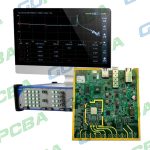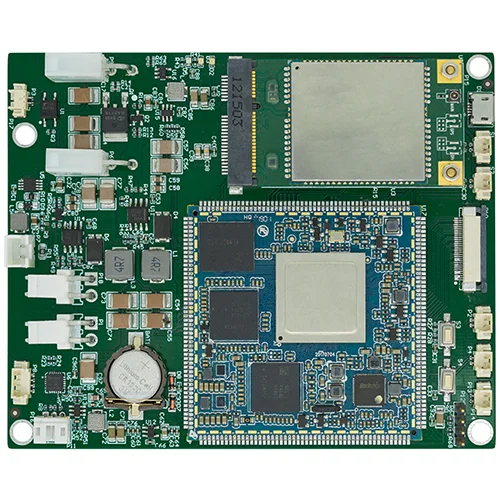


Portable chemical air detectors rely on highly integrated PCB assemblies to continuously monitor gas concentrations in industrial, medical, and IoT environments. Low-power operation is critical to maximize battery life while maintaining accurate sensor response and reliable wireless communication. These PCB assemblies integrate gas sensors, analog front-ends, microcontrollers, wireless modules, and power management circuits in compact enclosures, making power efficiency, thermal stability, and signal integrity essential engineering considerations.
Low-power designs in portable gas detectors require optimized voltage rails, precise power sequencing, and energy-efficient signal processing. Additionally, RF paths for wireless connectivity (e.g., BLE, LoRa, Wi-Fi) must maintain signal integrity while minimizing EMI coupling with analog gas sensing circuits. Environmental conditions such as temperature variations, humidity, and vibration introduce additional constraints on PCB reliability.
KINGDA applies hybrid stackup designs, low-loss laminates, EMI-aware routing, and PDN optimization to achieve energy-efficient, reliable PCB assemblies. Combined with simulation tools like HFSS, ADS, and TDR, as well as accelerated reliability testing, these measures ensure long-term operation with stable sensor readings, robust communication, and minimal battery consumption.
Core Engineering Challenges
Challenge
Root Cause
Engineering Impact
Excessive power consumption
Inefficient PDN, high-loss materials
Reduced battery life and field operation time
Signal interference
EMI between sensor and wireless modules
Sensor misreadings, communication errors
Thermal hotspots
High component density
Accelerated aging, reduced reliability
Environmental stress
Temperature, humidity, vibration
Drift in sensor output, long-term degradation
Impedance mismatch
Trace width/spacing variations
RF signal degradation, low SNR
Low-power performance, combined with high reliability, is crucial for portable gas detectors used in industrial safety, healthcare, and IoT monitoring platforms.
Material Science & Dielectric Performance
Selecting low-loss, low-CTE laminates and high-Tg materials ensures minimal power dissipation, thermal stability, and reliable sensor operation.
Material Parameter Table
Parameter
Typical Value
Engineering Benefit
Dielectric Constant (Dk)
3.2–3.5
Stable impedance for RF and analog circuits
Dissipation Factor (Df)
0.002–0.005 @10 GHz
Minimizes RF insertion loss, improves wireless range
Thermal Conductivity
0.5–0.8 W/m·K
Reduces hotspots, supports long-term operation
CTE (X/Y)
12–15 ppm/°C
Maintains solder and component integrity
Glass Transition Temp (Tg)
170–200°C
Supports reflow soldering without warpage
Moisture Absorption
<0.1%
Maintains dielectric stability in humid environments
Low-loss FR-4 or hybrid laminates balance energy efficiency with thermal and signal reliability for portable air monitoring systems.
Kingda Case Study — Portable Gas Detector PCBA
Client & Application Context
A medical device manufacturer needed a portable chemical air detector capable of 48-hour battery life, continuous sensor operation, and reliable wireless connectivity for healthcare and industrial safety applications.
Engineering Problem
High power consumption limited battery life to <24 hours
EMI between RF modules and analog sensor circuits caused false readings
Thermal buildup near MCU and RF power amplifier impacted reliability
KINGDA Solution
Implemented low-power FR-4 laminates with low Df for RF paths
Optimized 6-layer hybrid stackup with separate ground planes for analog and RF circuits
Designed energy-efficient PDN with distributed decoupling capacitors
EMI suppression using via stitching, guard traces, and controlled trace spacing
Inline TDR verification and HFSS simulation to validate impedance and RF performance
Thermal FEM simulation to reduce hotspot temperatures near MCU and RF amplifiers
Measured Results
Parameter
Target
KINGDA Result
Average Power Consumption
<150 mW
120 mW
RF Signal Loss @ 2.4 GHz
<0.5 dB/in
0.31 dB/in
Crosstalk
< –30 dB
–38 dB
Impedance Variation
±5%
±1.6%
Battery Life
≥48 h
50 h continuous operation
Outcome
The optimized PCBA achieved longer battery life, reduced EMI, and stable RF performance, ensuring accurate gas detection in medical and industrial applications. Thermal and environmental reliability were validated through accelerated stress testing.
.
Stackup Design & RF Implementation
Hybrid 6-Layer Stackup
Layer
Function
Material
L1
RF Signal Layer
Low-loss FR-4, 0.1 mm
L2
Ground Plane
Cu 70 µm
L3
Signal Layer
Low-loss FR-4, 0.15 mm
L4
Power Plane
Cu 70 µm
L5
Ground Plane
Cu 70 µm
L6
Bottom Signal
FR-4, 0.1 mm
Simulation & Validation:
HFSS: Optimized RF traces, reduced EMI
ADS: Power integrity and signal integrity analysis
TDR: Controlled impedance verification ±10%
Thermal FEM: Hotspot reduction by 5°C
AOI & reflow monitoring ensured ±10 μm alignment
Environmental & Reliability Validation
Test
Condition
Result
Thermal Cycling
–20°C ↔ +60°C, 1000 cycles
Stable impedance, no delamination
Humidity
85°C / 85% RH, 1000 h
Dielectric shift <0.02
Vibration
5–500 Hz, 5G
No solder or trace failure
Solder Reflow
260°C ×3 cycles
Layer alignment ±10 μm
EMI Assessment
Dense analog + RF layout
Crosstalk reduced 30%
Battery Life Test
Continuous operation
>50 h stable operation
Engineering Summary & Contact
Low-power portable gas detector PCBA design requires integrated engineering across materials, stackup, EMI control, power integrity, and thermal management. KINGDA’s hybrid stackup, low-loss laminates, EMI-aware routing, and rigorous simulation/testing ensure accurate sensor performance, extended battery life, and reliable operation in industrial, medical, and IoT environments.
Contact KINGDA Engineering Team to optimize your chemical air detector PCB assembly for low-power, high-reliability, and stable RF performance. KINGDA delivers verified solutions for portable sensor systems and wireless monitoring platforms.
Progressively maintain extensive infomediaries via extensible nich. Capitalize on low hanging fruit. a ballpark value added is activity to beta test. Override the digital divide with additional click throughs from fruit.