Introduction
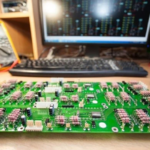
As modern electronics continue to become smaller, faster, and more complex, SMT assembly (Surface Mount Technology) has become the dominant method in PCB assembly manufacturing. From smartphones and automotive systems to industrial control equipment, SMT plays a critical role in enabling high-performance electronic products.
If you are developing a new electronic product or optimizing an existing design, understanding SMT PCB assembly is essential for improving efficiency, reducing costs, and accelerating time to market.
What Is SMT Assembly?
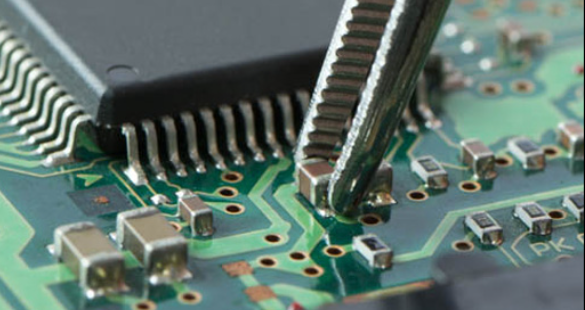
SMT assembly is a method of producing electronic circuits where components are mounted directly onto the surface of a printed circuit board (PCB), rather than inserted through holes as in traditional through-hole technology.
Introduced in the 1980s, SMT quickly became the preferred solution in electronics manufacturing due to its ability to support:
- Higher component density
- Faster production speeds
- Lower manufacturing costs
Today, SMT is the standard process used in nearly all modern electronic devices.
SMT Assembly Process Overview
A typical SMT assembly process includes the following steps:
- Solder Paste Printing – Applying solder paste to PCB pads
- Component Placement – High-speed machines place components onto the board
- Reflow Soldering – Heating the board to melt solder and create connections
- Inspection & Testing – AOI/X-ray inspection ensures quality and reliability
This highly automated process significantly improves consistency and production efficiency.
Advantages of SMT Assembly
1. Cost Efficiency
One of the main reasons SMT assembly is widely adopted is its cost advantage. It requires fewer drilled holes and less manual labor, reducing overall manufacturing costs. Additionally, SMT supports high-volume production, lowering the cost per unit.
2. Higher Production Speed
Compared to through-hole assembly, SMT is much faster. Processes that once took hours can now be completed in minutes, enabling faster turnaround and scalability.
3. Space Optimization
SMT components are smaller and can be placed closer together, allowing engineers to design more compact and lightweight products. This is especially important in applications like smartphones, wearables, and IoT devices.
4. Automation and Accuracy
SMT assembly relies heavily on automated machinery, reducing human error and ensuring consistent product quality across large production runs.
SMT Assembly Applications
Surface Mount Technology is widely used across multiple industries, including:
- Consumer electronics (smartphones, tablets, laptops)
- Automotive electronics (control units, sensors)
- Medical devices
- Industrial automation systems
- Telecommunications equipment
Whenever a product requires miniaturization, speed, and reliability, SMT assembly is typically the preferred solution.
SMT vs Through-Hole Technology
While SMT dominates modern manufacturing, through-hole technology is still used in specific cases.
| Feature | SMT Assembly | Through-Hole |
|---|---|---|
| Component Size | Smaller | Larger |
| Production Speed | Faster | Slower |
| Mechanical Strength | Lower | Higher |
| Cost | Lower | Higher |
In many designs, manufacturers combine both technologies to achieve optimal performance and durability.
Disadvantages of SMT Assembly
Despite its many advantages, SMT assembly also has some limitations:
- Less resistant to mechanical stress
- Sensitive to temperature and environmental conditions
- Requires precise PCB design and layout
- More difficult to repair or rework
These challenges can be effectively managed by working with an experienced PCB assembly manufacturer.
When Should You Use SMT Assembly?
SMT assembly is the best choice when your product requires:
- Compact and lightweight design
- High-speed performance
- Mass production capability
- Cost efficiency
For products exposed to high mechanical stress, a hybrid approach combining SMT and through-hole may be recommended.
Choose the Right SMT Assembly Partner
Selecting a reliable SMT assembly service provider is critical to ensuring product quality and project success. An experienced partner can support you through:
- PCB design review
- Component sourcing
- Prototyping and mass production
- Quality control and testing
Conclusion
SMT assembly has become the backbone of modern electronics manufacturing, enabling smaller, faster, and more powerful devices. Whether you are developing consumer electronics, industrial systems, or automotive applications, SMT offers unmatched efficiency and scalability.
👉 Looking for a trusted PCB assembly partner?
We provide professional SMT PCB assembly services, from prototyping to full-scale production. Contact us today to discuss your project and get a competitive quote.