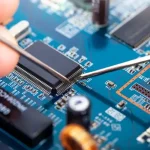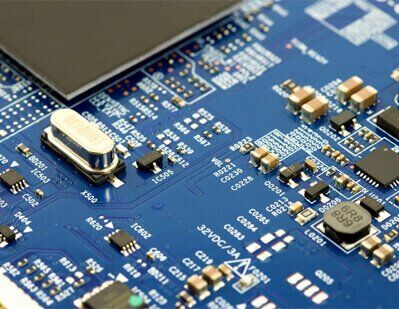
When developing a new electronic product, it is often difficult to identify every design or manufacturing issue before physical hardware is built. Producing a small number of assembled boards allows engineers to verify the design, evaluate component performance, identify manufacturing problems, and make improvements before committing to larger production volumes.
Low-Volume PCB Assembly is commonly used for prototypes, engineering samples, pilot runs, product updates, and products manufactured in relatively small quantities. Instead of immediately producing hundreds or thousands of units, manufacturers can build a controlled quantity for evaluation and validation.
The exact definition of low volume varies by manufacturer and project. For some projects, it may mean only a few boards, while other applications may involve hundreds or several thousand units. The appropriate production quantity depends on the product, assembly technology, manufacturing process, and business requirements.
Benefits of Low-Volume PCB Assembly
Reduce Development Costs
New electronic products often require multiple design iterations before entering mass production. Producing only the quantity needed for functional verification can reduce unnecessary material and assembly costs during the development stage.
A small production run allows engineers to identify problems before committing to a large manufacturing order. Potential issues involving component selection, PCB layout, soldering, firmware, thermal performance, or mechanical integration can be addressed at an earlier stage.
This makes Low-Volume PCB Assembly particularly valuable during new product introduction (NPI).
Shorten Time to Market
Low-volume production can help companies move from design to physical validation more efficiently.
Instead of waiting for a large production run, engineering teams can build a limited number of boards, test them, collect data, and implement design improvements. When the design is stable, the project can then transition to pilot or volume production.
However, actual turnaround time depends on PCB fabrication, component availability, assembly complexity, testing requirements, and production scheduling. Therefore, a supplier should provide a realistic lead-time estimate based on the actual BOM and manufacturing requirements rather than relying on a fixed delivery promise.
Validate Product Quality
A small pilot run provides an opportunity to evaluate product quality before larger quantities are released.
Engineers can verify:
- Electrical performance
- Component compatibility
- Soldering quality
- Mechanical fit
- Thermal performance
- Functional performance
- Assembly consistency
- Software or firmware integration
- Manufacturing repeatability
If a problem is discovered, only a limited number of units may need to be reworked or modified.
This significantly reduces the potential cost and risk associated with discovering design or manufacturing problems after mass production has begun.
Reduce Production Risk
Moving directly from a prototype to mass production can introduce unnecessary risk.
A pilot build allows the engineering and manufacturing teams to determine whether the production process is stable and repeatable. It can also reveal problems that may not be visible on the design files, such as component accessibility, soldering challenges, board warpage, assembly clearance, or test-point limitations.
The lessons learned from a low-volume build can then be incorporated into the production process before volume manufacturing begins.
Support Product Iteration
Electronic products frequently undergo revisions as new components, functions, or mechanical requirements are introduced.
Low-Volume PCB Assembly provides a practical way to validate these changes without producing a large quantity of potentially obsolete boards.
For example, engineers may need to evaluate:
- A replacement component
- A new processor or memory device
- A revised power circuit
- A new connector
- A different PCB material
- A modified PCB layout
- A new enclosure
- Updated firmware
Small production quantities make these engineering changes easier to manage during product development.
Low-Volume PCB Assembly Process
Although the production volume is small, the manufacturing process should still follow a controlled workflow.
1. Design and DFM Review
The process normally begins with PCB design files, Gerber or other fabrication data, the Bill of Materials (BOM), assembly drawings, pick-and-place files, and relevant manufacturing notes.
A DFM review can identify potential manufacturing and assembly issues before production.
Typical checks include:
- Component spacing
- Pad and solder-mask design
- Trace width and spacing
- Via requirements
- Component orientation
- PCB edge clearance
- Test-point accessibility
- BGA and fine-pitch component requirements
- Panelization
- Assembly-side clearance
Early DFM analysis can prevent avoidable production problems and reduce the number of design iterations.
2. Component and Material Preparation
Before assembly, the manufacturer verifies the BOM and confirms component availability.
Component preparation may include:
- Part-number verification
- Quantity verification
- Package verification
- Component lifecycle review
- Moisture-sensitive component handling
- Reel and tray preparation
- PCB inspection
For prototypes and low-volume projects, component shortages can have a particularly large impact on the schedule because only a limited quantity may be available from distributors.
3. Solder Paste Printing
For SMT production, solder paste is applied to the PCB pads using a stencil.
Printing quality is critical because excessive, insufficient, or misaligned solder paste can cause defects such as:
- Solder bridging
- Insufficient solder
- Tombstoning
- Component misalignment
- Solder joint reliability problems
SPI can be used when appropriate to evaluate solder paste deposition before component placement.
4. Component Placement
Pick-and-place equipment places surface-mount components onto the PCB according to the placement data.
For low-volume production, equipment selection should balance flexibility, setup time, placement accuracy, component variety, and production efficiency.
A flexible production system can be especially useful when a project contains many different component types but requires only a relatively small number of boards.
5. Reflow Soldering
After placement, the PCB passes through a controlled reflow profile that melts the solder paste and forms solder joints.
The reflow profile should be selected according to the solder paste, PCB materials, components, and assembly requirements.
Proper thermal control helps reduce defects such as:
- Cold solder joints
- Component damage
- Tombstoning
- Excessive voiding
- Poor solder wetting
6. Through-Hole Assembly
Some products require both SMT and through-hole components.
Through-hole components can be installed manually, by selective soldering, or by wave soldering depending on the board design and production requirements.
Using a combination of SMT and through-hole technology can provide both high assembly density and strong mechanical connections where required.
7. Inspection and Testing
Inspection is particularly important during low-volume production because each build may be used to validate the manufacturing process itself.
Common inspection and testing methods include:
- Visual inspection
- AOI
- X-ray inspection
- Electrical testing
- Flying-probe testing
- ICT when appropriate
- Functional testing
AOI is effective for detecting many surface assembly defects, while X-ray inspection can be useful for hidden solder joints such as those beneath BGA packages.
The appropriate testing strategy should be determined by product risk and technical requirements rather than automatically applying every available inspection method.
Applications of Low-Volume PCB Assembly
Low-Volume PCB Assembly is suitable for many industries and product-development stages, including:
- Telecommunications equipment
- Industrial control systems
- Industrial automation
- Medical electronics
- Aerospace electronics
- Defense-related electronics
- Scientific instruments
- Test and measurement equipment
- Power and energy systems
- Transportation electronics
- Audio equipment
- Video equipment
- Electronic security systems
- HVAC control systems
- Consumer electronics
- IoT devices
- Robotics
- Research and development projects
It is particularly useful when the product requires frequent design changes, specialized components, or relatively small production quantities.
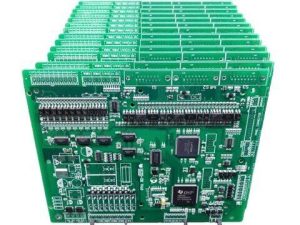
When Do You Need Low-Volume PCB Assembly?
New Electronic Product Development
When developing a new electronic product, a low-volume build can provide an important bridge between PCB design and production.
A prototype or engineering build allows teams to verify whether the PCB works as expected and whether the assembly process can produce the board consistently.
After successful validation, the project can progress through:
PCB Prototype → Low-Volume Build → Pilot Production → Mass Production
This staged approach helps reduce manufacturing risk and supports a more controlled transition to higher production volumes.
Product Updates and Design Iterations
Low-volume production is also useful when an existing product needs to be modified.
A revised PCB can be manufactured and assembled in limited quantities to evaluate new components or circuit changes before the updated design is released more broadly.
This is especially valuable when the replacement component has different electrical, thermal, mechanical, or supply-chain characteristics.
Specialized or Niche Products
Not every electronic product requires mass production.
Industrial equipment, scientific instruments, specialized control systems, custom electronics, and engineering equipment may only require relatively small quantities.
For these products, outsourcing PCB Assembly can often be more practical than maintaining an internal production line.
Low-Volume vs. High-Volume PCB Assembly
Low-volume and high-volume production require different manufacturing strategies.
| Factor | Low-Volume PCB Assembly | High-Volume PCB Assembly |
|---|---|---|
| Production quantity | Small batches and prototypes | Large-scale production |
| Main objective | Flexibility and validation | Throughput and repeatability |
| Design changes | Relatively frequent | Usually minimized after qualification |
| Setup strategy | Optimized for flexibility | Optimized for efficiency |
| Component variety | Often high | More standardized |
| Testing | Often extensive during development | Usually optimized for production |
| Engineering support | Highly important | Focused on process control and optimization |
| Cost structure | Higher unit cost may be acceptable | Lower unit cost becomes increasingly important |
| Production planning | Flexible | Highly structured |
| Typical use | Prototypes, NPI, pilot builds, niche products | Established products and mass production |
Neither production model is inherently better. The appropriate approach depends on product requirements, production volume, lifecycle, and business objectives.
Equipment and Manufacturing Flexibility
Equipment selection plays an important role in low-volume production.
High-volume manufacturing often emphasizes maximum throughput and repeatability, while low-volume manufacturing may place greater emphasis on flexibility, rapid changeover, and the ability to handle a wide range of components.
A suitable low-volume production line should be capable of efficiently handling different:
- Component packages
- PCB sizes
- Board configurations
- Component quantities
- Assembly technologies
- Product revisions
The most appropriate equipment should therefore be selected according to the actual product mix rather than simply based on maximum placement speed.
Engineering and Production Requirements
A successful low-volume project requires close cooperation between engineering and production teams.
Because prototypes and small batches often involve design changes, engineers may need to respond quickly to:
- BOM revisions
- Component substitutions
- PCB layout changes
- Assembly problems
- Test failures
- Mechanical interference
- Manufacturing feedback
For this reason, engineering support and communication can be just as important as production equipment when selecting a low-volume manufacturing partner.
Cost Considerations for Low-Volume PCB Assembly
The unit cost of a low-volume build is often higher than that of mass production because fixed manufacturing costs are distributed across fewer units.
Major cost factors include:
- PCB fabrication
- Component cost
- Component sourcing
- SMT setup
- Stencil cost
- Programming
- Assembly
- Inspection
- Testing
- Engineering support
- Packaging
- Shipping
However, low-volume production can reduce overall development costs by preventing large quantities of defective or obsolete products from being manufactured.
Therefore, companies should evaluate total project cost rather than only the unit price.
How DFM Improves Low-Volume PCB Assembly
DFM is particularly valuable for prototypes and low-volume production because manufacturing problems discovered during early builds can be corrected before the design moves into larger-scale production.
A DFM review can help determine whether:
- Components are suitable for automated assembly
- Pad dimensions are appropriate
- Component spacing is sufficient
- Test points are accessible
- PCB edges provide adequate clearance
- BGA packages can be reliably inspected
- The board can be efficiently panelized
- SMT and through-hole components can be assembled effectively
The DFM process can therefore serve as a communication bridge between PCB design and manufacturing engineering.
Quality Control for Low-Volume PCB Assembly
Small production quantities should not mean reduced quality requirements.
A suitable quality-control process may include:
- Incoming PCB inspection
- Component verification
- Solder paste inspection
- Placement verification
- Reflow profile verification
- AOI inspection
- X-ray inspection when required
- Electrical testing
- Functional testing
- Final visual inspection
For products with specific reliability requirements, additional environmental, thermal, mechanical, or lifecycle testing may also be appropriate.
Kingda Low-Volume PCB Assembly Services
Kingda supports customers with PCB manufacturing and assembly requirements ranging from prototypes and engineering builds to larger production programs.
For low-volume projects, Kingda can support the manufacturing workflow through engineering review, DFM, PCB fabrication, component assembly, inspection, and testing according to project requirements.
A low-volume project can also provide valuable manufacturing feedback before a product enters larger-scale production. Design issues identified during early builds can be addressed before production quantities increase.
Kingda’s goal is to help customers establish a practical manufacturing process that balances flexibility, quality, cost, and production efficiency.
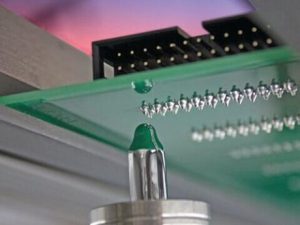
Choosing a Low-Volume PCB Assembly Partner
When selecting a supplier, consider the following factors:
Technical Capability
Confirm that the supplier can support the required PCB structure, component packages, assembly technology, and testing requirements.
Engineering Support
A strong engineering team can help identify DFM issues, component risks, and production challenges before they become costly problems.
Quality Control
Evaluate the supplier’s inspection and testing processes and determine whether they match the risk level of your product.
Component Sourcing
Component availability can have a major impact on low-volume production schedules. A supplier should be able to manage BOM information and communicate potential sourcing problems early.
Production Flexibility
A suitable supplier should be able to accommodate prototype quantities, engineering changes, small batches, and the transition toward larger production volumes.
Communication
Clear communication regarding design files, BOM revisions, component substitutions, testing requirements, and production schedules is essential for successful low-volume manufacturing.
Conclusion
Low-Volume PCB Assembly provides an efficient way to validate electronic designs, reduce development risk, support product iterations, and prepare products for larger-scale manufacturing.
Its major advantages include lower development risk, faster design validation, greater production flexibility, and better control over early-stage manufacturing costs. However, low-volume production should still follow a structured manufacturing process covering PCB Manufacturing, component preparation, SMT Assembly, inspection, testing, and quality control.
For companies developing new products or manufacturing specialized electronics, selecting the right manufacturing partner is critical. With effective DFM, engineering support, appropriate testing, and flexible production capabilities, low-volume PCB assembly can create a reliable path from prototype development to stable volume production.