Surface Mount Technology (SMT) has become the dominant technology in modern PCB assembly, enabling manufacturers to build smaller, lighter, faster, and more reliable electronic products. Unlike traditional Through-Hole Technology (THT), SMT mounts components directly onto the surface of a printed circuit board (PCB), eliminating the need for most component lead holes.
With highly automated SMT assembly equipment, manufacturers can achieve high component density, precise placement, fast production cycles, and consistent soldering quality. SMT is now widely used in consumer electronics, automotive electronics, medical devices, telecommunications, industrial automation, IoT equipment, and other advanced electronic applications.
As an experienced PCB manufacturer and PCB assembly service provider, Kingda provides professional PCB prototyping, rapid PCB prototype manufacturing, SMT assembly, THT assembly, and complete PCBA solutions, supporting customers from initial design verification through mass production.
What Is Surface Mount Technology (SMT)?
Surface Mount Technology (SMT) is an electronic assembly technology in which surface-mount devices (SMDs) are placed directly onto solder pads on the surface of a PCB.
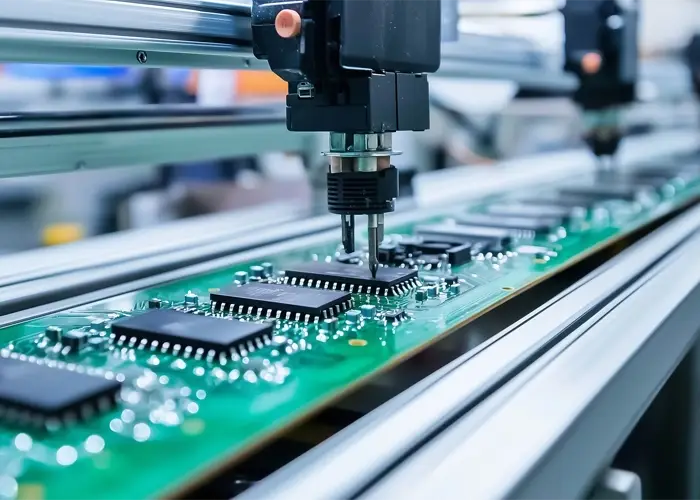
Unlike traditional through-hole components, most SMDs do not require long leads passing through drilled holes. Instead, solder paste is printed onto the PCB pads, components are accurately positioned using automated pick-and-place machines, and the populated PCB passes through a reflow soldering oven to form permanent electrical and mechanical connections.
A typical SMT PCB assembly process includes:
- PCB preparation and loading
- Solder paste printing
- Solder Paste Inspection (SPI)
- High-speed component placement
- Pre-reflow Automated Optical Inspection (AOI)
- Reflow soldering
- Post-reflow AOI
- X-ray inspection when required
- Electrical and functional testing
- Final inspection and packaging
This highly automated workflow makes SMT assembly particularly suitable for high-density and high-volume electronic products.
How Does SMT Assembly Work?
The effectiveness of SMT technology depends on precise coordination between PCB design, solder paste printing, component placement, reflow soldering, and inspection.
1. PCB Preparation
Before production begins, the manufacturer reviews the PCB design, Gerber files, BOM, component specifications, assembly drawings, and other manufacturing data.
At Kingda, engineering teams can conduct Design for Manufacturing (DFM) and Design for Assembly (DFA) reviews to identify potential manufacturing problems before production.
Typical checks include:
- PCB dimensions and layer configuration
- Component footprints
- Solder pad geometry
- Component spacing
- Fine-pitch and BGA areas
- Polarity and orientation
- Thermal considerations
- Manufacturing tolerances
- Component availability
Early engineering review helps reduce rework, production delays, and unexpected manufacturing costs.
2. Solder Paste Printing
The PCB is positioned accurately beneath a stainless-steel stencil. A squeegee then forces solder paste through precisely designed stencil apertures onto the PCB pads.
The quality of solder paste printing has a direct impact on the final solder joints.
Important process parameters include:
- Stencil thickness
- Aperture dimensions
- Squeegee pressure
- Printing speed
- Stencil alignment
- Solder paste viscosity
- PCB pad design
For fine-pitch and miniature components, even small variations in solder paste volume can cause defects such as solder bridging, insufficient solder, or component tombstoning.
3. Solder Paste Inspection (SPI)
After printing, 3D Solder Paste Inspection (SPI) can measure the position, height, area, and volume of solder paste deposits.
SPI helps identify printing defects before expensive components are placed and soldered.
Typical defects include:
- Insufficient solder paste
- Excessive solder paste
- Offset printing
- Missing solder paste
- Bridging
- Uneven paste deposits
By detecting problems at an early stage, manufacturers can improve SMT assembly yield and reduce downstream rework.
4. Pick-and-Place Component Placement
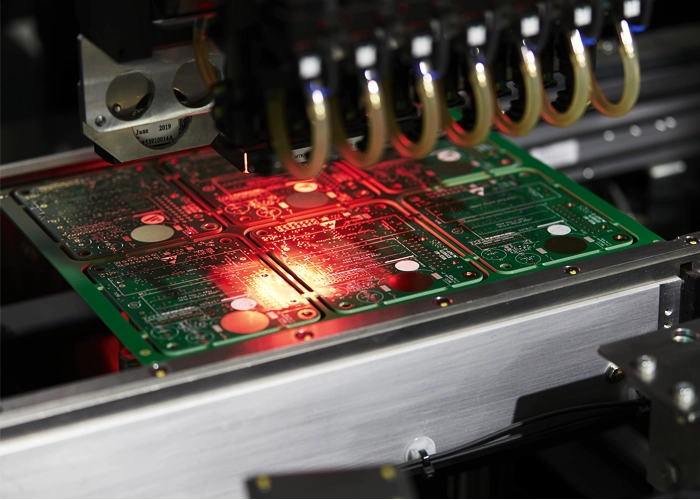
After SPI, automated pick-and-place machines collect SMD components from feeders and place them onto the corresponding solder-pasted PCB pads.
Modern placement systems use high-resolution vision systems to identify component position, orientation, polarity, and package characteristics.
The process can support components ranging from relatively large power packages to miniature components such as 0201 and 01005 SMDs, depending on the equipment and PCB design.
Critical placement parameters include:
- Placement accuracy
- Component recognition
- Feeder stability
- Nozzle selection
- Placement force
- PCB positioning
- Vision system calibration
For high-density PCBs, precise component placement is essential for achieving reliable solder joints during reflow.
5. Reflow Soldering
After component placement, the populated PCB enters a reflow soldering oven.
The board passes through multiple controlled temperature zones. The solder paste gradually heats, reaches its melting point, wets the component terminals and PCB pads, and then cools to form permanent solder joints.
A typical lead-free reflow profile includes:
- Preheating: gradual temperature increase
- Soaking: activation of flux and thermal stabilization
- Reflow: solder reaches its liquidus temperature
- Cooling: controlled solidification of solder joints
The exact temperature profile must be optimized according to the PCB materials, component packages, solder paste, board thickness, and thermal mass.
Improper reflow parameters can cause:
- Cold solder joints
- Tombstoning
- Solder bridging
- Component damage
- Voids
- Delamination
- Insufficient wetting
Therefore, reflow profile optimization is a critical part of professional SMT manufacturing.
6. AOI and X-Ray Inspection
After reflow, the PCBA undergoes inspection.
Automated Optical Inspection (AOI) uses high-resolution cameras to identify visible defects such as:
- Missing components
- Incorrect component orientation
- Component displacement
- Solder bridges
- Insufficient solder
- Excessive solder
- Tombstoning
For hidden solder joints, especially BGA, QFN, and other bottom-terminated packages, X-ray inspection provides additional quality verification.
7. Electrical and Functional Testing
Depending on the application, Kingda can support different testing methods, including:
- In-Circuit Testing (ICT)
- Flying Probe Testing (FPT)
- Functional Testing (FCT)
- Continuity testing
- Insulation testing
- Power-up testing
- Communication interface testing
Testing verifies that the completed PCBA not only meets visual inspection requirements but also performs according to its electrical specifications.
Types of Surface-Mount Components
Surface-Mount Devices (SMDs) are available in many package types and sizes.
Common SMT components include:
SMD Resistors
SMD resistors regulate current and establish voltage relationships in electronic circuits. Common chip resistor packages include 0201, 0402, 0603, 0805, and 1206.
SMD Capacitors
SMD capacitors are widely used for filtering, decoupling, energy storage, and signal conditioning. Ceramic capacitors are particularly common in high-density PCB assemblies.
SMD Inductors
Inductors are used in power conversion, filtering, RF circuits, and electromagnetic interference suppression.
SMD Diodes
SMD diodes provide rectification, protection, switching, and signal control. Common examples include Schottky diodes, Zener diodes, and LEDs.
SMD Transistors
Surface-mount transistors are widely used for switching, amplification, power management, and signal processing.
Integrated Circuits (ICs)
SMT supports numerous IC packages, including:
- SOP
- SOIC
- QFP
- QFN
- PLCC
- BGA
- CSP
- LGA
These packages allow designers to integrate large numbers of electrical connections into compact PCB areas.
Connectors and Specialized Components
Although SMT is primarily associated with miniature components, surface-mount versions of connectors, switches, sensors, modules, and other specialized devices are also available.
For large or mechanically stressed components, however, THT assembly may still be more appropriate.
Key Advantages of Surface Mount Technology
1. High Component Density
One of the greatest benefits of SMT PCB assembly is its ability to support extremely high component density.
Because SMDs are mounted directly onto the PCB surface, components can be positioned much closer together. Components can also be mounted on both sides of the PCB.
This allows designers to create smaller and thinner electronic products.
2. High-Speed Automated Production
SMT is highly compatible with automated manufacturing.
Modern pick-and-place machines, solder paste printers, SPI systems, AOI equipment, and reflow ovens can operate as an integrated production line.
This significantly improves production efficiency and makes SMT suitable for medium- and high-volume manufacturing.
3. Excellent High-Frequency Performance
SMD components generally have shorter electrical paths than traditional through-hole components.
Shorter connections can reduce parasitic inductance and capacitance, making SMT particularly valuable for:
- RF circuits
- High-speed digital systems
- 5G communication equipment
- Networking equipment
- Automotive radar
- High-frequency modules
4. Reduced Product Size and Weight
SMT allows manufacturers to achieve compact PCB layouts without sacrificing functionality.
This is particularly important for:
- Smartphones
- Wearable devices
- IoT products
- Portable medical equipment
- Automotive electronics
- Communication modules
5. Suitable for Mass Production
Although SMT production lines require significant equipment investment, automated assembly can reduce labor requirements and improve production consistency.
For high-volume production, SMT can therefore provide excellent cost efficiency.
6. Consistent Assembly Quality
Automated placement and inspection systems reduce the variability associated with manual assembly.
When supported by appropriate process controls, SMT can achieve high repeatability and stable production quality.
7. Supports Complex PCB Designs
SMT is highly compatible with:
- Multilayer PCBs
- HDI PCBs
- Flexible PCBs
- Rigid-flex PCBs
- Fine-pitch assemblies
- High-density interconnects
This makes SMT an important manufacturing technology for increasingly complex electronic systems.
Disadvantages of SMT
Despite its many advantages, Surface Mount Technology also has limitations.
1. More Difficult Repair
Small components and dense layouts make manual repair more challenging.
Fine-pitch ICs, QFNs, BGAs, and 01005 components often require specialized rework equipment and experienced technicians.
2. More Sensitive to PCB Design Quality
SMT production is highly dependent on accurate footprints, solder pad geometry, component spacing, stencil design, and thermal considerations.
Poor PCB design can result in:
- Solder bridges
- Tombstoning
- Insufficient solder
- Component interference
- Thermal imbalance
Therefore, DFM/DFA review is highly recommended before production.
3. Limitations for Large and High-Power Components
Very large transformers, heavy connectors, high-current components, and certain power devices may require stronger mechanical support than SMT alone can provide.
For these applications, Through-Hole Technology (THT) is often preferred.
4. Higher Equipment Requirements
A professional SMT production line requires specialized equipment, including:
- Stencil printers
- SPI systems
- Pick-and-place machines
- Reflow ovens
- AOI systems
- X-ray inspection equipment
- Rework systems
This makes SMT manufacturing infrastructure more complex than simple manual assembly.
SMT vs. THT Assembly
| Feature | SMT Assembly | THT Assembly |
|---|---|---|
| Component density | Very high | Lower |
| Component size | Miniature to medium | Medium to large |
| Assembly speed | Very high | Moderate |
| Automation | Excellent | Moderate to high |
| Mechanical strength | Good | Excellent |
| High-frequency performance | Excellent | Generally lower |
| High-power components | Application dependent | Excellent |
| Repairability | More difficult | Easier |
| Prototyping | Excellent with appropriate setup | Excellent for manual modification |
| Mass production | Highly suitable | Suitable for selected applications |
| Typical applications | Consumer, communications, IoT, automotive | Power, industrial, connectors, heavy components |
In many modern products, SMT and THT are not competing technologies. Instead, manufacturers combine them in a mixed-technology PCB assembly to achieve the optimal balance between miniaturization, electrical performance, mechanical strength, and cost.
Common Applications of SMT PCB Assembly
SMT PCB assembly is used across a wide range of industries.
Consumer Electronics
Smartphones, tablets, smartwatches, cameras, laptops, and home electronics depend heavily on SMT because of their compact size and high component density requirements.
Automotive Electronics
SMT is widely used in:
- ADAS systems
- Infotainment systems
- Instrument clusters
- Battery management systems
- Vehicle control modules
- Automotive communication systems
Automotive applications require robust process control and appropriate component qualification.
Medical Electronics
Medical PCBs used in monitoring equipment, diagnostic devices, laboratory instruments, and portable medical equipment require high reliability and traceability.
Industrial Automation
SMT supports PLCs, industrial controllers, sensors, motor-control systems, robotics, and factory automation equipment.
Telecommunications and Networking
High-speed communication equipment, wireless modules, routers, switches, and 5G infrastructure rely on high-density SMT assemblies for compact designs and high-frequency performance.
IoT and Smart Devices
IoT products typically require small dimensions, low power consumption, wireless connectivity, and high functional integration, making SMT an ideal assembly solution.
SMT Quality Control and Reliability Management
Professional SMT PCB assembly requires more than simply placing components onto a PCB. A comprehensive quality management system should monitor the entire manufacturing process.
Key controls include:
Incoming Material Inspection
Components, PCBs, solder paste, and other materials should be inspected before entering production.
Solder Paste Control
Solder paste storage temperature, expiration date, handling time, viscosity, and printing performance should be controlled.
SPI Inspection
SPI verifies solder paste volume and position before component placement.
Placement Verification
Placement machines use vision systems to verify component position and orientation.
AOI Inspection
AOI identifies visible assembly defects before the PCBA moves to subsequent processes.
X-Ray Inspection
X-ray inspection is particularly valuable for BGA, QFN, and other hidden solder joints.
Electrical Testing
ICT, FPT, and FCT can verify electrical connections and functional performance.
Traceability
For demanding applications, production data such as component batches, process parameters, inspection results, and test records can be maintained for improved traceability.
Why Choose Kingda for SMT PCB Assembly?
As an experienced PCB manufacturer and PCB assembly service provider, Kingda provides integrated manufacturing support for customers requiring reliable and scalable SMT PCB assembly.
Professional PCB Manufacturing and Assembly
Kingda supports the complete workflow from PCB prototype manufacturing and PCB fabrication to SMT assembly, THT assembly, inspection, testing, and production.
This integrated approach simplifies supplier management and helps maintain consistency between PCB fabrication and assembly.
Engineering Support and DFM Review
Before production, Kingda can review PCB layouts, component footprints, BOM information, and assembly requirements to identify potential manufacturing risks.
Our engineering support helps customers optimize designs for:
- Manufacturability
- Assembly efficiency
- Component availability
- Soldering reliability
- Production yield
- Cost control
Flexible Production from Prototype to Volume
Kingda provides PCB prototype assembly, small-batch PCB assembly, and volume PCBA manufacturing, allowing customers to move efficiently from initial design verification to larger-scale production.
SMT and THT Assembly Integration
Not every PCB can be optimized using SMT alone.
Kingda can combine SMT and THT assembly when a project requires both miniature surface-mounted components and mechanically robust through-hole components.
Comprehensive Inspection and Testing
Kingda emphasizes process control throughout PCB assembly, with inspection and testing methods selected according to product requirements.
These may include:
- SPI
- AOI
- X-ray inspection
- ICT
- Flying probe testing
- Functional testing
- Visual inspection
Support for Multiple Industries
Kingda’s PCB and PCBA solutions can support applications including:
- Automotive electronics
- Industrial automation
- Medical electronics
- Telecommunications
- Consumer electronics
- Power electronics
- IoT devices
- Control systems
Future Trends in SMT Technology
The development of SMT continues to follow several major directions.
Miniaturization
Components continue to become smaller, with advanced applications increasingly adopting ultra-small packages and high-density layouts.
Higher Placement Accuracy
As component sizes decrease and pitches become finer, placement accuracy and vision recognition capabilities will become increasingly important.
Intelligent Manufacturing
MES integration, automated inspection, production-data collection, and process analytics are helping manufacturers build more intelligent SMT production environments.
Advanced Packaging
Technologies such as SiP, advanced BGA packages, CSP, and heterogeneous integration are expanding the capabilities of surface-mount assembly.
Flexible and Rigid-Flex Electronics
The increasing adoption of flexible and rigid-flex PCBs is creating new SMT assembly requirements for wearable devices, medical electronics, automotive applications, and compact consumer products.
Greater Process Traceability
For automotive, medical, aerospace, and other high-reliability applications, manufacturers increasingly require comprehensive component and process traceability throughout the PCBA lifecycle.
Conclusion
Surface Mount Technology (SMT) has become a fundamental technology in modern PCB assembly, enabling manufacturers to achieve high component density, compact product designs, fast automated production, and excellent electrical performance.
Although SMT has limitations when dealing with very large, heavy, or high-power components, these challenges can often be addressed by combining SMT with Through-Hole Technology (THT) in a mixed-technology assembly.
For companies developing new electronic products, selecting the right SMT PCB assembly manufacturer is critical to achieving stable quality, competitive costs, and reliable production.
With professional capabilities covering PCB prototype manufacturing, PCB fabrication, SMT assembly, THT assembly, PCB assembly, inspection, testing, and volume production, Kingda can provide integrated PCB and PCBA solutions from initial design verification to full-scale production.