Medical Grade PCB Cleanliness: What 1.56 ug/cm2 Means
A medical grade PCB is judged by numbers that never appear on a consumer board, and one of them is ionic residue measured in micrograms per square centimetre. Implantable electronics are pushing that limit toward 1.56 micrograms per square centimetre, a figure that describes how much conductive contamination may remain on the surface after assembly. For an implanted device the consequence of exceeding it is not a failed test but a corrosive failure inside a patient.
Interest in these limits has grown with the progress of implantable neural interfaces. In August 2026 a Chinese developer of brain computer interface systems reported that a 256 channel implant had been used in several patients, with control latency below fifty milliseconds and subjects operating a computer for three to four hours continuously. The same company expects to run a large multi centre registration trial during the year with roughly forty implants, and has reported cumulative funding above 1.1 billion yuan. Each of those numbers translates into requirements on the electronics inside the device.
Why Implantable Electronics Raise the Bar
A wearable can be cleaned and replaced. An implant has to survive years in a warm, conductive, chemically active environment, with no opportunity for service. Every material, every joint and every residue left on the surface becomes part of a long term reliability calculation, and the acceptable margin is far smaller than in any other application.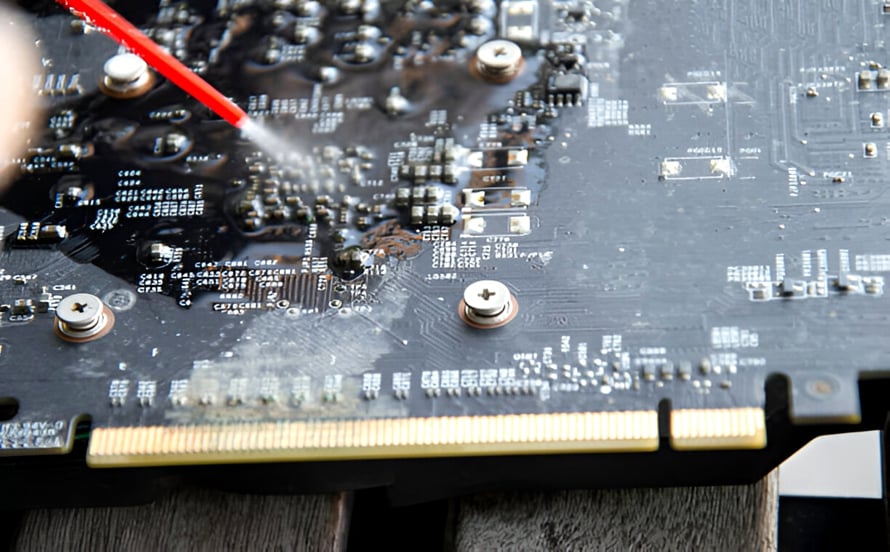
The channel count adds a second pressure. A 256 channel electrode array requires signal aggregation, transmission and processing within a very small volume, which means more conductors, denser interconnect and tighter routing than earlier generations. Density and cleanliness are related, because a dense assembly is harder to clean thoroughly.
What Ionic Residue Measures
Ionic contamination testing extracts soluble residue from the assembly and measures its conductivity, expressing the result as an equivalent mass of sodium chloride per unit area. It detects flux activators, plating salts, handling residues and other materials that can ionise in the presence of moisture and drive electrochemical migration.
The measurement is a proxy for risk rather than a direct prediction of failure, which is why limits are set conservatively and why test conditions matter. Extraction time, temperature, the volume of the extraction solution and the area tested all influence the result, so comparing numbers from different laboratories requires knowing the method used.
Where Contamination Comes From
Most residue originates in soldering. Flux activators are designed to remove oxide during reflow, and whatever is not volatilised remains on the surface. Cleaning removes most of it, but the effectiveness depends on geometry: under a component, inside a via, or beneath a shielded area, the cleaning agent may not reach the contamination at all.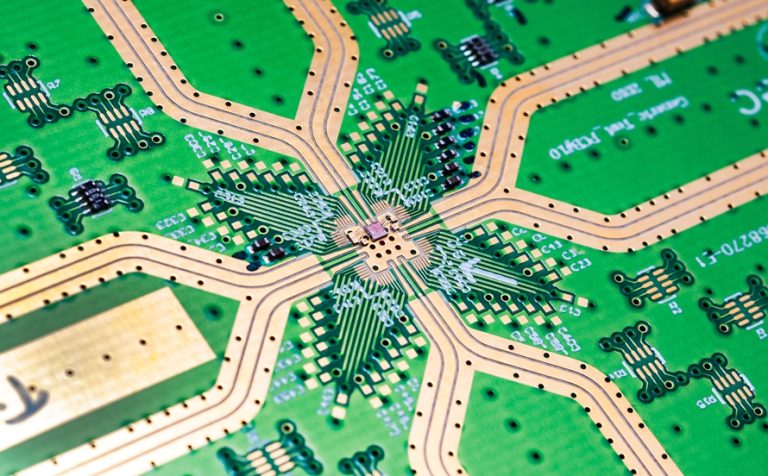
Other sources are easy to overlook. Plating chemistry from the fabrication stage can remain in vias if rinsing is incomplete, handling transfers skin oils and salts, and adhesives used for stiffeners or encapsulation can contain ionic species. Controlling cleanliness therefore begins at the board fabricator and continues through every handling step in assembly.
Cleaning Processes and Their Limits
Aqueous cleaning with deionised water and a controlled detergent, followed by thorough rinsing and drying, is the standard approach for high reliability assemblies. The variables that decide whether it works are detergent concentration, temperature, impingement energy, rinse water quality and drying, and each of them needs to be monitored rather than assumed.
Inline cleaning is more repeatable than batch processing, but dense assemblies with low standoff components benefit from a dedicated profile with longer dwell and better access. The practical check is not documentation but measurement: test coupons cleaned alongside the product, tested with the same method, show whether the process is actually delivering the intended result.
Flux Choice and Process Sequence
No clean fluxes leave less residue but are less tolerant of oxidation and surface condition, so they suit clean board finishes and controlled environments. Water soluble fluxes clean effectively but must be removed completely, because their activators are aggressive. Rosin based fluxes are more forgiving but leave residue that must be cleaned when measured limits are tight.
The sequence matters as much as the chemistry. Cleaning before a second soldering step contaminates the assembly again, so the process should be arranged to clean once at the end where possible, or to clean and verify after each thermal step. For implantable products that verification is part of the manufacturing record, not a final inspection.
Coating, Encapsulation and Ionic Permeability
Conformal coating and encapsulation are barriers, not substitutes for cleaning. They slow the ingress of moisture and ions, but they also trap contamination against the surface, which in a humid environment increases the local concentration. Coatings applied over a contaminated surface can therefore accelerate the failure they were intended to prevent.
Material selection follows the same principle. Coating chemistry has to adhere reliably, cure fully and tolerate the sterilisation method used for the device. Coatings that are specified for consumer protection are generally unsuitable in an implant, where the requirement is long term barrier performance under constant moisture and temperature.
Fine Line Fabrication for High Channel Counts
Two hundred and fifty six channels in a small implantable package requires dense conductors and small vias, and the fabrication process must deliver that density without leaving plating chemistry behind. Rinsing after plating and after each wet process is therefore part of product quality rather than housekeeping.
Fine line capability also affects surface finish choice. Finishes that use aggressive chemistry may leave more residue, while finishes with excellent solderability may have limited shelf life in a medical production flow. Suppliers building this class of work treat fabrication capability and cleanliness as one specification rather than two.
Flexible Interconnect Inside the Body
Implantable devices rely on flexible circuits because the electronics must fit the anatomy rather than the anatomy accommodating a rigid board. Flexible interconnect carries electrode signals from the array to the processing electronics, and it must survive the mechanical environment of the body as well as the cleaning and coating processes.
Design rules follow the dynamic flex principles used elsewhere, with additional attention to encapsulation: no exposed copper, controlled bend radii, and conductor routing that minimises stress at the transition between flexible and rigid sections. Because the assembly cannot be repaired, the design has to tolerate the worst case rather than the typical one, and a supplier experienced in medical electronics assembly will normally be involved before the layout is finalised.
Test and Verification
Verification for implanted electronics combines electrical test, cleanliness measurement, coating inspection and accelerated life testing. The cleanliness test is destructive in the sense that the sampled assembly cannot be shipped, so production accepts that a percentage of output is consumed by verification.
Electrical testing has to cover parameters that matter for signal quality rather than only continuity, since a partially degraded connection may pass a continuity check. Combining coupon based cleanliness data with functional testing provides evidence that the process is under control, and it is the kind of data that a regulated quality system requires.
Traceability and Documentation
For a device implanted in a patient, traceability is not optional. Each unit must be linked to the board lot, the components, the cleaning and coating processes, and the measurements recorded at each stage. If a problem appears years later, that record determines whether a corrective action is possible.
Documentation therefore has to be generated as part of production rather than reconstructed afterwards. Lot control at incoming inspection, serialisation, and test data retained against the unit are the minimum, and any change to a process step has to be recorded with the date it took effect so that units built before and after can be distinguished.
Why the Limit Keeps Tightening
As devices move from external use to implanted use, and as channel counts rise, the amount of electronics inside the body grows while the acceptable failure rate falls. That combination is what pushes residue limits from tens of micrograms toward single digits, and it is unlikely to reverse.
For manufacturers the practical response is to build margin rather than to design to the specification. A process that reliably produces results well inside the limit is far easier to defend during an audit, and it survives the material and component changes that inevitably occur over the life of a medical product. Building that margin into verification and testing from the beginning is what makes the limit achievable in routine production rather than only in a laboratory sample.
Working With the Right Supplier
Very few manufacturers are set up for implantable electronics, and the questions that identify them are specific: what ionic contamination limit can be held in routine production, what method is used to measure it, how is cleanliness verified after coating, and how are process changes controlled.
Answers to those questions describe a manufacturing system, and they matter more than a general capability statement. As neural interfaces move into registration trials and eventually into clinical use, the boards inside them will be evaluated on exactly this evidence, which is why the manufacturing requirement should be established during design rather than discovered during the production process.