Aerospace PCB Assembly: Designing for the Space Environment
Aerospace electronics are not simply rugged versions of industrial hardware. The environment is different in kind: radiation that can corrupt logic, temperature swings of hundreds of degrees, vibration and shock during launch, and a service life during which no repair is possible. Aerospace PCB assembly has to be planned around those conditions from material selection onward, and most of the decisions are locked in before the first board is built.
The Environment Defines the Requirements
Outside the atmosphere the temperature range spans from over a thousand degrees Fahrenheit near hot structures to hundreds of degrees below zero, and the mechanical stress that accompanies those extremes is considerable. Collision with debris of various sizes is a real risk, and the same platform must survive the vibration and acoustic energy of launch. Internally, the equipment sees its own thermal load and the vibration transmitted through the structure, and the enclosure has far less ability to reject heat than a ground-based rack.
Radiation is the hazard with no real analogue on the ground. Ionizing radiation affects semiconductors directly, while radio frequency radiation matters particularly in the ionosphere, where it couples into cables and wiring and is carried to the electronics.
How Radiation Affects a Board
Radiation disturbs a circuit by inducing currents and voltages that appear as noise. The consequences are degraded signal quality, changes in effective impedance and coupling between traces that were quiet under laboratory conditions. Mitigation starts with an architecture that is inherently quiet: power integrity for every supply, signal integrity rules applied to all interfaces, and components selected for tolerance and radiation behaviour rather than for commercial grade alone.
Shielding and filtering are added where analysis shows they are needed, and the analysis itself should follow a documented risk process with traceability of materials and components through the supply chain. In practice this means a qualified manufacturing chain, a written risk analysis and a parts list reviewed against the program qualification requirements rather than against a distributor catalogue.
Mechanical and thermal design then have to be resolved in the same small volume as the electrical design.
Vibration and Mechanical Stress
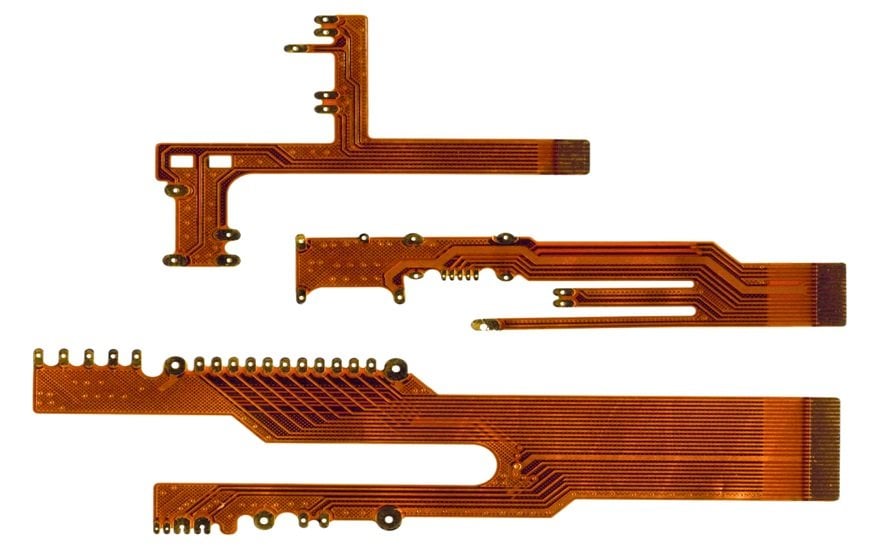
Material selection is the first response to vibration. Rigid boards resist it better than flexible ones, but rigid-flex and flex circuits are often unavoidable in a compact assembly, and their bend radius becomes a hard design constraint. A flexible board bent beyond its limit will fail at the bend, and a heavy component on a flexible substrate will eventually fatigue its solder joints.
The layout responses are straightforward. Keep component placement flat wherever possible, so the mass of each part is supported by the board rather than by its terminations. Where planarity is impossible, or the component is heavy, add stiffeners or mechanical support and increase the adhesion of the attachment. For flex assemblies, request stiffeners over the areas where connectors and heavy parts are mounted, and make sure the assembly sequence does not bend the board after soldering.
Thermal Cycling and Material Choice
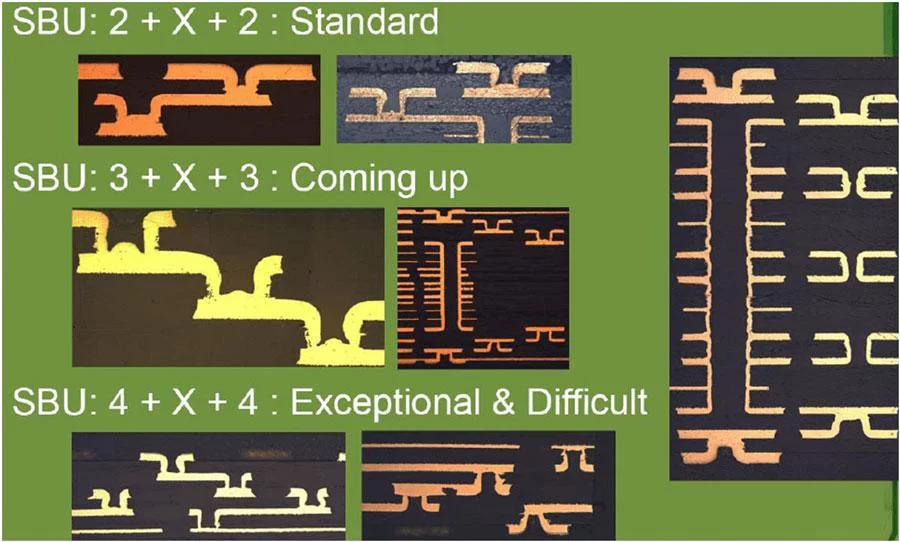
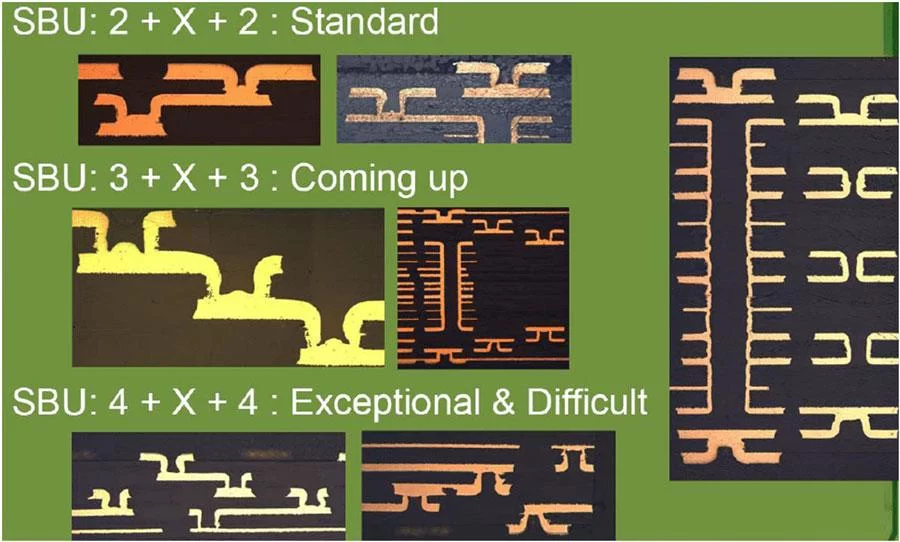
Every material changes dimension with temperature, and the assembly has to tolerate that without losing electrical continuity. The critical interfaces are the plated through holes, where the copper barrel must follow the laminate as it expands, and the solder joints, where the component and the board expand at different rates. A laminate with a high glass transition temperature and a coefficient of thermal expansion close to that of copper reduces the stress at the barrel.
Component selection follows the same logic. Parts intended for extreme environments have wider temperature ratings and better understood behaviour under thermal cycling. Where a commercial part is used for availability reasons, it should be qualified by test rather than accepted on the assumption that the datasheet limits are adequate.
Assembly Standards and Process Discipline
The acceptable quality level for aerospace work is higher than for commercial products, and the assembly standard usually calls for the most stringent class of acceptance criteria, which affects everything from hole plating to solder joint inspection. Design for manufacturing and design for assembly reviews are part of the qualification package rather than an optional extra. A conformal coating or similar board protection method is normally applied, because the assembly has to survive humidity and contamination as well as vacuum.
Process discipline extends to the supply chain. Materials and components should be traceable and the manufacturer should be qualified for the program. Where a commercial part is used, additional test evidence may be required to show that it meets the specification, because a certificate of conformance from a commercial distributor is not sufficient evidence for a flight article.
Electrical performance under those conditions is verified by analysis and test rather than assumed.
Signal and Power Integrity at the Extremes
Impedance changes with temperature and with the dielectric properties of the laminate, so a link that has margin at room temperature may not have it at either extreme. Coupling between traces changes too, because the fields depend on geometry and material. Designing with margin, and simulating the extremes rather than the nominal case, is the practical answer.
Power distribution deserves particular attention. Load transients in a radiation-tolerant design can be larger, and the resonances of the plane structure shift with temperature. The principles of EMI suppression apply here as well, and the board quality characteristics used for commercial products have to be extended to cover the environmental range rather than only the electrical function.
Vacuum, Outgassing and Contamination
In a vacuum, materials release volatile compounds that would otherwise stay in the bulk. Those compounds condense on cold surfaces, including optical elements and thermal radiators, and they can degrade both the hardware and its function. Material selection therefore extends beyond electrical properties to include low outgassing behaviour for the laminate, the solder mask, the conformal coating and any adhesive or staking compound used to secure components.
Contamination control matters during assembly as well. Handling residues, flux that is not fully removed and particles left on the board all become risks when there is no convection to carry them away and no opportunity to clean the assembly later. Cleanliness requirements are written into the assembly specification for that reason, and the assembly area itself is controlled accordingly.
Qualification and Documentation
Flight hardware requires evidence. The qualification package typically includes material specifications, the stackup and its verification, assembly process records, inspection results and environmental test results. Because repair is impossible in service, documentation is the mechanism by which the design can be trusted, and it is also what makes a second build reproducible years later.
FAQ
Can commercial components be used in space hardware? They can, but only with additional qualification evidence. The part is accepted on measured behaviour across the environmental range, not on the assumption that the commercial rating is sufficient.
Are flexible boards suitable for aerospace assemblies? Yes, and they are often necessary. The constraint is the bend radius and the support of heavy components, both of which should be defined in the mechanical design rather than left to assembly.
Why is documentation emphasised so heavily? Because the hardware cannot be repaired or inspected in service. Traceability of materials, processes and tests is the only way to demonstrate that the design meets its requirements.