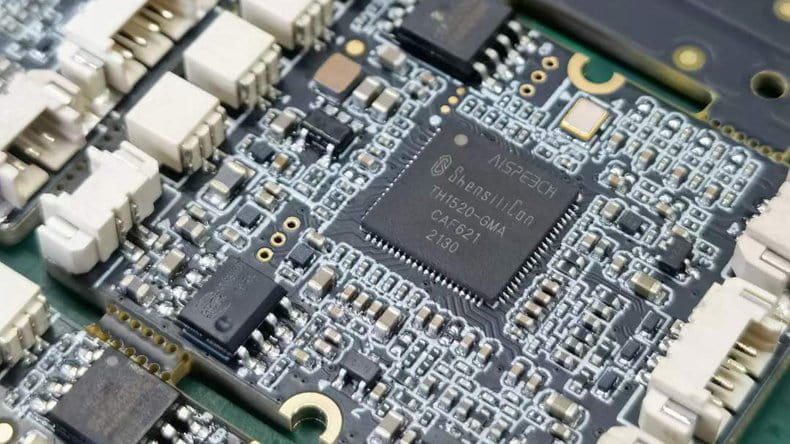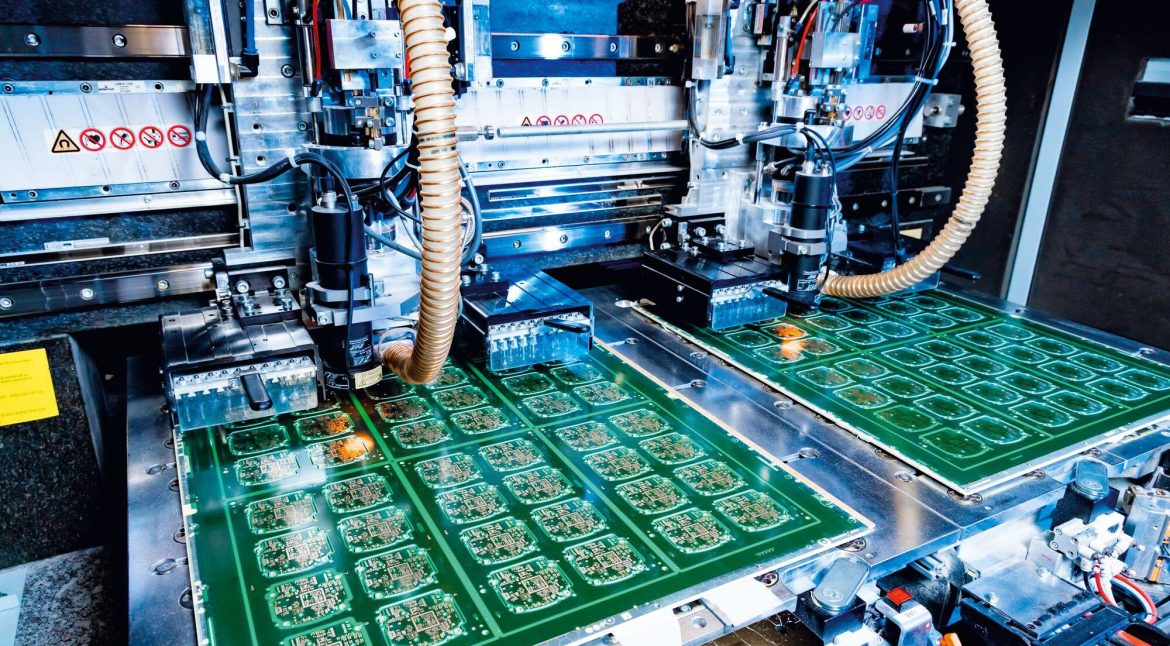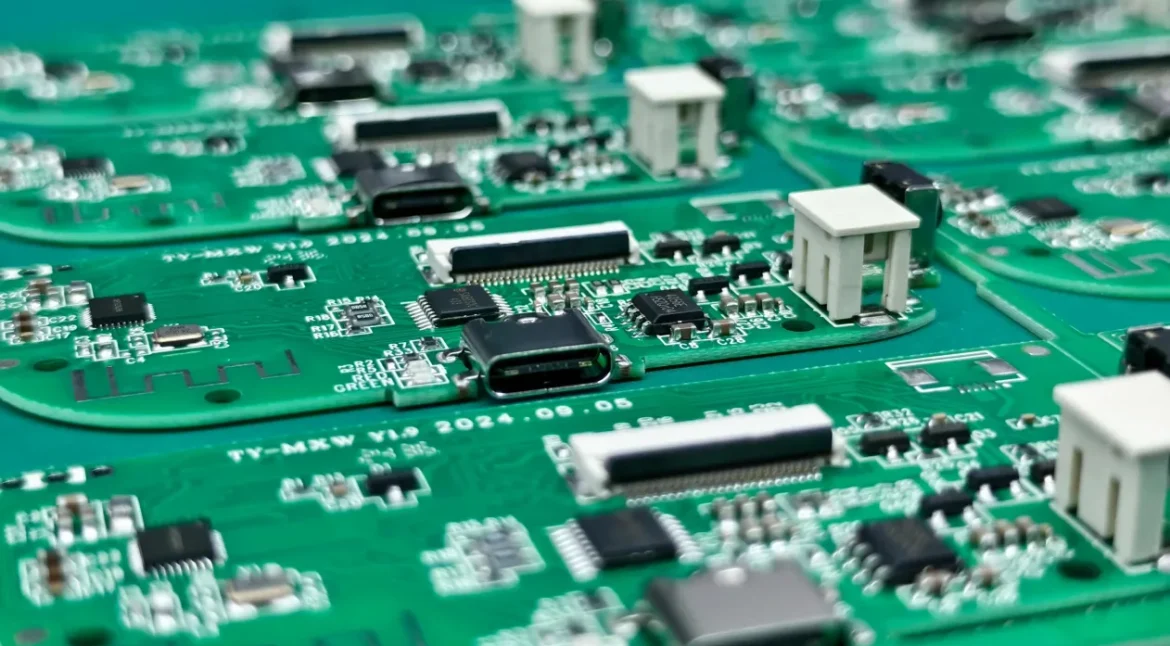
Via Tenting Versus Plugging On PCB Assemblies A via is a hole through the board, and leaving it open creates problems: solder can wick down the barrel during reflow, flux can be trapped inside, and contamination can enter the hole over the life of the product. Tenting and plugging are…
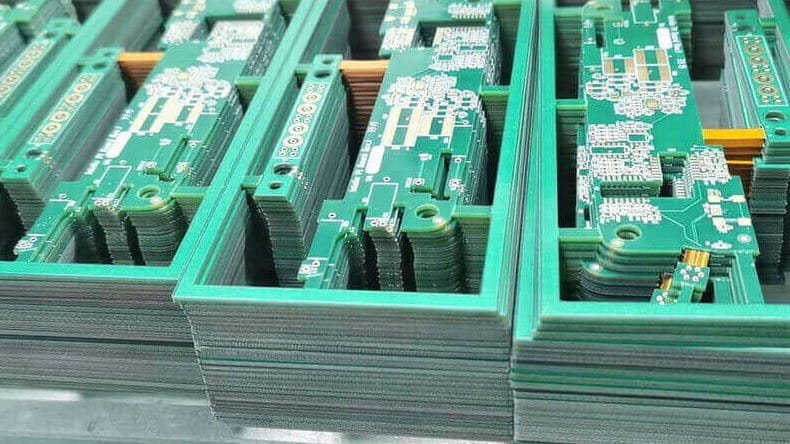
Solder Paste Volume Control In SMT Printing Solder paste volume is the single number that links the printing process to the quality of the joint. The volume of paste printed into an aperture, less what is lost during reflow, becomes the solder fillet, and a fillet that is too small…
Silkscreen Design Rules For PCB Assembly The silkscreen, also called the legend, is the printed layer that carries component outlines, reference designators and polarity marks. It exists for the people who assemble, inspect and repair the board, and its rules are written to keep it readable without interfering with the…
Teflon PCB Design Guide A teflon board, more precisely a board built on a polytetrafluoroethylene laminate, is chosen for its electrical properties. The dielectric constant is low and stable with frequency and the loss is very low, which is what a microwave circuit, an antenna or a very high speed…
Copper Foil Surface Profile and High Frequency Signal Loss At low frequencies the surface of a copper trace is just a surface. At microwave frequencies the current no longer flows evenly through the conductor, it crowds towards the outside, and the texture of the copper becomes part of the electrical…
Copper Paste Plugging for Vias Copper paste plugging fills a via with a conductive material so that a subsequent plating step can bridge over it and form a flat, connected surface. It is used where a via has to carry current or heat, or where a via has to be…
Panel Fiducial and Tooling Strategy for PCB Assembly A placement machine finds the board by looking for marks printed on it. Those marks are fiducials, and the holes that locate the panel in the machine are tooling holes. Both belong to the design, and a board with poorly specified references…
Metal Core PCB Thermal Design A metal core board replaces the usual glass reinforced laminate with a metal base, normally aluminium, covered by a thin dielectric layer and the copper circuit. The construction takes the heat that a component generates and spreads it across the whole board area, which lowers…
Board Support and Backing Systems for Reliable SMT Assembly A printed circuit board is flat when it is manufactured and flexible when it is being processed. In a printer, a placement machine or a reflow oven the board is pushed, pressed and heated, and it will bend unless something holds…
Backdrilling: Preparation, Placement and Process Control Backdrilling is the controlled removal of the unused portion of a plated through hole. A via that runs the full thickness of a thick board leaves a stub below the layer where the signal joins, and at high frequency that stub behaves as a…