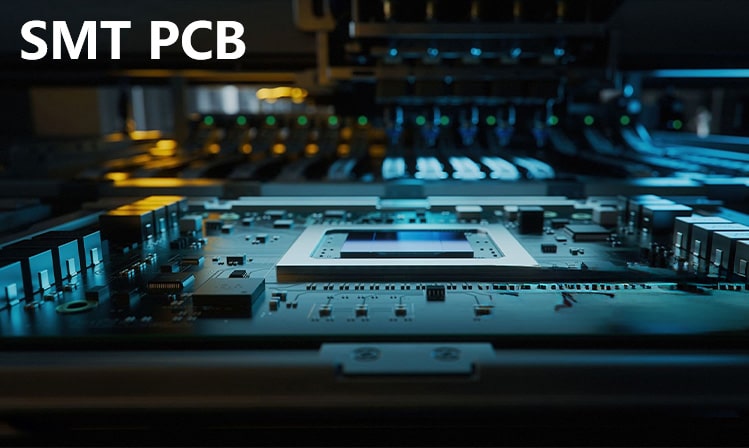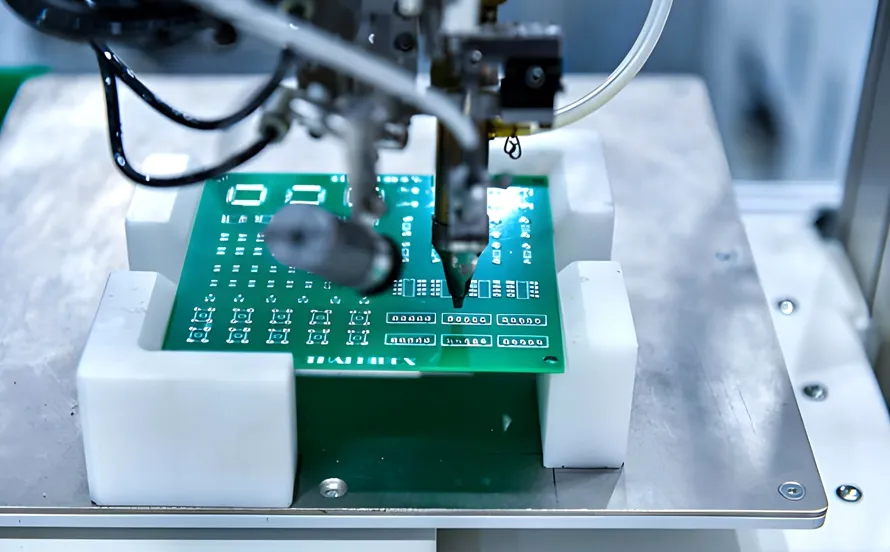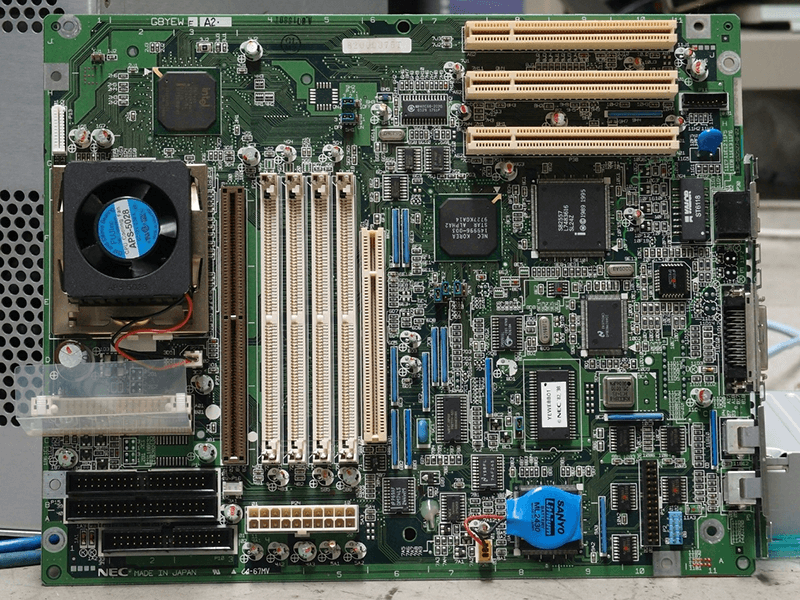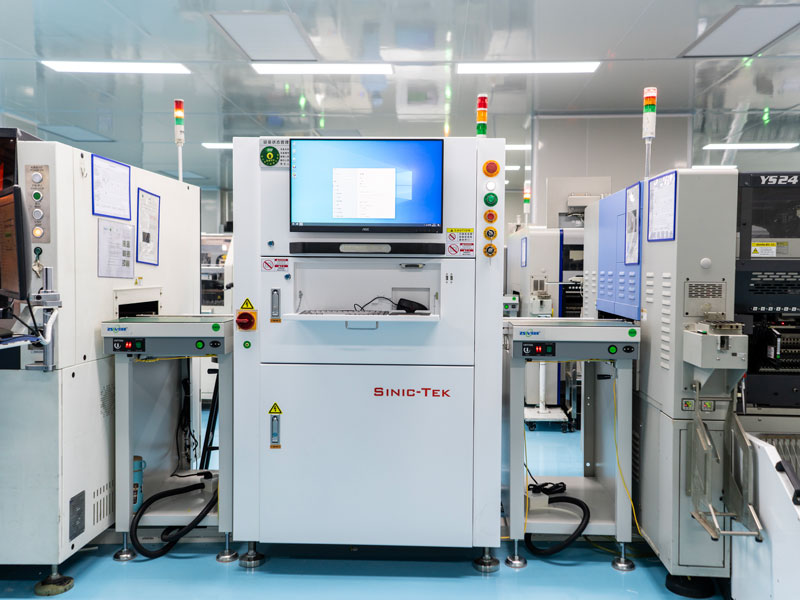
Squeegee Pressure and Print Speed on SMT Printers Squeegee pressure and print speed are the two settings that operators adjust most often and understand least. Turn the pressure up and the deposit looks fuller; run the blade faster and the cycle time drops. Both adjustments feel like improvements until patches…
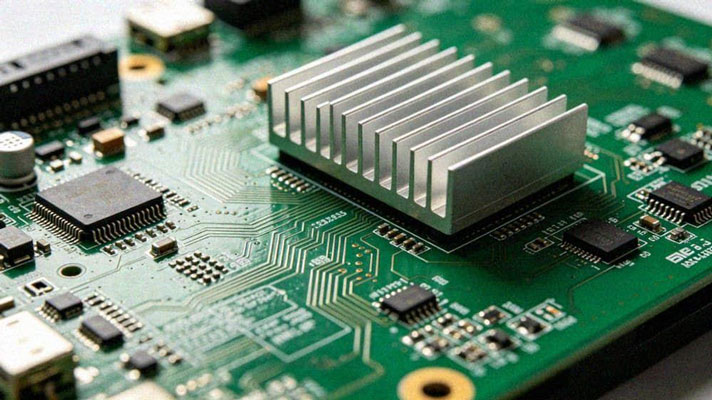
ADC Reference Noise and Layout Design Every conversion an ADC performs is a comparison against its reference, so the reference is as much a part of the measurement as the input itself. A stable input with a noisy reference produces a noisy result, and a reference that takes too long…
SD Card Interface PCB Layout Guide An SD card interface looks like a simple four wire bus, and at low speed it is. At the rates used by modern cards, however, the clock and data lines behave as a synchronous transmission line, and the socket adds a connector, a card…
Solder Mask Colour Selection for Flexible Circuits On a rigid board the solder mask colour is mostly an aesthetic and inspection question. On a flexible circuit it is a functional decision as well, because the layer that covers the conductors is part of the mechanical structure of the part and…
Thermal Vias Under Power Devices: Design and Verification A power device on a board dissipates heat that must travel through the package, through the solder, into the copper and out to the air or to the chassis. A thermal via array is the route through the board, and its design…
Incoming Inspection: Building a Program That Actually Works Incoming inspection is the checkpoint where a delivered lot of printed circuit boards is judged against the order before it enters stores, and it is the last cheap moment to find a mistake. A bare board that looks perfect can carry a…
CAN Bus Transceiver Layout and Protection A CAN bus is designed to be robust, which is exactly why problems on it are usually caused by the boards attached to it rather than by the protocol. Termination, stub length, grounding and protection are all board level decisions, and a node that…
Board Level Shielding Cans: Design, Attachment and Removal A shielding can is a metal cover soldered or clipped over a circuit that radiates or is susceptible. It is effective, it is expensive, and it is frequently specified where a layout change would have been cheaper and more reliable. What the…
HDI Structure And Cost: Type I, II And III Two boards can have the same layer count and the same outline and still differ by a factor of three in price, because the cost of a high density board is driven by how the layers are connected rather than by…
Nitrogen Reflow Atmosphere in SMT: Benefits and Cost Nitrogen is the most commonly debated consumable in a reflow department. It clearly reduces oxidation, and it clearly improves wetting on some surface finishes, but it also adds a running cost that has to be justified product by product. The question is…