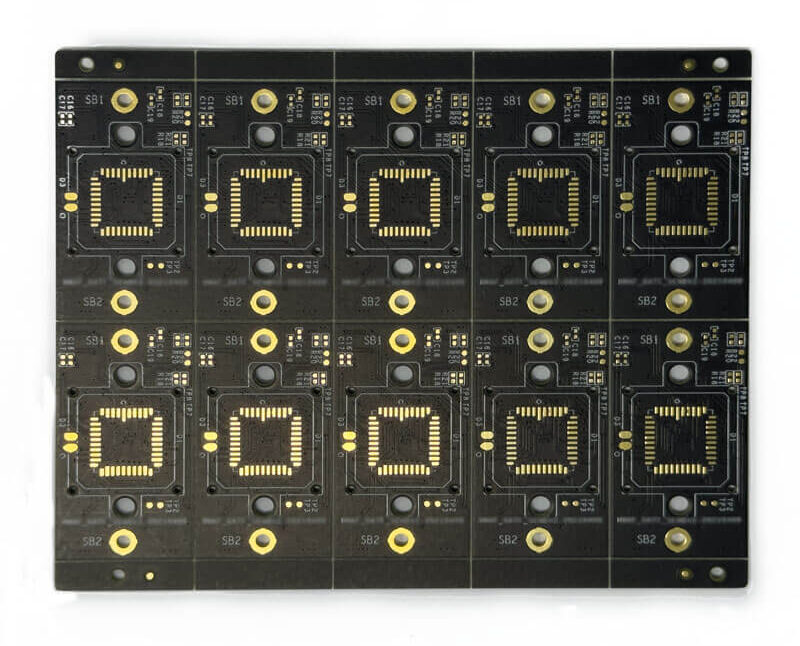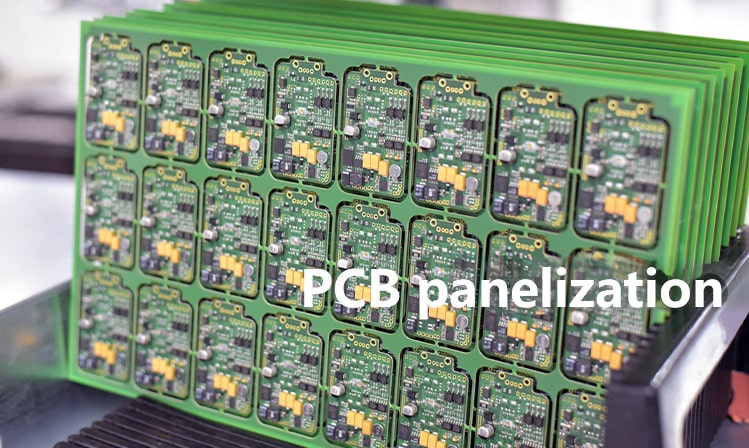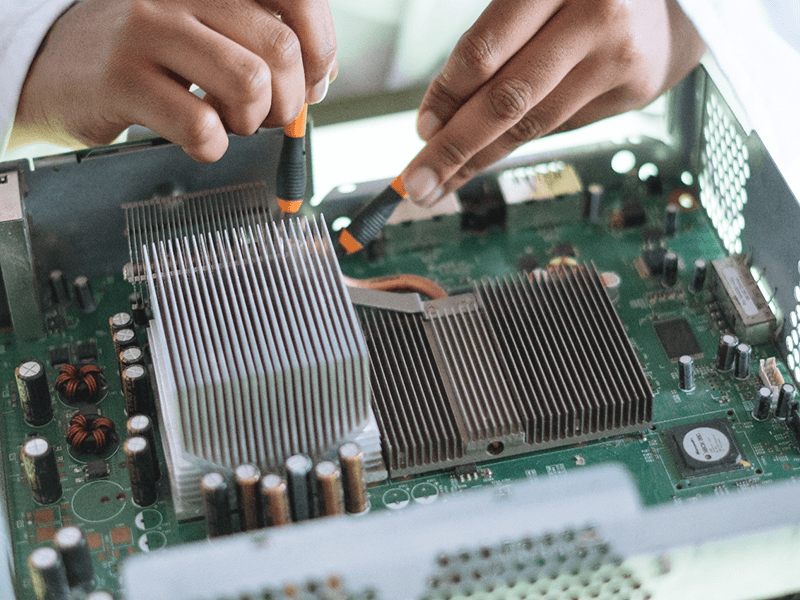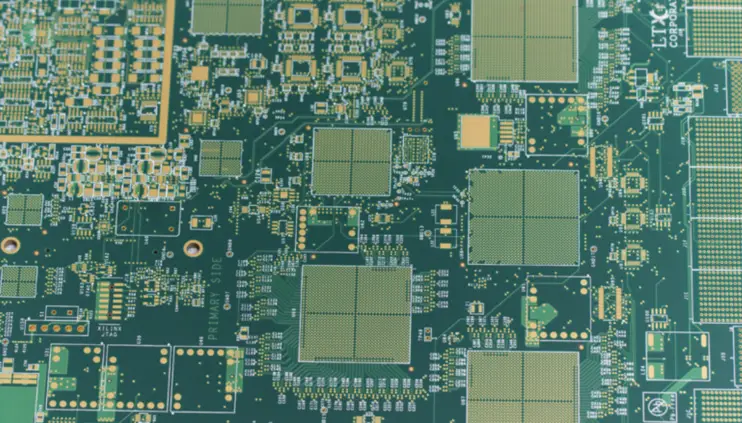
Single Sided PCB vs Double Sided PCB for Prototypes The difference between a single sided and a double sided board is not just one more layer of copper. It changes how the circuit is grounded, how the board is assembled, how much it costs and how quickly it can be…
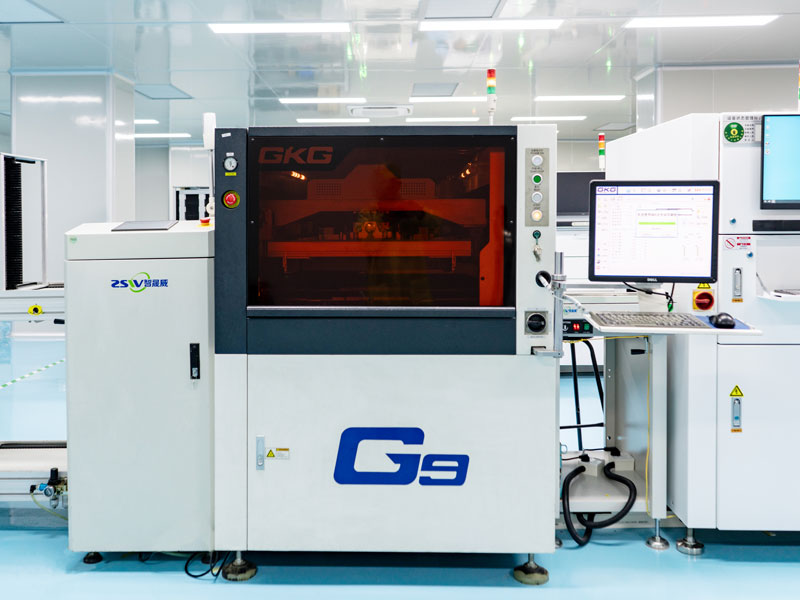
Aluminum Substrate vs Copper Core PCB: Which Base to Choose Metal core boards are used when the board itself has to carry heat away from a component. Two base materials dominate the choice: an aluminum substrate, which is inexpensive, light and adequate for most LED work, and a copper core,…
Flex Bend Radius And Dynamic Flex Life A flexible circuit that is bent once during assembly and left in place behaves very differently from one that flexes every time a lid opens. The first is a static application and almost any construction will survive it; the second is a dynamic…
Solder Ball Defects in SMT Assembly: Causes and Fixes Anyone who has inspected a reflowed board under magnification has seen them: tiny spheres of alloy scattered beside pads, sometimes loose on the mask and sometimes clinging to a component body. They look trivial, and on a benign design they often…
Ceramic Substrates for Automotive Thermoelectric Coolers A thermoelectric cooler is a solid state heat pump. Current through a junction of p type and n type semiconductor pellets moves heat from one face of the module to the other, so the same device can cool a component or stabilise its temperature…
Current Shunt Measurement and Kelvin Layout A current shunt is the simplest way to measure current: pass it through a resistor of known value and measure the voltage across it. The accuracy of the measurement, however, depends almost entirely on where the voltage is measured. A few milliohms of track…
Decoupling Capacitor Placement in HDI Boards with BGA Packages Decoupling capacitor placement used to be a routine task. The designer put a small capacitor next to every power pin, tied it to the ground plane with a short via, and moved on. In a modern high density interconnect board carrying…
Flexible Circuit Materials And Construction A flexible circuit is not a thin rigid board. It is a different construction with different materials, and the rules that govern it are written by mechanics rather than by impedance. Understanding the stackup is the first step towards designing one that survives being bent.…
Snubber Circuits and Their PCB Layout Every switching circuit contains inductance that the designer did not intend. The loop formed by the transistor, the diode, and the capacitor has a parasitic inductance measured in nanohenries, and when the current is interrupted the energy stored in that inductance has to go…
Inrush Current Limiting on Power Supply Boards Switch on a power supply and the input capacitor is empty. For a few milliseconds it looks like a short circuit, and the current that flows is limited only by the source impedance and the resistance of the wiring. The surge can be…