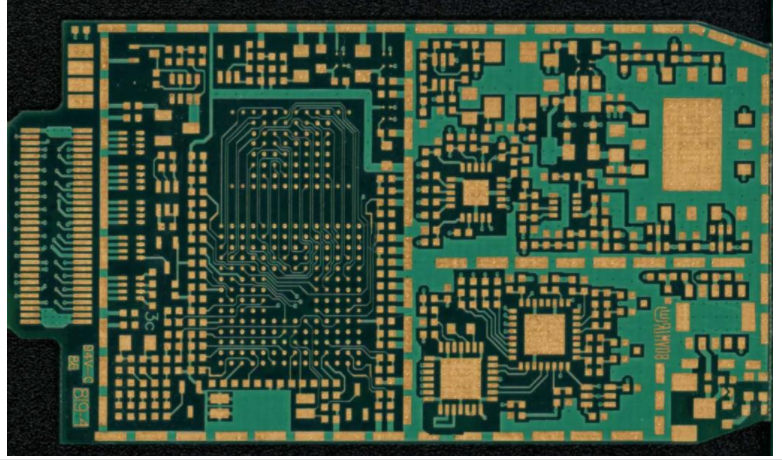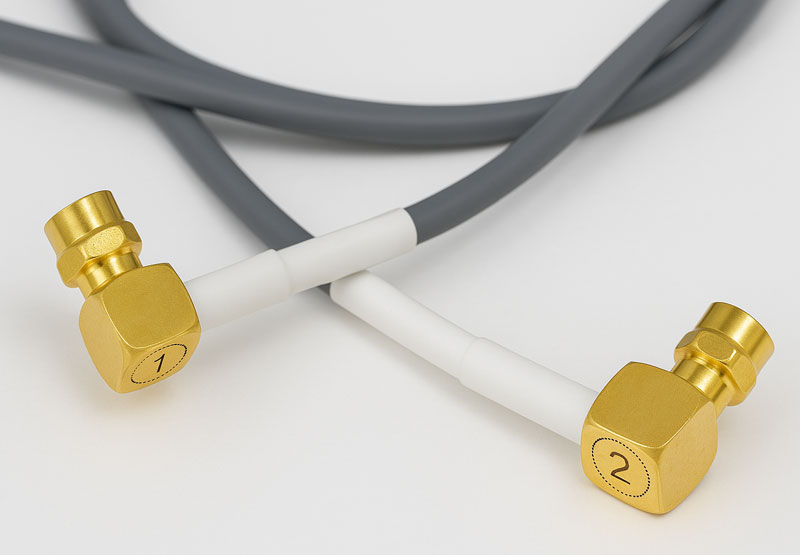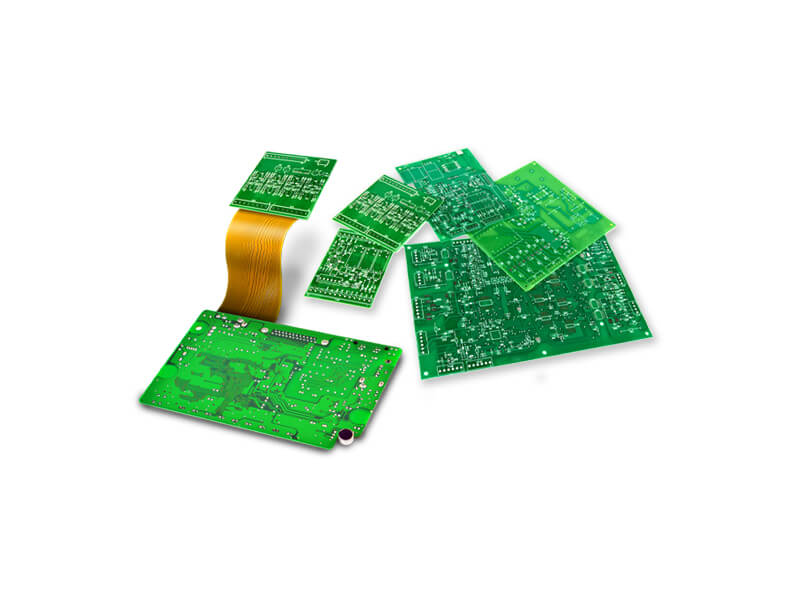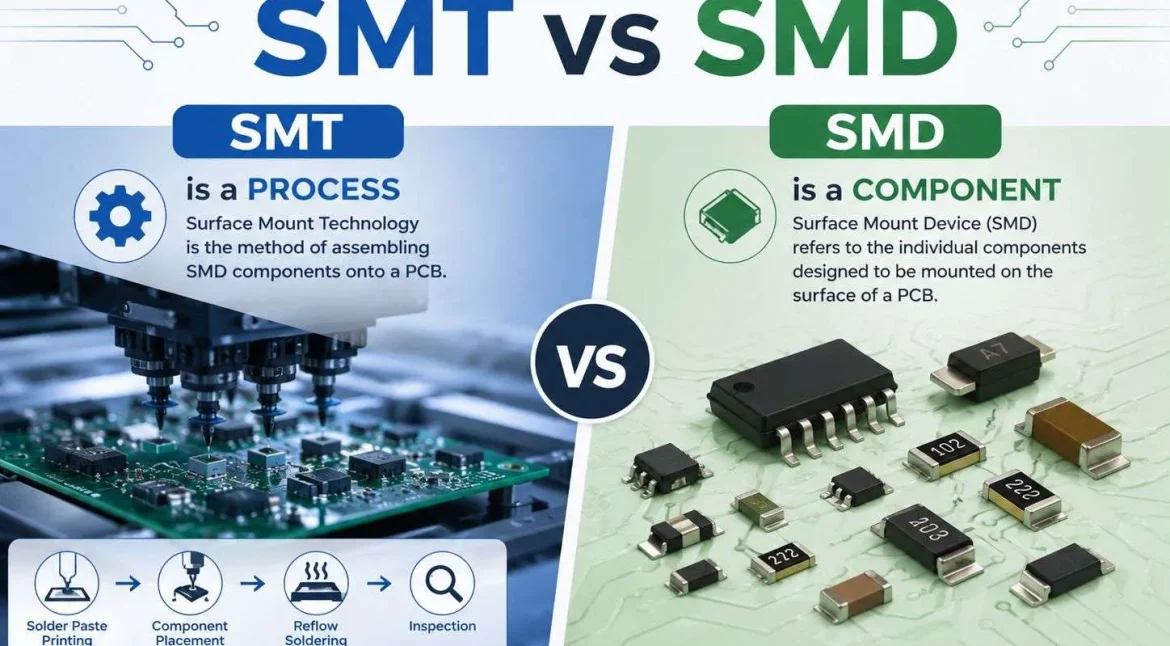
Microvia Reliability in HDI Board Design and Assembly Microvias are the small laser-drilled holes that let HDI boards pack more routing into less space, and they are also the feature most likely to fail a thermal cycling test. Because the hole is only a fraction of a millimetre deep and…
High Frequency HDI Stackup Design Rules As soon as a design needs more connections per square centimetre than through vias will allow, the stackup becomes a high density interconnect problem. The transition is not gradual: at a certain density the escape routing from a large array package simply cannot be…
Fanout Via Design: Escaping Dense Packages on a PCB Fanout is the bridge between the package and the board. Before any signal can travel across the board it has to escape the pin field of the device that drives it, and for a large ball grid array that escape is…
AI in PCB Design: What Can Be Automated and What Cannot Until recently the role of artificial intelligence in electronics was advisory. It answered questions about how to route a differential pair, what to check in a power layout, or why a signal was noisy, and the engineer applied the…
Star Ground versus Ground Loops in Mixed-Signal PCB Layout The star ground is one of the most repeated pieces of layout advice and one of the most frequently misapplied. It solves a real problem, but only in circuits where that problem exists, and it creates new ones when a solid…
Head-in-Pillow Defects: Causes, Detection, and Prevention A head-in-pillow defect is a joint that looks complete on an X-ray image and reads as open on a continuity test. The solder ball touches the solder paste but the two never coalesced, leaving a boundary that conducts intermittently at first and fails completely…
Relay Basics: How A Coil Drives A Contact An electromechanical relay is a deliberately crude device: a coil of wire, a magnetic circuit, and a set of metal contacts that open and close in air. That crudeness is exactly why it still appears on boards that also carry transistors and…
How Multilayer Design Shortens PCB Lead Time Multilayer boards are slower to build than two-layer boards, so it is counter-intuitive that a well-planned multilayer design can shorten the total delivery time. The saving does not come from the fabrication process; it comes from removing the queue time, the re-quote and…
Multiphase Regulator Design Considerations for Low Noise Rails Modern systems keep asking for more current from less board area. A processor that once needed a single rail now needs several, each with a tight tolerance, fast transient response and low noise, and all of them have to fit around the…
112G PAM4 Channel Design Rules and Loss Budget When a serial link reaches 112G PAM4, the Nyquist frequency lands at 28 GHz. At that point the printed circuit board stops behaving like a set of connected wires and starts behaving like a microwave network. Every discontinuity that was tolerable at…