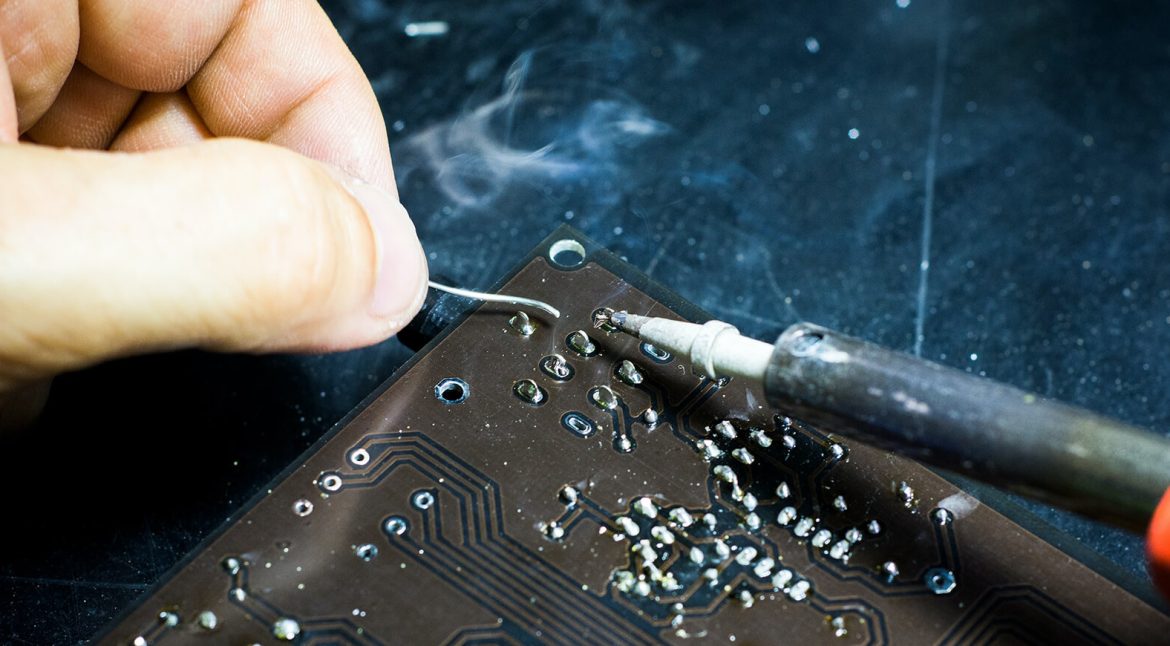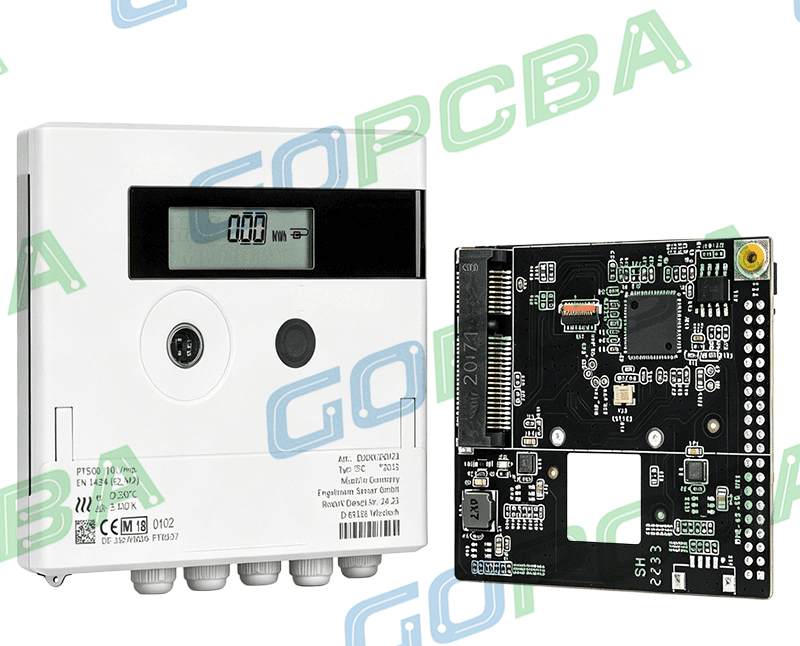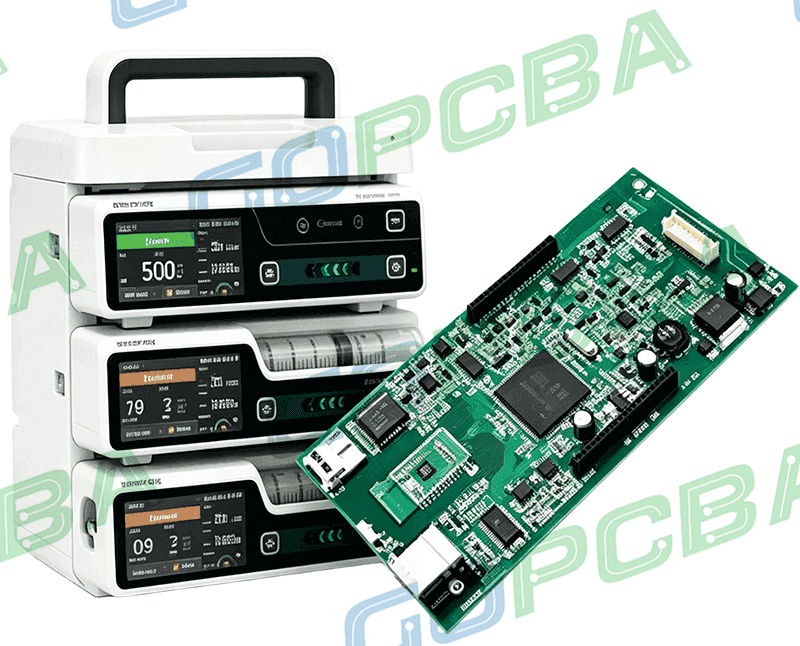
PCB Sample Board: What a Prototype Proves Before Volume A PCB sample board is the first physical article of a design, and its purpose is to be wrong in a controlled way. Every assumption made during the layout, about a footprint, a clearance, a connector height or an impedance, becomes…

Bendable Circuit Boards: Materials, Structure and Uses A bendable circuit board is not simply a thin rigid board. It is a different construction, built from materials chosen for fatigue resistance rather than stiffness, and its behaviour is governed by rules that have no equivalent in ordinary printed circuit work. Getting…
High Frequency PCB Laminate: Materials and Selection Guide Above a few hundred megahertz, the laminate stops being a passive insulator and becomes part of the circuit. Its dielectric constant sets the geometry required for a given impedance, and its dissipation factor, together with the roughness of the copper beneath it,…
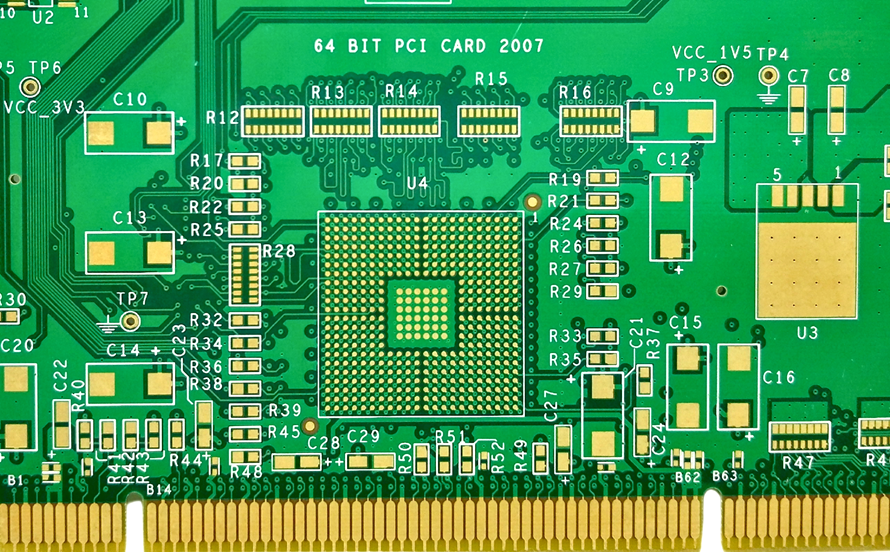
PCB Gold Fingers: Design, Plating, and Cost An edge connector is the part of a board that carries everything: power, ground, and every high-speed signal that leaves the card. On memory modules, graphics cards, and expansion cards, that interface is a row of gold-plated contacts along the board edge, and…
Double-Sided Rigid-Flex PCB: Structure and Process Products keep getting smaller while the amount of electronics inside them keeps growing, and the board has to absorb that contradiction. A double-sided rigid-flex PCB is one of the answers: it combines the flexibility of a flexible circuit with the structural rigidity of a…
Telecom PCB Cost Factors: What Drives the Price of Network Hardware Boards Telecom PCB cost is driven by requirements that do not appear on consumer boards: very high layer counts, low-loss materials, tightly controlled impedance, back-drilled vias and extensive test coverage. Each of those items adds process steps, and each…
AI Accelerator PCB: Design and Cost Factors for High-Core-Count Boards An AI accelerator PCB sits at the extreme end of board design. A single package may consume hundreds of watts and present thousands of high-speed differential pairs, and the board must deliver both the power and the bandwidth without exceeding…
Inverter PCB Design: Creepage, Isolation and Thermal Paths An inverter board is where power electronics layout stops being forgiving. The board has to carry tens or hundreds of amperes, switch them in a few tens of nanoseconds, isolate the control side from the mains side, and dissipate the losses that…
White Solder Mask PCB: Where It Helps and Where It Hurts White solder mask is chosen for one reason above all others: it reflects light. That single property makes it the standard finish for LED lighting boards and for products where a bright, clean appearance is part of the design.…
High-Frequency RF PCB: Materials, Impedance and Via Design A high-frequency RF PCB is not simply a normal board specified for a higher clock rate. Once the signal wavelength approaches the dimensions of the routing, the conductor stops behaving like a wire and starts behaving like a transmission line, and every…