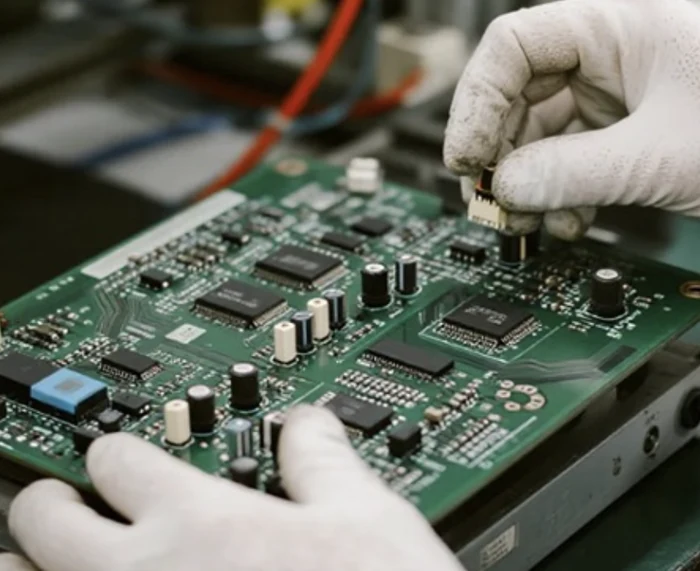
PCB Rework: A Practical Guide to Repairing Assembled Boards PCB rework is the controlled removal and replacement of a component or the correction of a solder joint on an assembled board. It is a normal part of manufacturing, not a sign that something has gone wrong in design, and every…
Wearable Technology PCB: Design and Manufacturing Constraints A wearable technology PCB is defined by its enclosure rather than by its circuit. The board has to fit a curved or very small space, survive being worn, run from a battery measured in tens of milliamp-hours, and reject the sweat and humidity…
PCB Color: Green, Black and Blue and What the Choice Affects The color of a circuit board is one of the few specifications a customer notices immediately and one of the last that engineers think about. It is not merely cosmetic: the solder mask pigment changes how the resist cures,…
HASL Surface Finish: What It Is and When to Use It HASL, or hot air solder leveling, is the surface finish that most boards received for most of the history of printed circuits. The board is dipped in molten solder, withdrawn, and blasted with hot air to remove the excess…
How to Choose a Consumer Electronics PCB Consumer products put a specific combination of pressures on a board that industrial and automotive designs do not. The enclosure is small, the unit price is negotiated down to cents, and the product still has to work after being dropped, charged in a…
Camera Module PCB: A Complete Guide Every image a phone captures passes through a board designed specifically to carry it. A camera module PCB is not a general purpose substrate with a sensor attached: it is a tightly constrained interconnect that has to carry a high speed serial link, dissipate…
FR4 Stiffeners for Flexible Circuits: Where and Why A stiffener is the part of a flexible circuit design that turns a floppy piece of polyimide into something a connector can sit on. The flex itself is too thin and too compliant to hold a plug, a switch or a mounting…
PCB Stiffeners: Types, Materials, and Design Rules A flexible circuit is designed to bend, and there are places where that is exactly what you do not want. Around a connector, under a component pad, or at the point where a board is inserted into a housing, the same flexibility that…
General-Purpose PCB: Types, Applications and Design Trade-offs Most electronic products are built on boards that were never designed for one specific product. They use standard laminates, common processes and conventional layer counts, and they are chosen because they are cheap, available and adequate. That category, the general-purpose PCB, covers an…
Choosing a High-Performance Laminate: Polyimide, Low-Loss and Thermal Grades Materials chosen for harsh environments are not simply better versions of ordinary laminate. They are different chemistries, each solving one problem well and accepting a penalty elsewhere. A high-performance laminate picked for thermal conductivity is not the same material that solves…