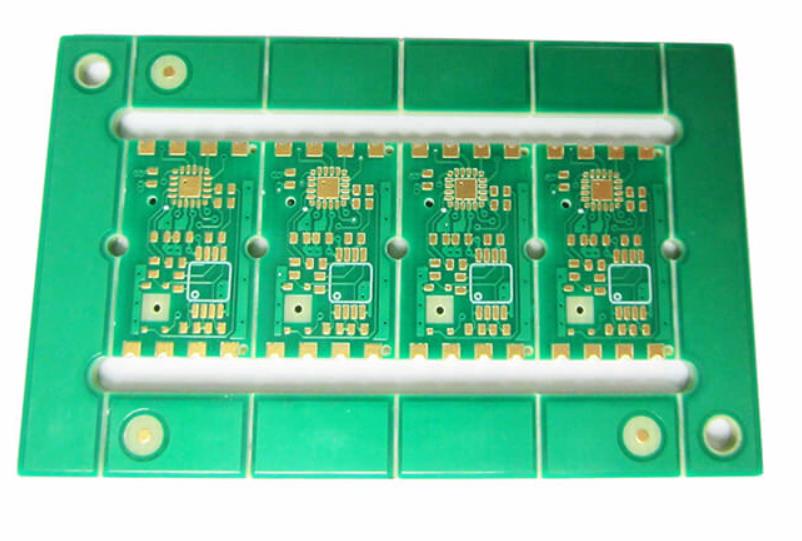
Wire-Bondable Soft Gold PCB: Surface Finish for Bond Reliability Wire bonding joins a bare die to a board with fine metal wire, usually gold or aluminium. The joint is formed by heat, pressure and ultrasonic energy rather than by solder, and the reliability of that joint depends almost entirely on…

Medical FR4 PCB: Requirements, Documentation and Cost Drivers A medical FR4 PCB is usually the same laminate as any other FR4 board. What changes is the documentation, the inspection and the cleanliness requirements applied to it, and those changes are what move the price. Understanding where the cost sits lets…
PCB Silkscreen: Process, Materials and Design Rules The PCB silkscreen is the printed layer that carries reference designators, polarity marks, connector pin numbering and the board revision. It is the least electrically significant layer on the board and the one most often read by the people who assemble, test and…
Stepped Rigid-Flex Board: Design Guide for Cavity and Step Structures A stepped rigid-flex board changes thickness across the same outline. A rigid section may be four layers thick, the flex section two, and the components may sit in a cavity milled into the structure so that total height stays within…
Embedded Component PCB: Placing Parts Inside the Board An embedded component PCB carries some of its parts inside the board rather than on the surface. The components, usually resistors and capacitors and occasionally an active die, are placed on an inner layer during lamination and buried under the layers above.…
Polyimide PCB Guide: Properties, Applications and Manufacturing Polyimide appears twice in board design, and the two uses are often confused. As a base film it is the standard substrate for flexible circuits. As a laminate it is a high temperature alternative to epoxy glass for rigid and rigid-flex boards that…
CEM-1 PCB Material: Properties and When to Use It CEM-1 occupies a middle ground that many designers never consider and many buyers should. It is cheaper than FR-4, far more robust than FR-2, and punchable in a press rather than drilled, which makes it the material of choice for a…
Bent Circuit Boards vs Flexible PCBs: What Differs The two terms are often used interchangeably, and they describe different things. A bent circuit board is a rigid board that has been formed into a shape. A flexible PCB is a board made from a material that bends by design. The…
Mobile Phone PCB: Design and Construction A phone board is the most demanding consumer circuit board in volume production. It carries a processor, a radio, a power management system, cameras, display and audio in a volume smaller than a credit card, and it has to survive being dropped. Almost every…
Power Bank PCB Design: Components, Layout, Protection A power bank is a battery, an enclosure, and a small circuit board that decides whether the product is safe, efficient, and durable. That board manages power distribution, regulates voltage, protects the cell, and handles the interfaces the user touches. Designing it well…