Flux Acid Value Control: 7 Rules for Consistent Soldering Acid value is a laboratory number that describes how much acidic material is present in a flux, expressed as the amount of alkali needed to neutralise a known weight of it. It is one of the few measurements that predicts how…
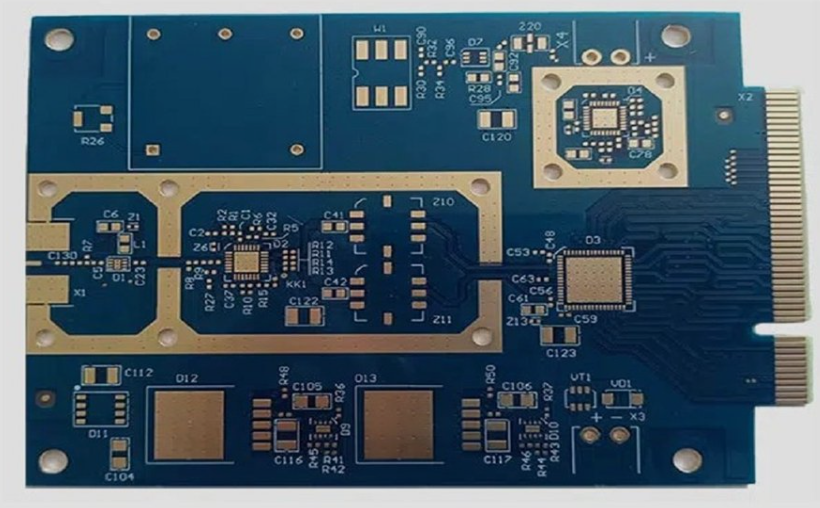
Plating Rack Maintenance for PCB Plating Lines: 7 Rules Every panel in an electroplating line is held by a rack or a jig, and that rack is part of the electrical circuit. The current enters through the rack contacts, passes through the panel and leaves at the other end. Any…
Flux Spitting in Wave Soldering: Causes and Controls Flux spitting is the ejection of flux droplets from the applicator that land on areas of the board where they were not intended. The droplets appear as isolated spots, sometimes with a dark ring, and they are usually seen on the top…
Microvoids in Plated Copper: Detection and Root Causes A microvoid is a small cavity inside plated copper, typically a few micrometres across and often located where the barrel meets the surface pad or an inner layer connection. It is inside the copper rather than between the copper and the resin,…
Component Skewing After Reflow: Causes and Corrections Component skewing is a rotation of a component about its own centre during reflow, so that a part placed accurately ends up sitting at an angle to its pads. On a two terminal chip component the rotation is easy to see; on a…
Flux Webbing Between Pads: Causes and Removal Steps Flux webbing is a thin film of flux residue that has dried in a stretched sheet between two adjacent pads, usually spanning the gap rather than sitting on either surface. It looks like a membrane and, because it bridges the gap, it…
Gap Filler Dispensing for PCB Thermal Paths: 6 Rules A gap filler is a soft, heavily loaded polymer that is dispensed into the space between a board and a metal housing, frame or heat spreader. Unlike a thermal pad, it is applied as a liquid or a paste, so it…
UV Cure Verification for PCB Adhesives and Coatings: 7 Rules A UV cure is a chemical reaction started by light rather than by heat. An adhesive or coating contains a photoinitiator that absorbs ultraviolet energy and begins the polymerisation, and the reaction then runs on its own. That is why…
Shield Termination to PCB Ground: 7 Rules for a 360 Degree Bond How a cable shield is terminated decides whether the shield works. A shield that is connected to the board by a single wire, often called a pigtail, looks like a proper connection and behaves like an inductor. At…
Solder Sleeve Splices for Shielded Cables: 6 Process Rules A solder sleeve is a length of heat shrink tubing with a ring of solder preform and two rings of sealing adhesive inside it. When heat is applied the tubing shrinks onto the conductors, the solder melts and joins them, and…