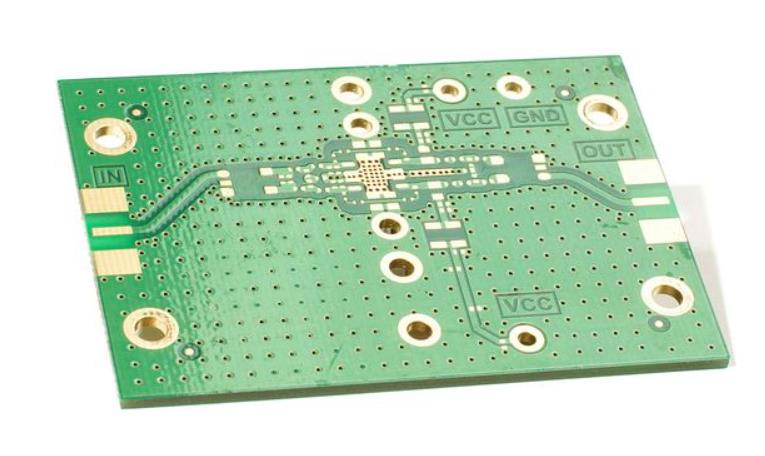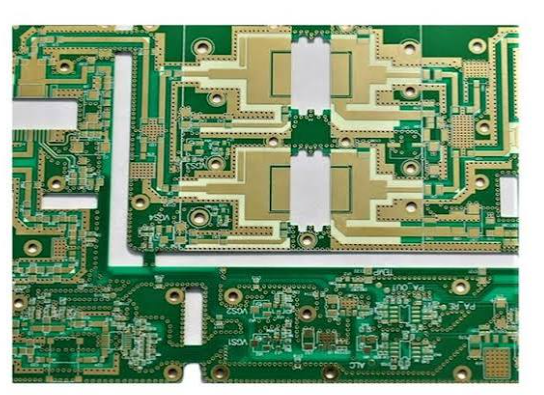
Impedance Control PCB Design: Stackup, Tolerance and Test From Optional to Mandatory There was a period when controlled impedance was a specification reserved for radio frequency boards and a handful of demanding digital interfaces. That period is over. As edge rates have steepened and data rates have risen, impedance control…
Direct Plated Copper in PCB Fabrication: Process and Reliability The Step That Decides Whether a Via Conducts Every plated through hole in a printed circuit board depends on a thin conductive layer being formed on the drilled hole wall before electroplating can build the copper up to its final thickness.…
Ceramic PCB Basics: Materials, Processes and Selection When FR-4 Is the Wrong Answer Consumer and industrial electronics are built on glass fibre epoxy laminates, and for the overwhelming majority of products that is correct. But as power density rises, feature sizes shrink and operating environments become harsher, the limitations of…
Wireless Module PCBA Assembly: RF, Quality and Cost Where Radio Performance Is Decided Wireless modules are now embedded in almost everything: IoT sensors and gateways, industrial monitoring, smart home products, wearables and consumer devices. Whatever the radio technology, whether Wi-Fi, Bluetooth, LoRaWAN, NB-IoT, LTE or 5G, the final performance of…
Quick Turn PCB Sourcing: China vs United States vs Europe What a Real Quick Turn Service Has to Deliver Speed alone does not make a quick turn PCB service useful. A supplier who promises twenty four hours but cannot answer a design question for two days, or who can build…
Eighteen Layer PCB Boards: Stackup, Process and Cost Where High Layer Counts Earn Their Cost As systems integrate more interfaces, run faster and demand tighter power integrity, the multilayer board has to grow. An eighteen layer board sits in the territory where the additional layers are no longer about fitting…
Why Impedance Changes Along a High Speed Trace A Trace Is Only a Transmission Line While It Behaves Like One Once signal edges become fast enough that the rise time is short compared with the trace length, the interconnect stops behaving like a wire and starts behaving like a transmission…
Low MOQ PCB Manufacturing: Prototyping From a Single Piece Why Minimum Order Quantity Matters More Than It Used To Hardware development has accelerated. Design teams iterate faster, startups validate products before committing capital, and engineering groups run several parallel variants to see which one performs. In that environment, a supplier…
Automotive PCB for EV, ADAS and Powertrain Systems Ten to Fifteen Years in an Engine Bay Automotive electronics operate under constraints that consumer and even industrial products do not face. A board in a vehicle must function across a temperature range from minus 40 to above 125 degrees Celsius, survive…
Turnkey Four Layer PCB Manufacturing and Assembly Four Layers and One Supplier The four layer board has become the default structure for a large part of industrial, automotive, power and embedded electronics. Compared with a two layer board it delivers a genuine ground plane, a dedicated power plane and the…