Surface Finishes: ENIG, OSP, HASL and Silver Why a Finish Is Needed Copper oxidises, and an oxidised pad does not wet. The surface finish is the thin layer that protects the copper between fabrication and soldering and that allows the solder to form a joint. Every finish is a compromise…
Microsection Analysis of Plated Holes What a Microsection Shows A microsection is a cross section through a plated hole or a via, prepared by encapsulating a sample, grinding and polishing it to a plane, and examining it under a microscope. It shows the copper plating on the barrel wall, the…
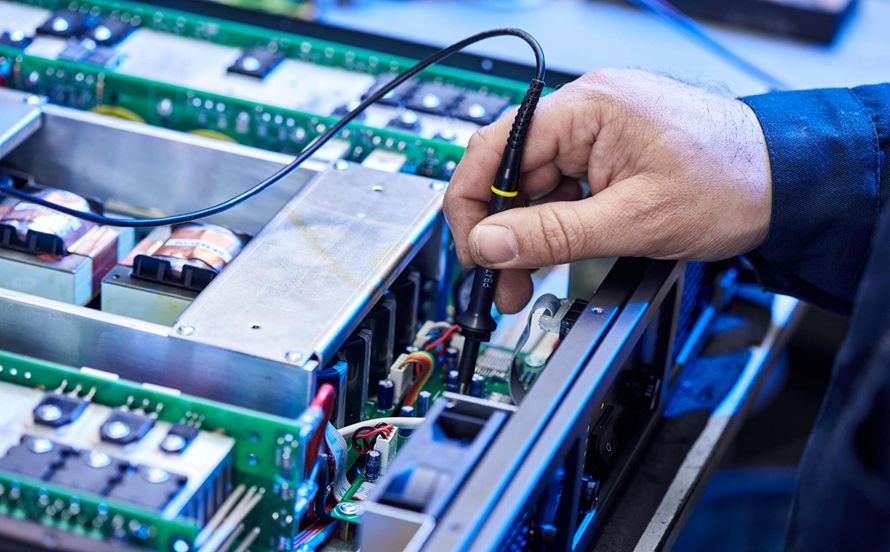
Hipot and Insulation Resistance Testing Two Tests, Two Purposes Insulation resistance and hipot tests are often mentioned together and they measure different things. The insulation resistance test applies a modest dc voltage and measures the resistance of the insulation, which detects contamination, moisture and a partial breakdown path. The hipot,…
Vibration and Shock Testing for Assemblies What Vibration Does to a Board A board mounted in a product is a plate supported at its edges or at a few points, and a plate has resonances. When the excitation matches a resonance, the displacement is amplified far beyond the input, and…
Thermal Cycling and Reliability Testing What Thermal Cycling Tests Thermal cycling takes an assembly through repeated temperature extremes and looks for the failures that the expansion and contraction cause. Because the board, the solder and the components expand at different rates, every cycle strains the joints, the plated barrels and…
Aqueous and Solvent Cleaning of Assemblies Why Cleaning Is a Decision Cleaning an assembly removes flux residue, particulates and other contamination that can cause corrosion, leakage currents and adhesion failures. It is not automatically necessary: a no clean flux is designed to leave a residue that is safe to leave…
Crimp Quality and Pull Testing Why Crimps Matter A crimp is a cold weld formed between the wire strands and the terminal when the tool compresses them. Done correctly, it is more reliable than a soldered joint, because it is ductile, it resists vibration and it does not embrittle the…
Connector Selection for PCB Assemblies Why Connectors Decide Reliability A connector is often the component most likely to fail in a product, because it carries the mechanical loads as well as the signals. It is mated and unmated, it is pulled and bent, it is exposed to the environment, and…
Heatsink Attachment and Thermal Interface The Thermal Path Heat leaves a component through a chain of materials, and the weakest link decides the temperature. From the die the heat travels through the package, through the interface between the package and the heatsink, into the heatsink and then to the air.…
Potting and Encapsulation of Assemblies Why Pot a Board Potting and encapsulation surround the assembly with a polymer so that the electrical function is protected from the environment. The reasons are mechanical, chemical and electrical: to protect against moisture, dust, salt and chemicals; to resist vibration and shock; to prevent…