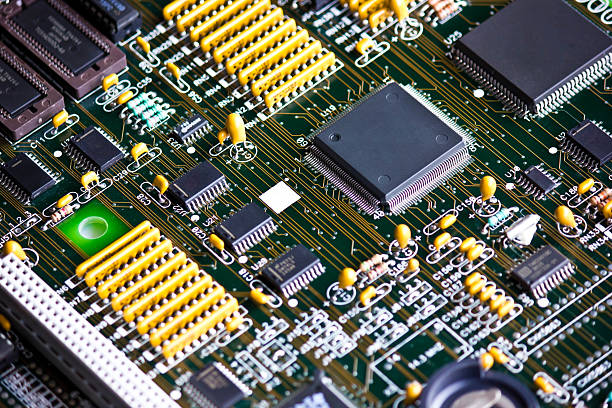
Millimeter Wave Small Cell Base Station PCB As 5G networks continue expanding into dense environments such as urban buildings, industrial parks, transportation hubs, and smart venues, the balance between the high bandwidth potential of millimeter wave frequencies and reliable signal coverage has become a major engineering challenge. The same…
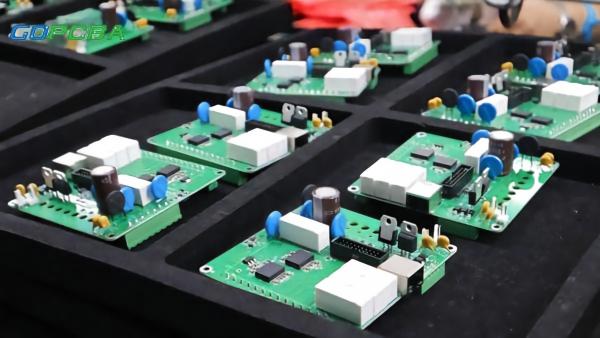
10-Layer PCB1.6mm Controlled Impedance PCB for High-Speed Electronics As a critical platform for modern electronic systems, PCBs face increasingly demanding requirements for signal integrity, routing density, electrical stability, and manufacturing precision. A 10-Layer PCB with a standard 1.6mm finished thickness combines multilayer routing capacity with controlled electrical characteristics, making it…
16-Layer PCB 5.0mm Ultra-Thick PCB: Manufacturing Challenges, Benefits and Applications PCB manufacturing technology continues to play a critical role in advancing modern electronic systems. As electronic equipment faces increasing demands for high power, high reliability, complex functionality, and compact integration, a 16-Layer PCB with a 5.0mm overall thickness can…
2.5 Mil Fine Line PCB Circuit density has become an important indicator of PCB performance as electronic products continue to become smaller and more integrated. A 2.5 Mil Fine Line PCB provides exceptionally precise circuit geometry, allowing electrical interconnections to be placed within a highly compact area. This capability…
Professional Mixed Material PCB Supplier A Mixed Material PCB combines different substrate materials within the same circuit board to achieve specific electrical, thermal, mechanical, or high-frequency performance requirements. Because different materials can provide complementary properties, mixed material PCB technology has become increasingly important in complex electronic systems. For demanding…
PTFE High-Frequency PCB Manufacturing As electronic systems continue to operate at higher frequencies and data rates, PCB materials have an increasingly direct impact on signal integrity, transmission loss, impedance stability, and overall system reliability. Conventional FR-4 materials remain suitable for many electronic products, but demanding RF and microwave applications…
Automotive LiDAR FPC As intelligent driving technologies continue to evolve, LiDAR has become an increasingly important sensor for environmental perception, object detection, and autonomous driving functions. At the same time, the internal structure of LiDAR modules is becoming more compact and complex, creating higher requirements for electrical interconnection and…
How to Choose Copper Thickness for Heavy Copper PCBs Copper thickness is one of the most important factors affecting PCB current capacity, thermal performance, reliability, and manufacturing cost. Although copper is only one part of a printed circuit board, its thickness directly influences how much current a conductor can…
Custom PCB for Power Monitoring Systems As power systems continue to evolve toward greater intelligence, automation, and digitalization, power monitoring systems function as the sensing and communication center of modern electrical networks. They continuously capture changes in voltage, current, temperature, and other operating parameters. At the hardware level, a…
Rail Transit Control Board PCB In modern rail transit systems, control boards function as a central nervous system, managing train operation, signal transmission, equipment monitoring, and system coordination. The PCB inside these control boards provides the fundamental electrical and mechanical platform that enables these functions to operate reliably. The same…