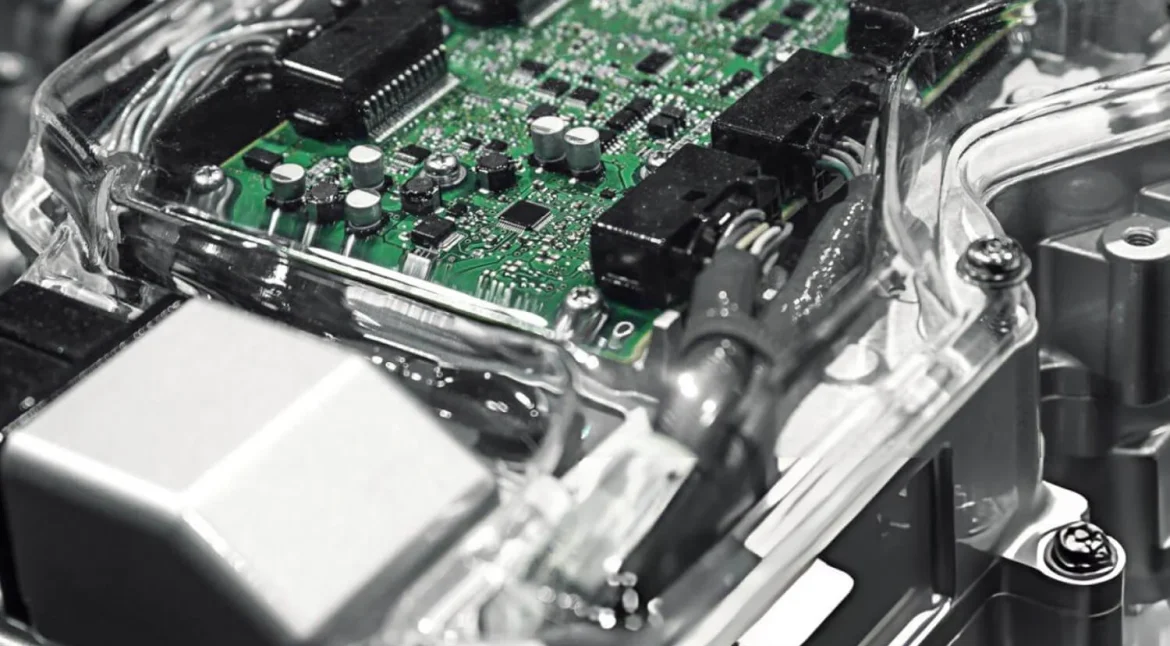
As modern vehicles become increasingly connected, electrified, and intelligent, automotive PCBs (Printed Circuit Boards) have become a critical foundation for automotive electronic systems. From engine control units (ECUs) and battery management systems (BMS) to advanced driver-assistance systems (ADAS), infotainment, sensors, and vehicle networking, PCBs provide the electrical interconnection and mechanical platform required for reliable electronic operation.
Compared with conventional PCBs used in consumer electronics, automotive PCBs must operate reliably under significantly more demanding conditions, including temperature fluctuations, vibration, mechanical shock, humidity, chemical exposure, electromagnetic interference, and long service-life requirements.
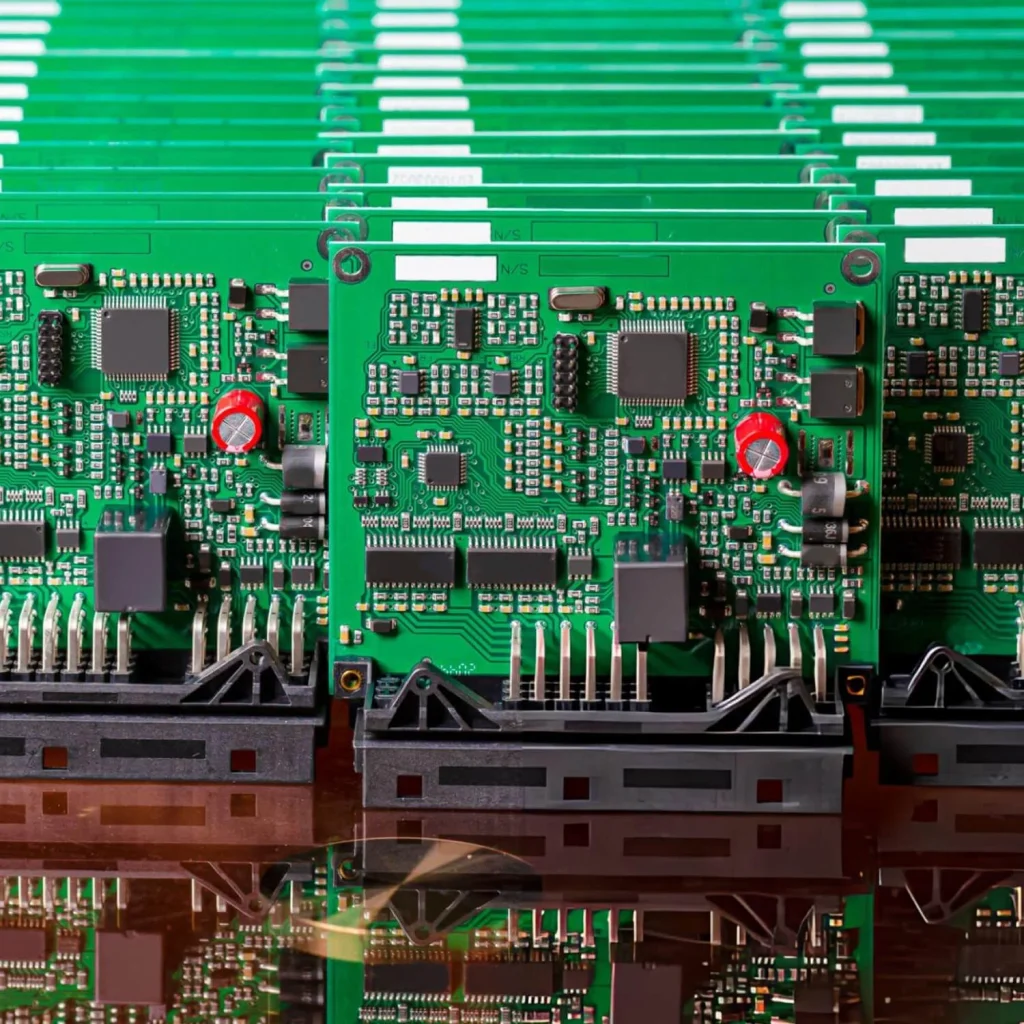
For this reason, automotive PCB manufacturing requires carefully selected materials, controlled fabrication processes, advanced assembly technologies, comprehensive testing, and strict quality management.
This article explains what an automotive PCB is, the major types of automotive PCBs, key manufacturing and PCBA processes, applicable industry standards, quality requirements, and how Kingda supports automotive electronics manufacturers with integrated PCB and PCBA solutions.
What Does an Automotive PCB Board Mean?
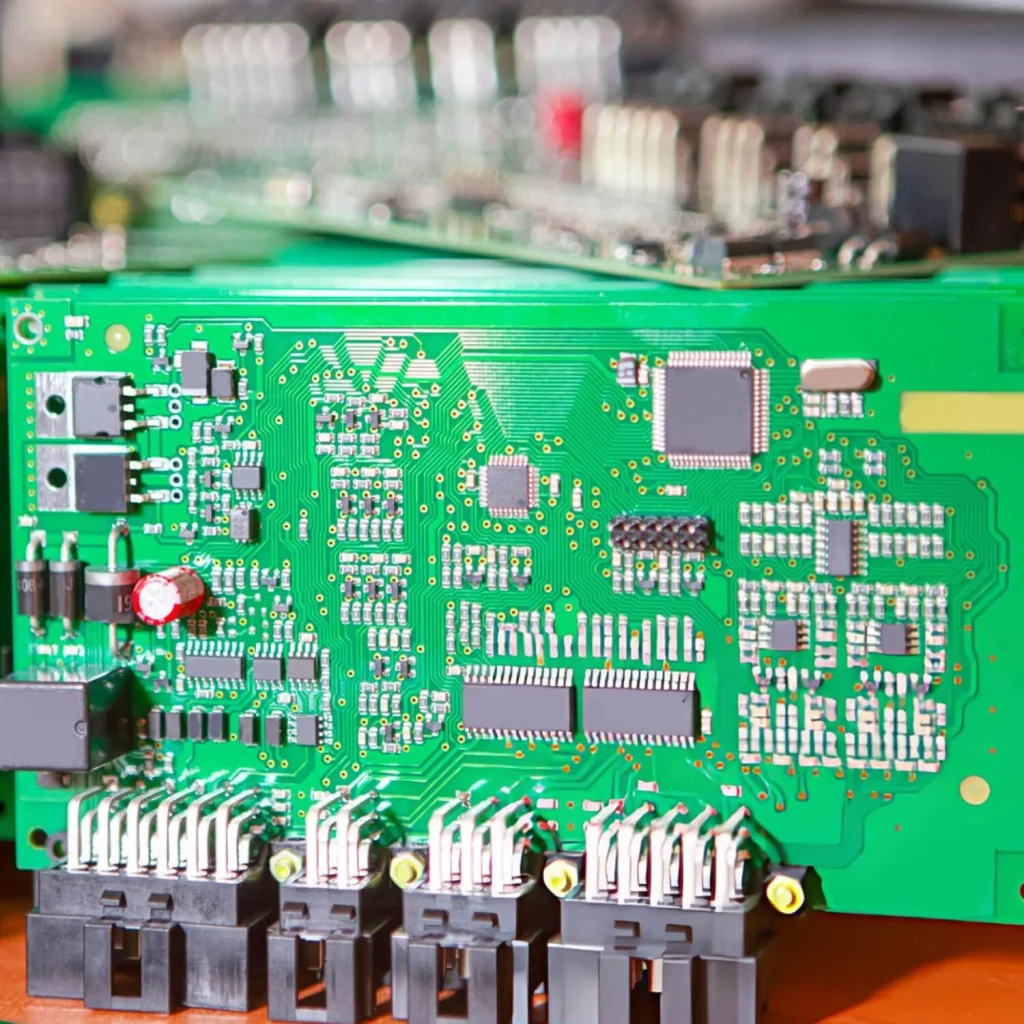
An automotive PCB is a printed circuit board specifically designed and manufactured for electronic systems used in vehicles. It consists primarily of conductive copper layers, insulating dielectric materials, solder mask, surface finishes, and other structures that provide electrical connections and mechanical support for electronic components.
Automotive PCBs are used throughout modern vehicles to support functions such as:
- Engine Control Units (ECUs)
- Battery Management Systems (BMS)
- Advanced Driver-Assistance Systems (ADAS)
- ABS and airbag control systems
- Transmission control systems
- Automotive lighting
- Infotainment systems
- Vehicle networking and communication
- Sensors and camera modules
- On-board chargers (OBC)
- DC-DC converters
- Electric powertrain systems
Unlike standard commercial PCBs, automotive circuit boards must be engineered around the specific electrical, thermal, mechanical, and environmental conditions of their intended vehicle application.
Key Features of Automotive PCBs
A reliable automotive PCB typically requires:
- High-reliability design
- Wide operating-temperature capability appropriate to the application
- High resistance to vibration and mechanical shock
- Resistance to moisture and automotive chemicals
- Controlled signal integrity and impedance
- Effective thermal management
- High solder-joint reliability
- Strong process traceability
- Consistent manufacturing quality
- Long-term operational reliability
For safety-critical applications, PCB design and manufacturing must also be integrated with the overall functional-safety strategy of the electronic system.
Main Types of Automotive PCBs
Different automotive applications require different PCB structures and materials. The most common technologies include rigid PCBs, flexible PCBs, rigid-flex PCBs, metal-core PCBs, HDI PCBs, and high-frequency PCBs.
1. Rigid PCBs
Rigid PCBs are widely used in automotive electronic modules because of their mechanical stability and durability.
Typical applications include:
- Engine control units
- Transmission control modules
- Body control modules
- Power distribution systems
- Automotive lighting
- Infotainment systems
High-Tg FR-4 and other application-specific laminates may be selected where elevated temperature performance is required.
2. Flexible PCBs
Flexible PCBs (FPCs) use flexible substrates, commonly polyimide-based materials, allowing the circuit to bend or conform to limited installation spaces.
They are suitable for:
- Automotive displays
- Sensors
- Steering-wheel electronics
- Lighting modules
- Camera modules
- Compact wiring applications
Flexible circuits can reduce wiring complexity and save valuable installation space.
3. Rigid-Flex PCBs
Rigid-flex PCBs combine rigid sections with flexible circuit sections. This allows designers to create three-dimensional electronic assemblies while reducing the need for additional cables and connectors.
Typical applications include:
- Automotive camera systems
- ADAS modules
- Display assemblies
- Sensor modules
- Compact control units
Rigid-flex technology can be particularly useful where space, weight, reliability, and mechanical flexibility must be considered simultaneously.
4. Metal-Core and High-Power PCBs
Metal-core PCBs, including aluminum-based and other metal-backed constructions, provide improved thermal dissipation compared with conventional PCB structures.
They are commonly considered for:
- LED automotive lighting
- Power electronics
- Motor control
- Battery-related electronics
- High-power modules
Thermal performance should always be evaluated according to the actual power density and operating environment rather than relying solely on the PCB material specification.
5. HDI PCBs
High-Density Interconnect (HDI) PCBs use technologies such as microvias, fine lines, and high-density interconnections to increase routing density while reducing board size.
HDI can benefit automotive applications requiring:
- Compact electronic modules
- High pin-count components
- High-speed interfaces
- Advanced sensor systems
- ADAS electronics
Key Manufacturing Processes of Automotive PCBs
The manufacturing process for automotive PCBs involves multiple controlled stages. Each stage contributes to the final reliability and electrical performance of the board.
1. Material Selection and Substrate Preparation
Material selection should be based on the application’s:
- Operating temperature
- Electrical performance
- Mechanical requirements
- Thermal requirements
- Frequency range
- Reliability target
- Environmental exposure
Depending on the application, manufacturers may use high-Tg FR-4, low-loss laminates, polyimide, aluminum-based materials, copper-based materials, or other specialized substrates.
Surface finishes such as ENIG, OSP, immersion tin, and selective gold may be selected according to solderability, corrosion resistance, contact requirements, and application conditions.
2. Inner-Layer Circuit Fabrication
For multilayer PCBs, the inner-layer circuit pattern is transferred to the copper surface and subsequently etched.
Advanced imaging technologies such as Laser Direct Imaging (LDI) can support the production of fine-line and high-density circuit patterns.
Manufacturing control focuses on:
- Trace width
- Trace spacing
- Registration
- Copper thickness
- Etching consistency
- Surface condition
For high-speed automotive applications, impedance control is also an important consideration.
3. Multilayer Lamination
Multilayer boards are constructed by combining copper layers, cores, and prepreg materials through controlled lamination.
Critical parameters include:
- Layer alignment
- Lamination temperature
- Pressure
- Heating and cooling profiles
- Resin flow
- Dielectric thickness
Good lamination control helps minimize risks such as delamination, voids, layer misalignment, and dimensional instability.
4. Precision Drilling and Via Formation
Mechanical drilling and laser drilling are used according to the PCB structure.
For HDI applications, laser-drilled microvias can provide high-density interconnections between adjacent layers.
Important manufacturing controls include:
- Hole diameter
- Hole position
- Hole-wall quality
- Aspect ratio
- Copper plating thickness
- Via reliability
5. Copper Plating and Surface Finishing
After drilling, conductive copper is deposited on the hole walls and circuit surfaces.
Depending on the design, the PCB may then receive a surface finish such as:
- ENIG
- OSP
- Immersion Tin
- Immersion Silver
- Selective Gold
The selected finish should match the assembly process, contact requirements, environmental conditions, and product life-cycle requirements.
Automotive PCB Assembly Process
PCB fabrication is only one part of the automotive electronics manufacturing process. The assembled PCBA must also meet stringent requirements for component placement, soldering, inspection, and functional performance.
Solder Paste Printing
For SMT assembly, solder paste printing must be carefully controlled to ensure consistent solder volume and accurate deposition.
Key factors include:
- Stencil design
- Aperture dimensions
- Solder paste condition
- Printing pressure
- Printing speed
- PCB support
- Environmental conditions
Poor solder paste printing can lead to insufficient solder, solder bridging, voiding, and other downstream defects.
High-Precision SMT Placement
Modern automotive electronic modules often use fine-pitch and high-density components.
Automated placement equipment provides controlled component positioning and repeatability, while programming and feeder management help maintain consistent assembly quality.
Reflow Soldering
Automotive PCB assemblies commonly use lead-free reflow soldering.
The reflow profile must be optimized according to:
- PCB materials
- Component specifications
- Solder paste
- Component thermal sensitivity
- Board thermal mass
A properly controlled profile helps minimize solder-joint defects and thermal damage to components.
Through-Hole Assembly
Some automotive products still use Through-Hole Technology (THT) for components requiring additional mechanical strength or specific electrical characteristics.
Depending on the product, selective soldering or wave soldering may be used.
Comprehensive Automotive PCBA Inspection and Testing
Automotive electronics require a comprehensive inspection strategy rather than relying on a single inspection method.
Automated Optical Inspection (AOI)
AOI can detect visible assembly defects such as:
- Component misalignment
- Missing components
- Incorrect component orientation
- Solder bridging
- Insufficient solder
- Solder-related defects
X-Ray Inspection
X-ray inspection is particularly valuable for inspecting hidden solder joints, including:
- BGA connections
- QFN packages
- Voids
- Hidden solder bridges
- Internal connection defects
In-Circuit Testing
ICT can be used to verify electrical characteristics, component values, connectivity, and specific circuit conditions depending on the test fixture and product design.
Functional Testing
Functional testing evaluates whether the completed PCBA performs its intended electrical functions under defined operating conditions.
For automotive electronics, functional testing can be particularly important for:
- BMS boards
- Control modules
- Communication modules
- Power electronics
- Sensor systems
Environmental and Reliability Testing
Depending on the application, automotive PCBAs may undergo:
- Thermal cycling
- High-temperature testing
- Humidity testing
- Vibration testing
- Mechanical shock testing
- Electrical stress testing
- EMC testing
- Insulation and dielectric testing
The exact test conditions should be determined according to the product specification and applicable automotive standards.
Automotive PCB Process Standards and Quality Requirements
Automotive PCB manufacturing involves multiple standards, and the applicable requirements depend on the product, component, vehicle system, and customer specification.
Commonly referenced standards and specifications include:
IATF 16949
IATF 16949 is a major quality management standard for the automotive industry. It emphasizes process control, risk management, defect prevention, traceability, and continuous improvement throughout the automotive supply chain.
ISO 26262
ISO 26262 addresses functional safety for road vehicles. It is particularly relevant to electronic and electrical systems where failures could affect vehicle safety.
PCB manufacturing is only one part of achieving system-level functional safety, but manufacturing consistency and traceability can contribute to the overall safety process.
AEC-Q100 / AEC-Q200
AEC-Q100 primarily addresses qualification requirements for integrated circuits, while AEC-Q200 applies to passive electronic components.
These are component-level qualification specifications rather than general PCB manufacturing standards.
IPC Standards
Relevant IPC standards can be used to define requirements for PCB fabrication, assembly, acceptability, and quality control. The appropriate standard and class should be determined based on the specific product and customer requirements.
Automotive PCB vs. Conventional PCB
Automotive PCBs generally face more demanding requirements than many consumer-electronics PCBs.
| Parameter | Conventional PCB | Automotive PCB |
|---|---|---|
| Operating Environment | Relatively controlled | Temperature, vibration, humidity and chemicals |
| Reliability Requirement | Application dependent | Typically much more demanding |
| Temperature | Application dependent | Wide temperature range depending on location |
| Mechanical Stress | Moderate | High in many applications |
| Quality Control | Standardized | Extensive process control and traceability |
| Testing | Functional/electrical | Electrical + environmental + reliability as required |
| Service Life | Product dependent | Often designed for long vehicle service life |
| Materials | Standard materials | Application-specific high-reliability materials |
| Applications | Consumer/industrial | ECU, BMS, ADAS, powertrain, sensors, etc. |
The specific requirements should always be determined based on the actual automotive application rather than applying one universal parameter to every automotive PCB.
Major Automotive PCB Technology Trends
Electrification
The rapid development of EVs is increasing demand for PCBs used in:
- Battery Management Systems
- On-board chargers
- DC-DC converters
- Motor controllers
- Power distribution
- Charging systems
These applications place greater emphasis on thermal management, electrical isolation, high-current design, and reliability.
ADAS and Autonomous Driving
Advanced driver-assistance systems require increasingly sophisticated electronic hardware.
Automotive PCBs used in radar, cameras, LiDAR-related electronics, domain controllers, and high-speed communication systems must address:
- High-speed signal integrity
- Controlled impedance
- Low-loss materials
- EMI/EMC performance
- High-density routing
- Thermal management
Miniaturization and HDI
As electronic functions become increasingly integrated, HDI PCB technology can help manufacturers achieve higher routing density within smaller form factors.
Smart Manufacturing
Modern PCB assembly increasingly incorporates automated inspection, manufacturing data collection, traceability systems, and process monitoring.
These technologies help improve production consistency and provide manufacturers with better visibility into process quality.
Kingda Automotive PCB and PCBA Solutions
For automotive electronics manufacturers, selecting an EMS partner requires more than PCB fabrication capability. The supplier should be able to coordinate PCB manufacturing, component sourcing, SMT/DIP assembly, inspection, testing, and quality management within a controlled production system.
Kingda provides one-stop PCB and PCBA manufacturing services covering PCB design support, PCB fabrication, component procurement, SMT assembly, DIP assembly, testing, and finished-product assembly. Its services are applicable to automotive electronics as well as medical electronics, industrial automation, communications, power electronics, and other demanding applications. (Kingda)
Why Choose Kingda for Automotive PCBA?
1. Automotive-Oriented Quality Management
Kingda states that it has obtained IATF 16949, ISO 13485, and ISO 9001 quality management system certifications, providing a quality-management framework suitable for customers with demanding automotive and electronic manufacturing requirements. (Kingda)
2. One-Stop PCB and PCBA Manufacturing
Kingda integrates PCB manufacturing, component procurement, SMT, DIP, testing, and final assembly, reducing the need to coordinate multiple suppliers across different manufacturing stages. (Kingda)
3. Advanced PCB Manufacturing Capabilities
Kingda’s PCB manufacturing capabilities include FR-4/Rogers PCBs, aluminum PCBs, flexible PCBs, rigid-flex PCBs, HDI PCBs, copper-based PCBs, impedance-controlled boards, blind and buried vias, and customized stack-ups. These technologies can support different automotive electronics requirements. (Kingda)
4. Comprehensive Inspection and Testing
Kingda provides PCB assembly inspection and testing capabilities including AOI, X-ray, ICT, FCT, and first article inspection, helping identify manufacturing and assembly issues at different stages of production. (Kingda)
5. Flexible Production from Prototypes to Volume Manufacturing
Kingda supports PCB and PCBA projects ranging from rapid prototyping and low-volume production to volume manufacturing, making it possible to maintain continuity as an automotive electronics project moves through development and production stages. (Kingda)
6. Component Procurement and Supply-Chain Support
Component sourcing is integrated into Kingda’s one-stop PCBA service. This can simplify procurement coordination and help customers manage component availability and production scheduling. (Kingda)
Conclusion
Automotive PCBs are fundamental to the development of modern vehicles, supporting everything from powertrain control and battery management to ADAS, connectivity, infotainment, and intelligent vehicle systems.
Compared with conventional circuit boards, automotive PCBs must address more demanding requirements for thermal performance, mechanical reliability, environmental resistance, signal integrity, quality control, traceability, and long-term stability.
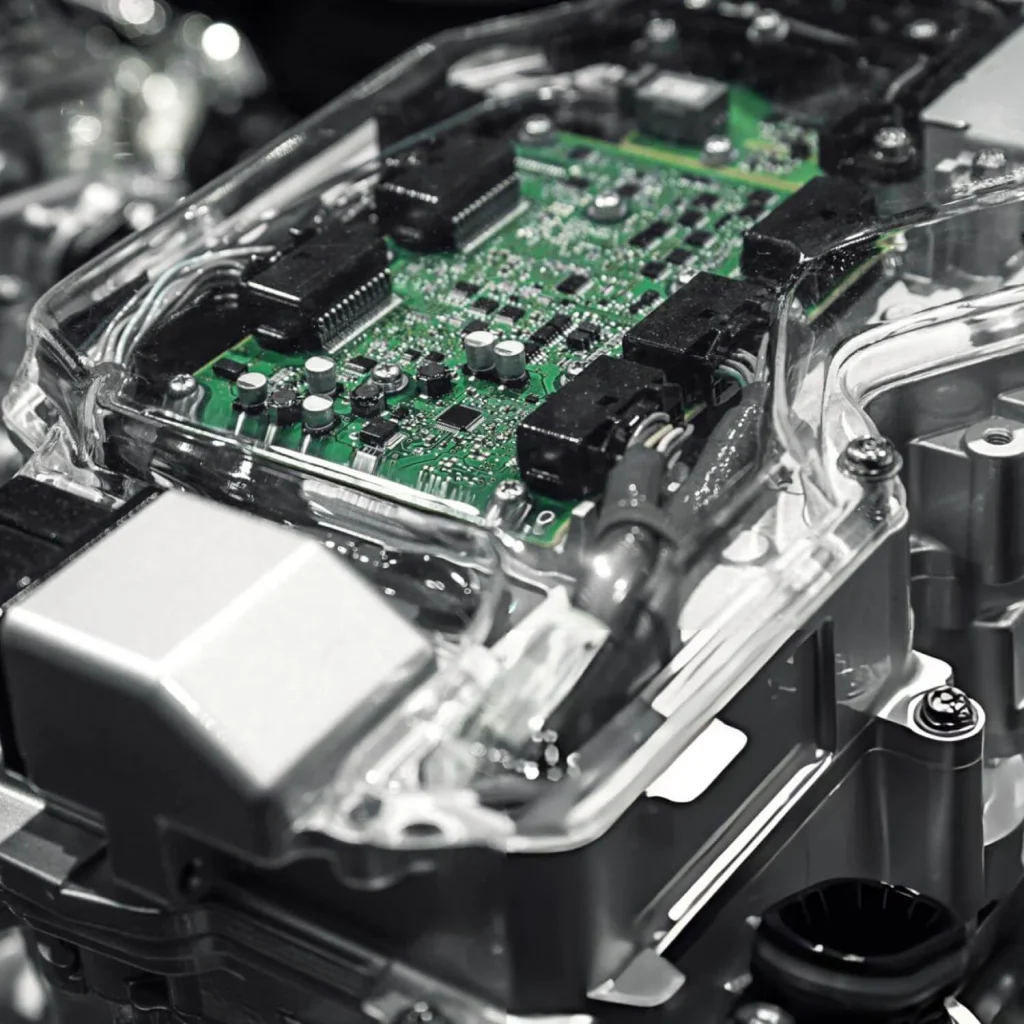
As vehicles continue moving toward electrification, intelligent driving, and greater connectivity, technologies such as HDI, rigid-flex, high-frequency materials, high-power PCB structures, advanced thermal management, and automated PCBA inspection will become increasingly important.
With its integrated PCB manufacturing, component sourcing, SMT/DIP assembly, testing, and finished-product assembly capabilities, Kingda provides a one-stop manufacturing solution for customers developing automotive and other high-reliability electronic products. (Kingda)