Multilayer PCB Stackup Rules: Planes, Signals and Symmetry Layer assignment is the first decision that constrains everything after it. Once the stack is fixed, the reference planes available to each routing layer, the impedance targets and the symmetry of the build are all determined, and changing them later means restarting…
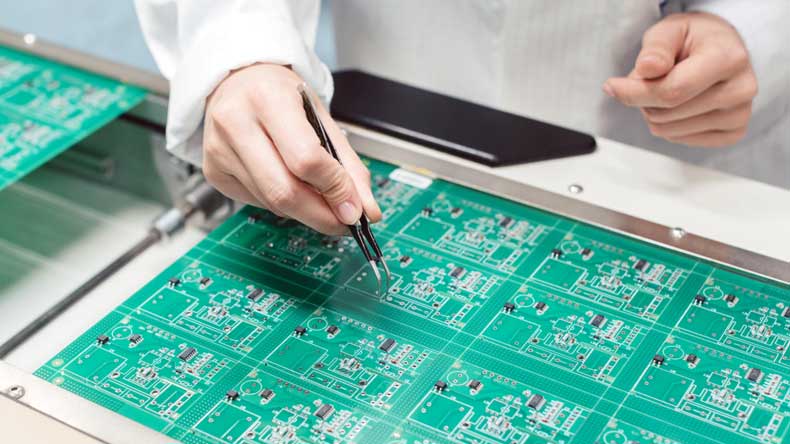
PCB Test Coupon Panel Design: The Witness on the Panel Electronics manufacturing has become a discipline of small details. Solder paste volumes, placement accuracy, temperature profiles and inspection limits all add up to the final result. This guide looks at PCB test coupon panel design from the perspective of a…
Layer Assignment Rules for Multilayer PCB Prototypes A multilayer board is not simply a two layer board with extra copper. The order in which the layers are arranged decides how well the board behaves, how easy it is to route and how much electromagnetic interference it radiates. Layer assignment is…
Where PCB Prototyping Goes Wrong and Why A prototype exists to answer questions, and it fails at that job when the questions were poorly chosen. Most prototyping problems are not manufacturing defects. They are decisions taken before the order was placed, in the quantity ordered, the footprints used, the testing…
Stencil Fabrication Requirements for SMT Printing The stencil decides how much solder paste reaches every pad, and no amount of process tuning downstream can compensate for a stencil that was cut to the wrong rules. Stencil fabrication is therefore a specification exercise, and the list of requirements is short enough…
Vapor Phase Reflow Soldering: Principles and Process Vapor phase reflow soldering, also called condensation soldering, replaces the moving air of a convection oven with a saturated vapor blanket that holds the whole assembly at one fixed temperature. The heat comes from the latent energy released when vapor condenses on the…
Multilayer PCB Prototyping: Four Fabrication Difficulties Multilayer boards are the backbone of communications, medical, industrial control, automotive and computing hardware, and as the layer count and density rise, so does the difficulty of making them. The constraints are not in one process step but in four: forming the inner layers,…
High Quality PCB Design: Placement, Thermal and Signal Priorities On a precision analogue board, or on a low-frequency digital board where a millivolt of noise matters, the quality of the result is decided long before the first trace is drawn. High quality PCB design at these signal levels is mostly…
PCB Lot Traceability Records: Finding the Board Again Buyers and engineers often focus on the finished product and forget the production line behind it. In practice, most field failures can be traced back to process decisions made during assembly. Understanding PCB lot traceability records gives you a practical advantage when…
PCB Work Instruction Writing: Telling the Operator What to Do Modern electronics depend on boards that are assembled correctly the first time. Every product – a phone, a charger, a medical instrument or an industrial controller – relies on thousands of solder joints that must conduct current for years. This…