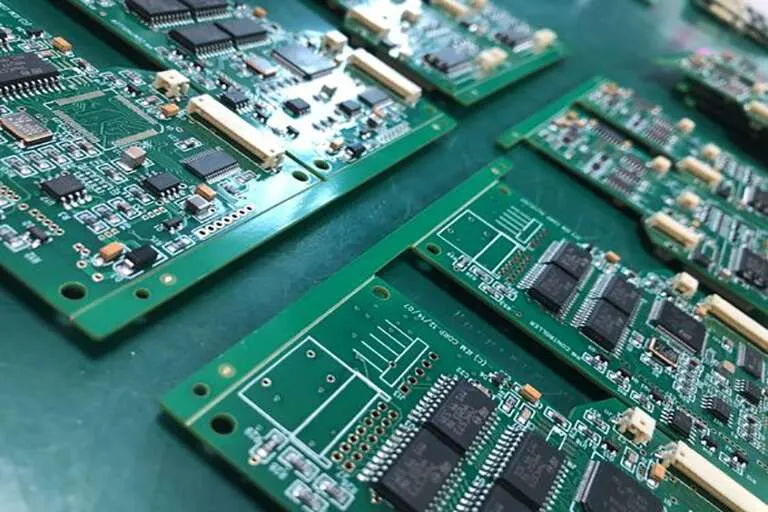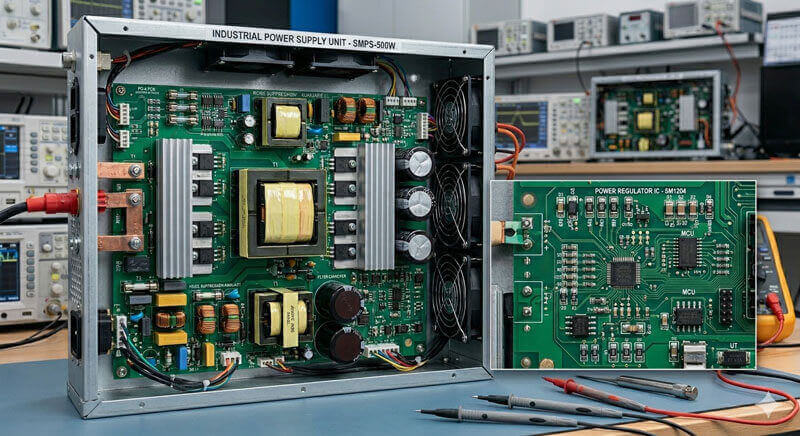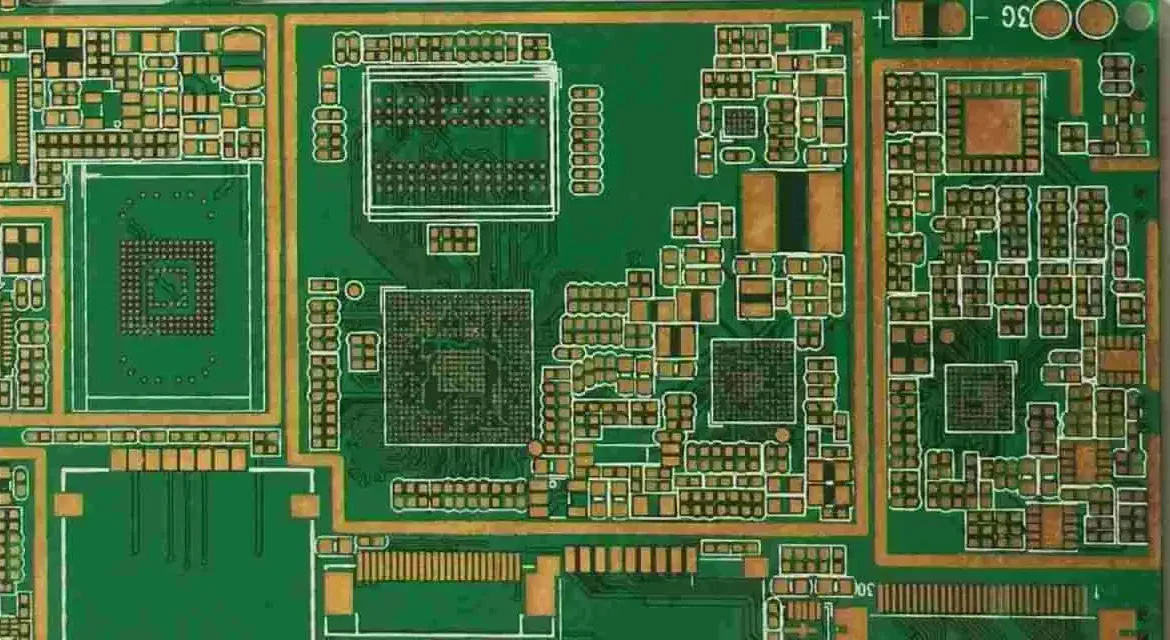
Power Board SMT Assembly: Process Requirements and Spacing Rules Power boards are not ordinary surface-mount assemblies. They carry large devices that dissipate real heat, they often use thicker copper to handle the current, and they frequently combine a dense surface-mount section with heavy through-hole parts. Those characteristics change the requirements…

Vacuum Etching in PCB Fabrication: Eliminating the Puddle Effect Etching is the step where the copper pattern finally becomes real, and it is also where fine-line capability is won or lost. The difficulty is not removing copper but removing it uniformly, because the etchant that has already reacted with the…
PCB Stackup Design: Layers, Reference Planes, and Return Paths Stackup design is where the electrical requirements of a board are translated into physical layers, and it is usually the last decision to be revisited and the first one to cause problems. How many signal layers are needed, how many planes,…
Electronic PCB Assembly: Design Rules That Improve Assembly Yield Assembly is the last chance to influence yield, and by the time a bare board reaches the placement machine most of the cost has already been committed. The design decisions that determine whether the assembly runs smoothly are made months earlier:…
PCBA Assembly Process Selection: SMT, DIP, and Mixed Flows Once a board is designed, the next decision is how it will be assembled, and the options are not interchangeable. The mix of surface-mount and through-hole content, the number of sides that carry components, and the thermal sensitivity of the parts…
PCB Reliability: Characteristics of a High-Quality Board Two boards can look identical and behave completely differently over a five-year service life. The difference is rarely visible on the surface, but it is decided by a set of measurable characteristics that a fabricator either controls or does not. PCB reliability comes…
PCB Shop Traveler Document: The Paper That Follows the Board Buyers and engineers often focus on the finished product and forget the production line behind it. In practice, most field failures can be traced back to process decisions made during assembly. Understanding PCB shop traveler document gives you a practical…
Blind and Buried Vias in HDI PCB Manufacturing When routing density rises far enough, a through hole becomes an unaffordable use of the board. It occupies a landing pad on every layer, blocks the routing channels around it on every layer, and prevents the layers above and below from being…
SMT Assembly Data Package: Gerber, BOM and Placement A surface-mount build starts long before the first panel is printed, and it starts with data. When the assembly package is incomplete, the factory stops, asks questions and waits, and the lost time lands directly on the delivery date. A complete SMT…
PCB Price Break Quantities: Why the Second Hundred Is Cheaper Buyers and engineers often focus on the finished product and forget the production line behind it. In practice, most field failures can be traced back to process decisions made during assembly. Understanding PCB price break quantities gives you a practical…