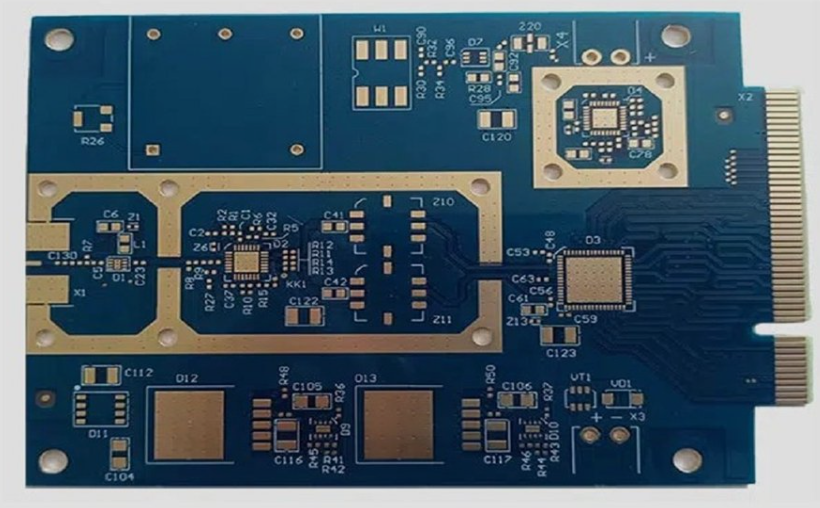
Crystal and Oscillator Layout: Rules for a Stable Clock The crystal circuit is a handful of components that takes almost no board area and is responsible for whether the product works at all. A badly placed crystal can fail to start at low temperature, drift enough that a radio will…
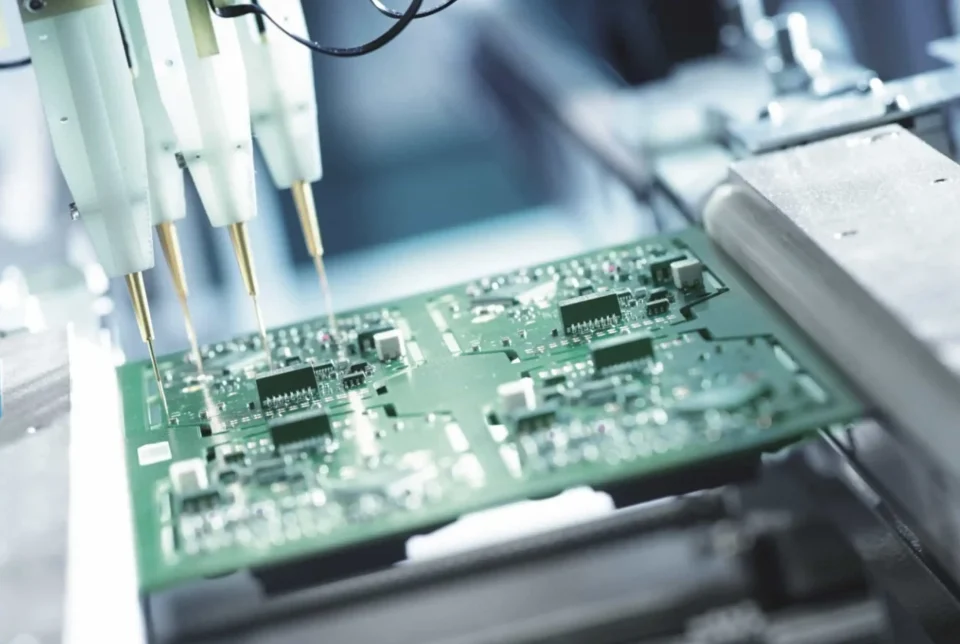
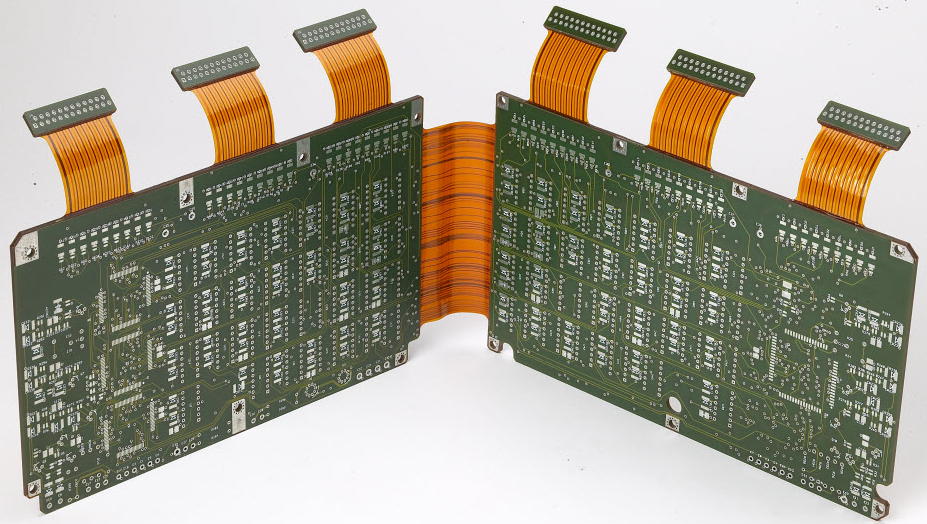
Flex Stiffeners: Adding Rigidity Where It Is Needed A stiffener is a piece of rigid material bonded to part of a flexible circuit to stop it flexing where it should not. It is a small addition that solves a large class of problems: a connector that cannot be soldered to…
Gold Fingers on a PCB: Design Rules for Edge Contacts Gold fingers are the plated contacts on the edge of a board that slide into a socket. They are one of the few parts of a circuit board designed for mechanical wear, and they fail for mechanical reasons: worn plating,…
Choosing a PCB Surface Finish: Five Options Compared The surface finish is a thin layer of metal or organic material that protects the copper from oxidation and provides a solderable surface. It is chosen in seconds on most projects and it decides whether the assembly process runs smoothly, how long…
Thermal Via Arrays: Moving Heat Through the Board A thermal via array is the simplest thermal management tool available on a printed circuit board: a group of small vias under a component that carries heat from the pad into the copper layers below. It costs almost nothing in material and…
Power Integrity on a PCB: The PDN From Bulk to Die Power integrity is the least visible part of signal integrity and the most common cause of intermittent failures. A board can pass every eye diagram test and still reset a processor when an FPGA switches a thousand outputs at…
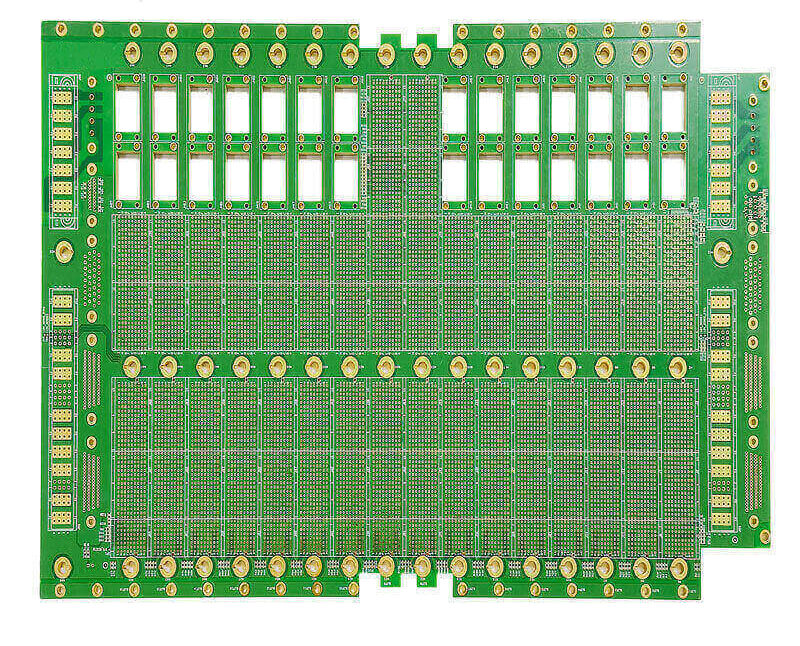
Backplane Design: Long Traces, Many Slots and Heavy Power A backplane is the board that carries the connectors for every card in a system. It usually has no active components of its own, it is physically large, and it is the most demanding board in the chassis in terms of…
PCB Edge Plating: Grounding, Shielding and Card Edges Edge plating is copper that wraps around the outside of a circuit board, connecting the surface layers to the edge of the board. It is used to ground a board to a chassis, to close the seam between a shield and an…
PCB Assembly Drawing: What It Has to Tell the Line An assembly drawing is the document that turns a design into a build instruction. The manufacturing data says where the copper goes and the centroid file says where the components sit, but neither of them explains what the assembly house…
Flex PCB Bend Radius: Rules for a Circuit That Folds A flexible circuit is designed to be folded, and the number that decides whether it survives that fold is the bend radius. Specify it correctly and the flex behaves like a hinge for the life of the product. Get it…