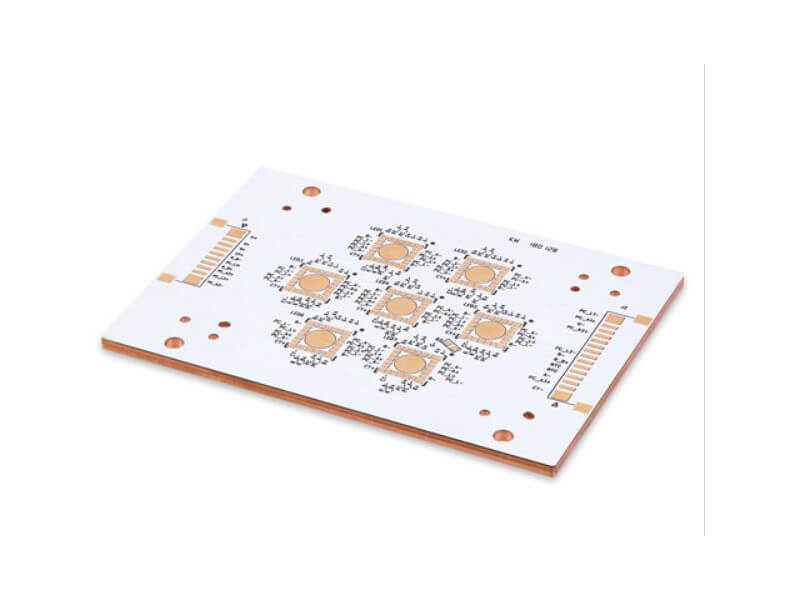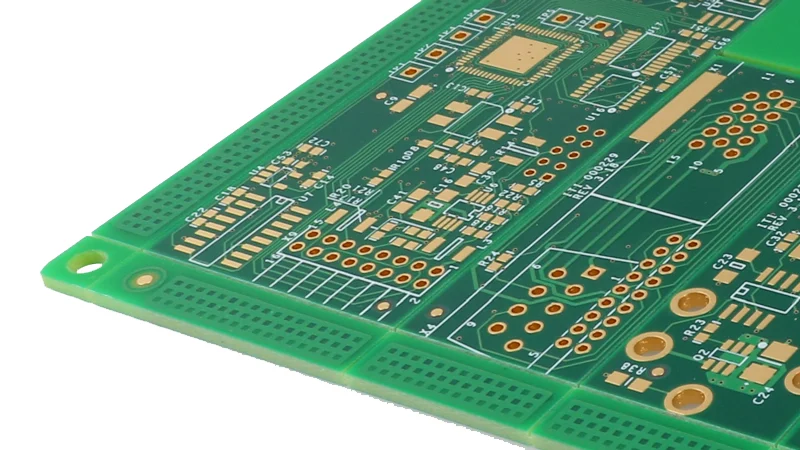
Component Courtyards and Keepouts: Space the Process Needs Every component on a board needs space around it that carries no circuit. That space is what lets the stencil print, the nozzle place, the camera inspect and the technician rework, and it is the first thing a dense layout gives away.…
Solder Paste Volume: The Variable Behind Most Joint Problems If a single number predicted whether an assembly would pass inspection, it would be the volume of solder paste deposited on each pad. Every common joint defect – insufficient solder, bridging, tombstoning, solder balls – can be traced back to that…
ESD Protection Devices: Placement and Return Path An ESD protection device that is placed correctly protects a product for its whole life. The same device placed a few millimetres away from the connector, with a long ground connection, protects almost nothing, because the discharge finds a lower impedance path through…
Solder Joint Defects: Causes and How the Layout Prevents Them Most solder joint defects are decided long before the board reaches the reflow oven. A stencil aperture, a pad geometry, a mask clearance or a thermal connection can make a joint that is easy to produce or one that is…
Differential Pair Routing: Rules That Actually Matter Differential pairs are surrounded by more folklore than almost any other part of high speed layout. Some of the advice is essential, some of it is a convention that no longer applies, and the difference shows up when a design fails its eye…
PCB Fiducials: Placement Rules for Machine Alignment A fiducial is a small copper mark on the board that exists only for a machine to look at. It carries no signal, it is not part of the circuit, and if it is missing, covered or badly placed, the entire assembly line…
PCB Drilling: Hole Types, Tolerances and Limits Drilling is the step where a circuit board stops being a flat sheet and starts being a three dimensional structure, and it is the operation with the most potential to damage a design. A hole that is slightly the wrong size, slightly the…
IC Substrate: How Package Substrates Differ From PCBs An IC substrate is the small board inside a chip package, and it is made with the same family of processes as a PCB while being a different product in almost every respect. It exists because a silicon die and a printed…
From Prototype to Production: What Changes on the PCB The gap between a working prototype and a stable production board is wider than most teams expect. The prototype proves that the design functions. Production has to prove that the same design can be built thousands of times, by a different…
PCB Minimum Order Quantity: Why It Exists and How to Work With It A minimum order quantity is one of the most common points of friction between a buyer and a circuit board supplier, and it is usually presented as an arbitrary rule. In practice it is an economic limit…