PCB OSP Multiple Reflow Resistance: A Finish That Survives the Oven Buyers and engineers often focus on the finished product and forget the production line behind it. In practice, most field failures can be traced back to process decisions made during assembly. Understanding PCB OSP multiple reflow resistance gives you…
Express PCB: How Fast Turnaround Prototyping Works When the Schedule Is the Constraint Most board design decisions are made against cost, performance or size. Express PCB exists for the projects where the binding constraint is time. A schematic that has just been finished, a design that has to be proven…
PCB Immersion Gold Gold Thickness: Just Enough Gold Modern electronics depend on boards that are assembled correctly the first time. Every product – a phone, a charger, a medical instrument or an industrial controller – relies on thousands of solder joints that must conduct current for years. This article explains…
Copper Substrate PCB: Copper Base Plates for High Power The Top of the Metal Core Family Metal core boards exist to move heat through a conductor instead of through a laminate. Within that family the base metal sets the ceiling, and copper sets it highest. An aluminium base conducts heat…
PCB Hot Air Solder Level Thickness: A Flat Finish for Soldering Electronics manufacturing has become a discipline of small details. Solder paste volumes, placement accuracy, temperature profiles and inspection limits all add up to the final result. This guide looks at PCB hot air solder level thickness from the perspective…
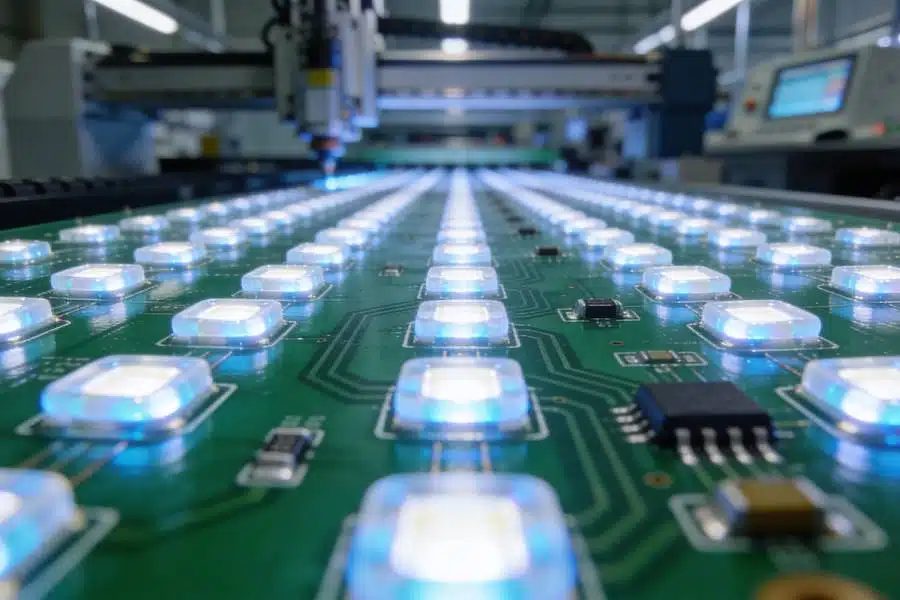
LED Lighting PCB: Materials, Thermal Design and Assembly The Board Is the Thermal Design An LED is a semiconductor, and like every semiconductor it degrades faster when it runs hot. That single fact makes the circuit board carry more responsibility than in almost any other lighting product. The board has…
PCB Water Soluble Flux Risk: Washing What the Flux Leaves Buyers and engineers often focus on the finished product and forget the production line behind it. In practice, most field failures can be traced back to process decisions made during assembly. Understanding PCB water soluble flux risk gives you a…
Aluminium Nitride Substrate: Properties, Metallization and Use The Ceiling That FR-4 and Metal Core Boards Hit Most thermal problems are solved by moving to a metal core board. An aluminium or copper base with a thin dielectric spreads heat well, costs far less than a ceramic and is routinely manufactured…
PCB Halide Free Flux Activation: Cleaning Without the Halides Modern electronics depend on boards that are assembled correctly the first time. Every product – a phone, a charger, a medical instrument or an industrial controller – relies on thousands of solder joints that must conduct current for years. This article…
PCB Aperture Ratio for Paste Release: Getting the Paste Out Buyers and engineers often focus on the finished product and forget the production line behind it. In practice, most field failures can be traced back to process decisions made during assembly. Understanding PCB aperture ratio for paste release gives you…