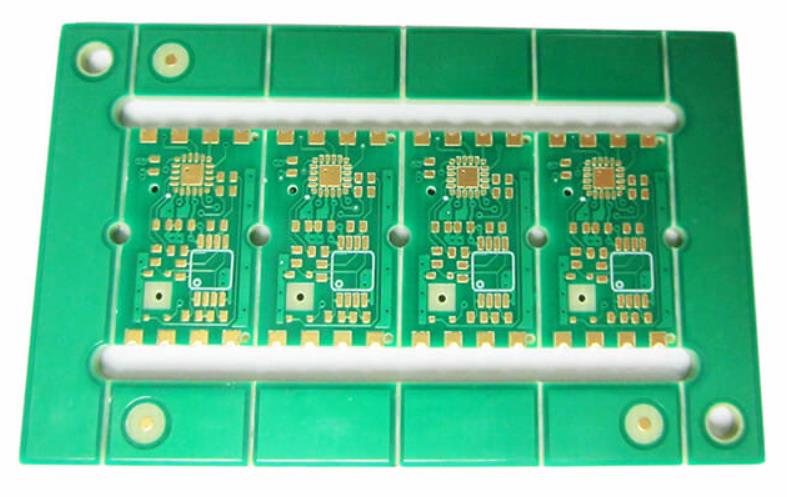
Ceramic Substrates for Thermal Designs Why Ceramic A ceramic substrate is used where the electrical and thermal requirements exceed what a polymer laminate can deliver. Ceramics are dimensionally stable, they tolerate high temperatures, they have a high dielectric strength and a low loss at high frequency, and some of them…
PTFE Laminates: Processing and Design Why PTFE Is Used PTFE-based laminates are chosen for their electrical properties: a low and stable dielectric constant and a very low loss tangent, which keeps insertion loss down at high frequency. They are also used where the dielectric constant has to be predictable across…
Metal Core PCB: Design and Thermal Path What a Metal Core Board Is A metal core board uses a metal plate, usually aluminium and sometimes copper, as the base instead of the usual FR4 laminate. The circuit is built on a thin dielectric layer bonded to the metal, and the…
PCB Dielectric Breakdown Voltage Test: Pushing Until It Fails Modern electronics depend on boards that are assembled correctly the first time. Every product – a phone, a charger, a medical instrument or an industrial controller – relies on thousands of solder joints that must conduct current for years. This article…
Convection Versus Vapour Phase Reflow Two Ways to Heat Every reflow oven has to deliver heat to a board and its joints, and there are only two mechanisms available: convection, where the heat is carried by a moving gas, and condensation, where the heat is released when a vapour turns…
SMT Reflow Solder Joint Microstructure: The Inside of the Joint Electronics manufacturing has become a discipline of small details. Solder paste volumes, placement accuracy, temperature profiles and inspection limits all add up to the final result. The same discipline applies to SMT Reflow Solder Joint Microstructure, where a small process…
Wave Soldering: Setup and Defects What the Wave Does Wave soldering passes the board over a standing wave of molten solder, so that every exposed joint is soldered in a single pass. It is fast, it suits through-hole assemblies and mixed boards with the surface mount side already reflowed, and…
PCB Solder Mask Adhesion Test: Checking the Mask Bond Modern electronics depend on boards that are assembled correctly the first time. Every product – a phone, a charger, a medical instrument or an industrial controller – relies on thousands of solder joints that must conduct current for years. This article…
SMT Component Nozzle Wear: When the Tip Wears Out Modern electronics depend on boards that are assembled correctly the first time. Every product – a phone, a charger, a medical instrument or an industrial controller – relies on thousands of solder joints that must conduct current for years. This article…
Refurbishing Assemblies and Re-Balling Packages What Refurbishing Covers Refurbishment is the restoration of an existing assembly to a usable condition. It covers replacing a failed component, re-balling a package whose solder balls were removed, replacing a worn connector, cleaning contamination from a board that has been in service, restoring a…