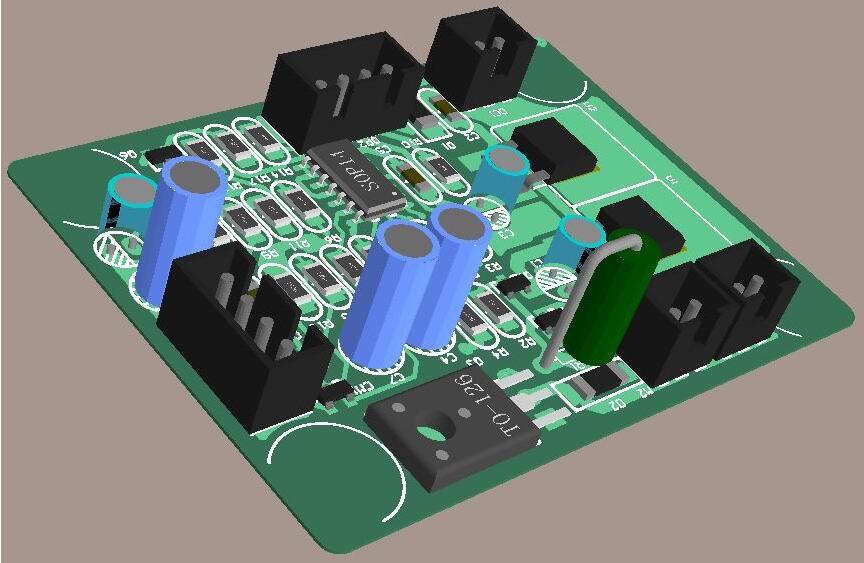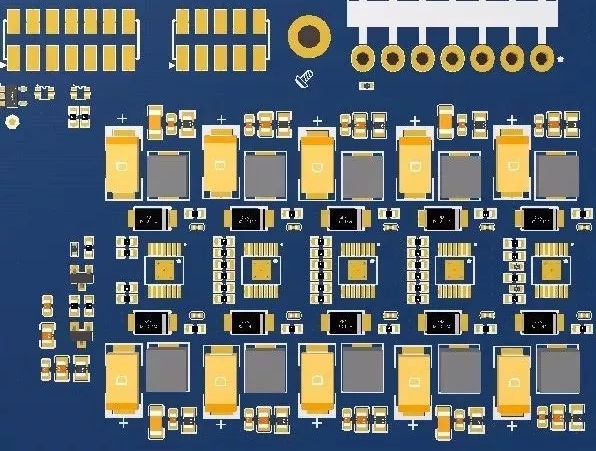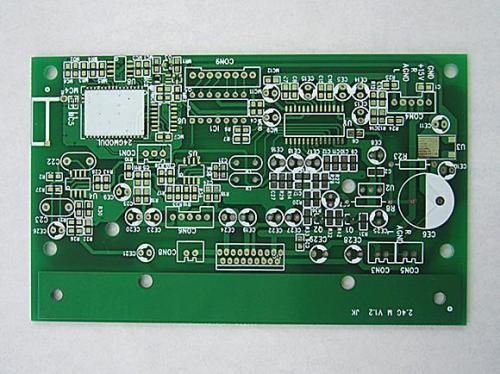
Capacitors are among the most widely used passive components in PCB Design. They perform essential functions such as energy storage, decoupling, filtering, signal coupling, noise suppression, and transient response improvement. Understanding how PCB Capacitors behave is important when designing power supplies, digital circuits, analog circuits, RF systems, communication equipment, and…
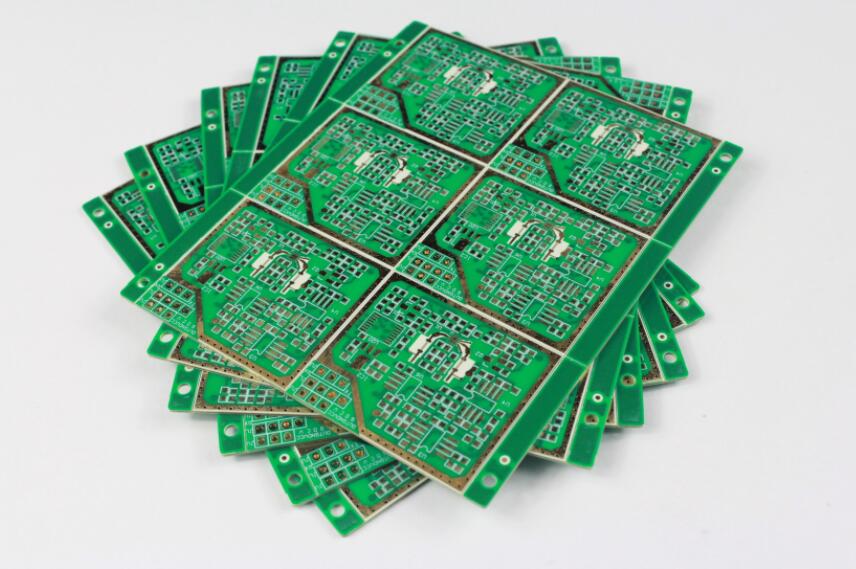
As electronic products become smaller, faster, and more integrated, High-Frequency PCB Design has become increasingly important in RF, communication, computing, automotive electronics, industrial equipment, and other high-performance applications. Compared with conventional PCB design, a High-Frequency PCB is more sensitive to component placement, routing geometry, return-current paths, parasitic effects, electromagnetic interference,…
As electronic products continue to operate at higher data rates and frequencies, High-Speed PCB Design has become increasingly important. At high frequencies, a PCB trace can no longer be treated simply as an ideal wire. Its physical geometry, dielectric environment, reference plane, length, vias, and surrounding conductors can all affect…
A PCB Circuit Board provides the physical foundation for electronic components and electrical interconnections in an electronic product. Even when the schematic is electrically correct, an improperly designed PCB can negatively affect signal quality, thermal performance, manufacturability, and overall product reliability. For this reason, PCB Design should not focus only…
The rapid development of modern electronics has driven continuous miniaturization of electronic components and the widespread adoption of SMT Assembly technology. Modern SMT Manufacturing lines are highly automated and require high positioning accuracy, fast production speeds, and consistent process control. As automation continues to increase, PCB Design must be developed…
The electronics industry continues to evolve toward smaller form factors, higher integration, faster data transmission, greater power density, and improved reliability. These trends are driving significant advances in printed circuit board technology and creating new challenges for engineers. Modern PCB Design is no longer limited to simply connecting electronic components.…
In PCB Design, engineers often need to choose between a Ferrite Bead and a Chip Inductor when controlling unwanted noise. Although both components are passive magnetic devices, they serve different purposes and exhibit different impedance characteristics over frequency. A Chip Inductor is commonly used when energy storage, filtering, impedance matching,…
Metal Core PCB technology is widely used in applications where thermal management, structural rigidity, and long-term reliability are important. Unlike conventional FR-4 PCBs, metal core boards incorporate a metal substrate—commonly aluminum or copper—to provide a more effective thermal path for heat generated by electronic components. Although Metal Core PCB Design…
The basic operating principle of a printed circuit board is straightforward. An insulating substrate separates conductive copper layers and provides a controlled structure for electrical connections. Copper traces create predefined current paths between electronic components, allowing the circuit to perform functions such as signal processing, amplification, attenuation, modulation, demodulation, switching,…
During product development, cost, schedule, quality, and electrical performance are closely connected. From these perspectives, it is generally more effective to address PCB EMI Shielding and electromagnetic compatibility (EMC) requirements as early as possible in the design cycle. Adding shielding components or implementing quick fixes late in development can increase…