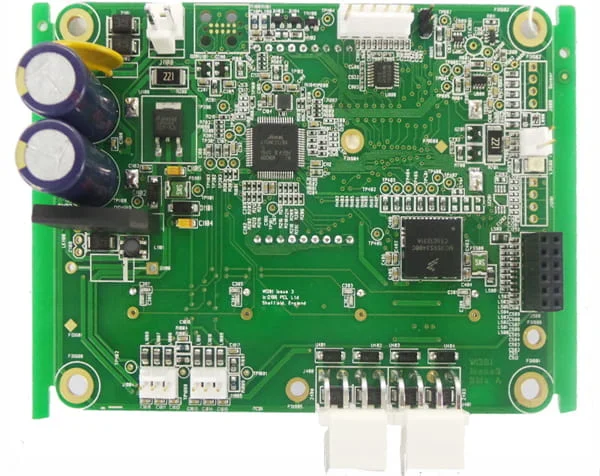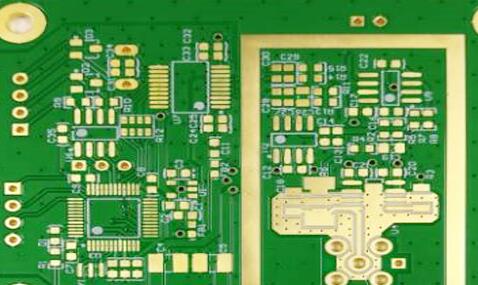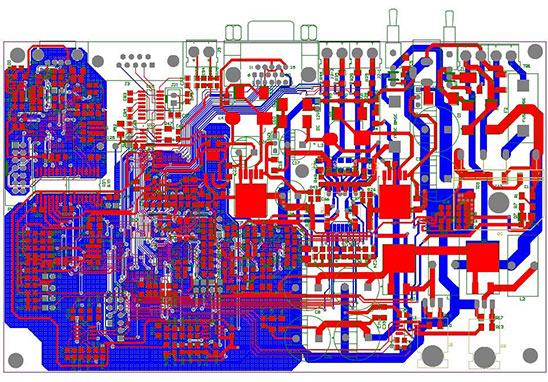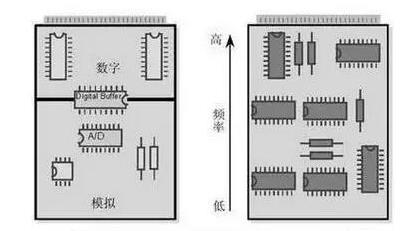
Designing a mixed-signal PCB requires a clear understanding of how analog and digital circuits interact. Unlike a purely digital or purely analog board, a mixed-signal PCB contains circuits with very different noise tolerances, signal characteristics, return-current behavior, and electromagnetic coupling mechanisms. A successful Mixed-Signal PCB Design therefore cannot rely on…
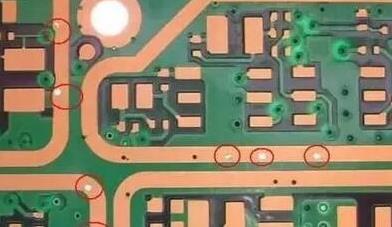
As electronic products continue to become thinner, smaller, lighter, and more highly integrated, printed circuit boards require increasingly sophisticated manufacturing processes. High-density interconnect structures, fine-pitch components, BGA packages, and advanced SMT assembly have created higher requirements for PCB Manufacturing, particularly for via protection, solder mask control, surface flatness, and solderability.…
During Reflow Soldering, PCBs are exposed to rapid heating and cooling. Because a printed circuit board is a composite structure made from copper foil, resin, glass fabric, and other materials, differences in thermal expansion can generate internal stress and cause the board to bend, twist, or warp. Severe PCB Warpage…
Wireless Charging PCBA: SMT Assembly Process and Quality Control Why Wireless Charging PCBA Is Different Wireless charging has moved quickly from flagship phones into earbuds, wearables, car docks, medical instruments, kitchen appliances and industrial robots. Every one of those products contains the same electronic core: a compact printed circuit board…
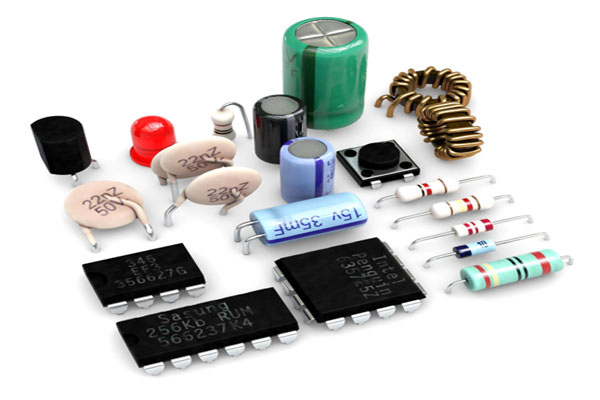
A capacitor is a passive electronic component that stores electrical energy in an electric field. It typically consists of two conductive electrodes separated by an insulating dielectric material. When a voltage is applied across the electrodes, electrical charge accumulates on them, creating an electric field within the dielectric. In modern…
SMT Assembly High Temperature Performance: Limitations and Solutions Why SMT Has Limits in High Temperature Environments Surface mount technology is the backbone of modern electronics because it packs more function into less space at lower cost. Like every process, however, it has boundaries, and temperature is one of the most…
Copper plating is one of the most important processes in PCB Manufacturing. It provides the conductive copper required for circuit formation, through-hole interconnection, and reliable electrical connections between PCB layers. A properly controlled copper plating process also contributes to mechanical strength, solderability, and long-term PCB Reliability. In modern PCB production,…
Tantalum Capacitor SMT Assembly: Polarity, Soldering and Design Guide What Makes Tantalum Capacitors Special for Surface Mount Boards A tantalum capacitor is an electrolytic capacitor that uses tantalum metal as the anode and a solid manganese dioxide or conductive polymer electrolyte. Unlike ordinary aluminum electrolytic capacitors, the solid construction gives…
As electronic products continue to become smaller, lighter, and more highly integrated, conventional rigid circuit boards are sometimes unable to provide enough flexibility for complex mechanical structures. At the same time, using separate rigid and flexible circuit boards can increase connectors, assembly steps, and potential points of failure. A Multilayer…
In modern PCB Design, signal integrity becomes increasingly important as interfaces operate at higher data rates and devices use faster signal edges. When a PCB trace behaves as a transmission line, impedance discontinuities can cause reflections, ringing, overshoot, undershoot, and timing uncertainty. One of the techniques used to control these…