2026 High Frequency Hybrid PCB Cost: Materials, Price Factors & Manufacturing Guide
With the rapid development of 5G communications, automotive millimeter‑wave radar, aerospace electronics, satellite communications, and high‑speed RF equipment, high frequency hybrid PCBs have become a critical component in advanced electronic systems. Unlike traditional FR‑4 PCBs, high frequency hybrid PCBs use a mixed lamination structure combining multiple dielectric materials – typically Rogers, PTFE, Taconic, or Isola high‑frequency materials with standard FR‑4 – to balance RF performance and overall manufacturing cost.
In the current market, approximate price ranges for high frequency hybrid PCBs are:
- Prototype samples: ~$100–$800 per design
- Low‑volume production: ~$20–$150 per board
- Medium‑volume production: ~$5–$50 per board
- High‑volume production: ~$2–$20 per board
For engineers, procurement professionals, and OEMs, a common question is: what is the actual cost of a high frequency hybrid PCB in 2026? This article provides a detailed breakdown of manufacturing costs, material selection, pricing factors, and strategies to reduce procurement expenses.
What Is a High Frequency Hybrid PCB?
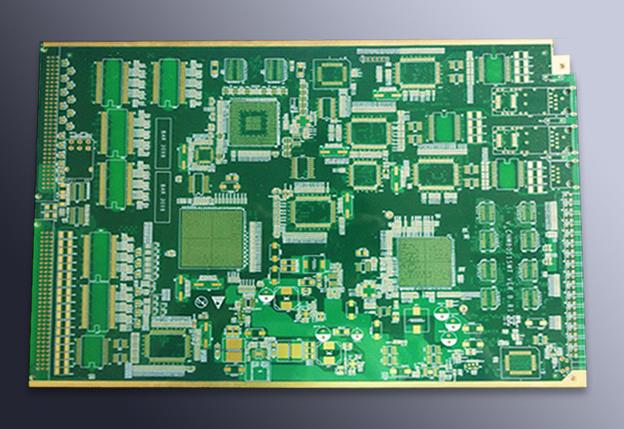
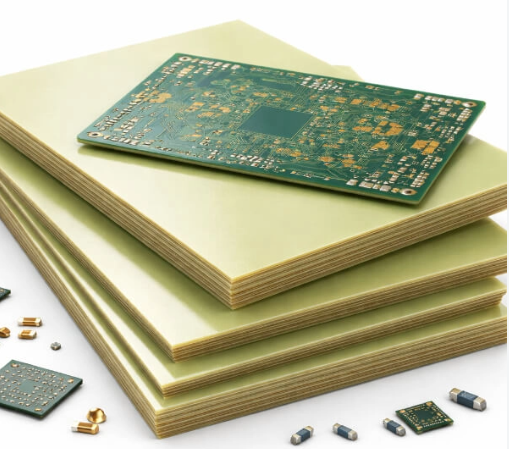
A high frequency hybrid PCB is a multilayer board manufactured by laminating different types of PCB substrates. It combines high‑frequency, low‑loss materials with traditional FR‑4 to achieve an optimal balance between performance and cost.
Standard FR‑4 PCBs are cost‑effective and mature, but they have drawbacks at high frequencies: higher dielectric loss, significant signal attenuation, unstable dielectric constant (Dk), and limited performance at GHz frequencies. High frequency hybrid PCBs address these issues by incorporating high‑performance materials.
A typical hybrid stack‑up may include:
- Rogers RO4003C / RO4350B high‑frequency layers
- FR‑4 digital control layers
- Copper foil conductive layers
- Prepreg adhesive layers
This design delivers lower signal loss, more stable impedance control, better thermal stability, and a lower cost compared to a full‑Rogers PCB. As a result, high frequency hybrid PCBs are a key solution for RF, microwave, and high‑speed communication applications.
2026 High Frequency Hybrid PCB Average Price Analysis
Pricing depends mainly on design complexity and order quantity.
1. Prototype Pricing (1–10 pieces)
- Simple 2–4 layer hybrid: ~$100–$300 per design – for basic RF circuits, antenna modules, communication test boards.
- 6–8 layer hybrid: ~$300–$800 per design – higher cost due to multilayer lamination, material costs, and tighter registration.
- High‑end microwave‑grade: ~$500–$1,500+ per design – for radar systems, avionics, satellite communications.
2. Volume Production Pricing
- Low volume (50–500 pcs): Basic hybrid: $20–$80/pc; complex RF multilayer: $50–$150/pc.
- High volume (5,000+ pcs): Basic hybrid: $2–$10/pc; complex RF multilayer: $10–$50/pc. Unit cost drops significantly as engineering, tooling, material procurement, and testing costs are amortized.
Key Factors Affecting High Frequency Hybrid PCB Price
- Material selection: The biggest cost driver. Rogers materials (RO4003C, RO4350B, RO3003) offer low loss and stable Dk, ideal for RF, 5G, and automotive radar, but add 30%–100% cost over FR‑4. PTFE has extremely low loss for microwave, aerospace, and antenna applications, but is more expensive and difficult to process. FR‑4 is used for digital/power regions to reduce overall cost.
- Stack‑up complexity: Mixing materials with different CTE, resin systems, and mechanical properties requires precise lamination to avoid delamination, warpage, and reliability issues.
- Layer count and registration: More layers demand tighter alignment and thicker material sets, increasing cost.
- RF performance testing: Impedance, TDR, cross‑section, and high‑frequency verification add to manufacturing expense.
Rogers, PTFE & FR‑4 Hybrid Cost Comparison
- FR‑4 only: Lowest cost, simple process, but poor high‑frequency performance – suitable for general electronics.
- Rogers hybrid: Excellent RF performance, stable Dk, low loss – 30%–200% higher cost than FR‑4. Used in 5G, radar, and RF communication.
- PTFE hybrid: Ultra‑low dielectric loss, superior microwave performance – highest cost tier. Used in satellite, avionics, and high‑end radar.
Prototype vs. Production Price Differences
Many assume price depends only on quantity. However, high frequency hybrid PCBs incur significant upfront engineering costs: stack‑up design, material procurement, process evaluation, impedance calculation, and test validation. For example, a 10‑piece prototype may cost $500 per board, while the same design at 10,000 pieces may drop to under $20 per board. Therefore, for mature products, increasing order volume substantially reduces unit cost.
Manufacturing Factors That Increase Cost
- Dissimilar material lamination: Different CTE and resin systems require careful process control to prevent delamination and warpage.
- High‑precision layer registration: Tight alignment and stable lamination temperatures are essential.
- RF performance testing: Impedance, TDR, cross‑section, and high‑frequency verification add time and expense.
How to Reduce High Frequency Hybrid PCB Manufacturing Cost
- Optimize material combination: Use Rogers only on RF layers, FR‑4 on digital layers – balances performance, cost, and reliability.
- Minimize layer count: Rational signal, power, and ground plane design can eliminate unnecessary layers, reducing material, lamination cycles, and lead time.
- Apply DFM early: Work with your manufacturer to optimize trace/space, impedance structures, material selection, and stack‑up to avoid costly revisions later.
- Increase production volume: Amortize engineering and setup costs over more boards.
How to Choose a Reliable High Frequency PCB Manufacturer
- Manufacturing capability: Experience with Rogers, high‑frequency materials, multilayer hybrid lamination, and impedance control.
- Quality certifications: ISO9001, UL, RoHS compliance.
- Engineering support: Ability to provide stack‑up optimization, material substitution advice, and cost‑reduction suggestions.
Why Choose gopcb for High Frequency Hybrid PCBs?
gopcb is a professional PCB manufacturer specializing in high‑performance boards, offering high frequency hybrid PCB solutions for 5G communications, automotive radar, aerospace, RF modules, and microwave electronics. Our capabilities include Rogers‑FR‑4 hybrid fabrication, multilayer high‑frequency production, impedance‑controlled PCBs, quick‑turn prototyping, and volume production supply chain advantages. With expert engineering support, we help customers optimize material selection, stack‑up design, and cost control. Whether for small‑batch R&D validation or large‑scale OEM production, gopcb delivers reliable, high‑quality hybrid PCBs.
Explore our related services: PCB manufacturing, prototype PCB assembly, turnkey PCB assembly, low‑volume PCB assembly, and high‑volume PCB assembly.
FAQ: High Frequency Hybrid PCB
1. How much does a high frequency hybrid PCB cost?
Typical ranges: prototyping $100–$800 per design; volume production $5–$50 per board, depending on material, layer count, and quantity.
2. Why are hybrid PCBs more expensive than FR‑4?
Due to higher‑cost materials (Rogers, PTFE), complex manufacturing processes, stringent impedance control, and additional testing.
3. Is a Rogers PCB always better than FR‑4?
For high‑frequency applications, Rogers offers lower loss, stable Dk, and better signal integrity. For general electronics, FR‑4 is more economical.
4. What industries use high frequency hybrid PCBs?
Automotive radar, 5G communication, satellite communication, microwave, aerospace, and RF modules.
5. How can I reduce the cost of high frequency PCBs?
Optimize material combination, reduce unnecessary layers, increase order volume, and work with an experienced manufacturer for DFM guidance.
Conclusion
In 2026, high frequency hybrid PCBs have become an essential technology for high‑speed communication and advanced electronics. While they cost more than standard FR‑4, they deliver superior high‑frequency signal transmission, lower loss, and higher reliability. For manufacturers of 5G, automotive radar, aerospace, and RF devices, partnering with a professional PCB supplier like gopcb can effectively reduce development risk and manufacturing cost. We provide end‑to‑end support from design optimization and prototyping to volume production, ensuring a smooth and cost‑efficient path to market.