Immersion Silver PCB: Cost Factors and When to Use It
Surface finish decides how well a board solders, how long it can be stored, and how much of the budget it consumes. Immersion silver sits in the middle of that range: flatter than hot air levelling, cheaper than an immersion gold process, and compatible with the fine-pitch packages that dominate modern assemblies. Understanding where its price comes from makes it easier to decide whether it is the right finish for a project.
What immersion silver is
An immersion silver PCB carries a thin layer of silver over the copper pads. The layer is produced by a chemical displacement reaction, in which silver ions in solution replace copper atoms at the surface, leaving a smooth and highly solderable finish.
Two properties follow from that. The finish is flat, which is what makes it suitable for packages with pads underneath the body, such as a BGA or a quad flat no-lead device. And it is compatible with lead-free assembly requirements, which is why it appears across consumer, automotive, and communications products.
The trade-off is storage. Silver surfaces oxidise and tarnish, so the shelf life is shorter than that of a gold finish and the boards normally ship in sealed packaging and are stored in a dry environment.
Where the finish fits
Immersion silver is the practical answer where pad flatness matters but the budget does not allow a gold finish. Fine-pitch surface mount assembly, packages with hidden joints, and boards that mix fine-pitch devices with ordinary parts all benefit from the flat surface.
It is also a reasonable choice for radio-frequency work and for LED assemblies, provided the rest of the stackup suits the application. The finish is one input to the electrical result, not a substitute for a suitable laminate or a properly designed stackup.
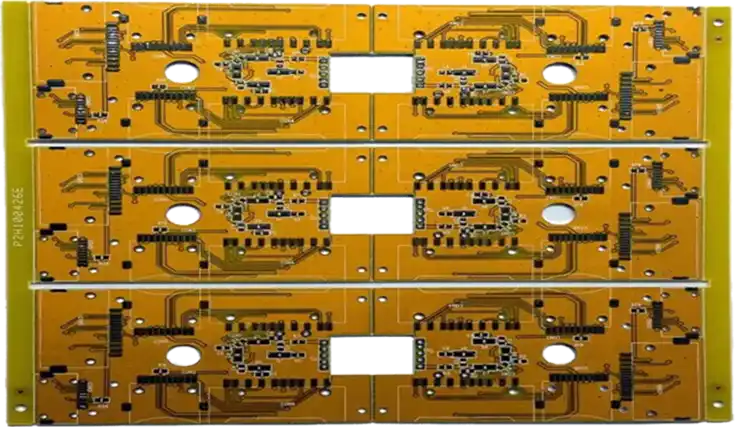
A flat finish is what allows a fine-pitch pad to sit flush on its land. Surface roughness that a coarse finish tolerates becomes an assembly defect at fine pitch.
Cost factors: materials and structure
The base material sets the floor. Standard FR-4 is the economical choice, while laminates chosen for high-frequency or high thermal performance, and metal substrates, can cost several times more.
Layer count then multiplies the effect. A two-layer board is simple to build, while four and six layer boards involve additional lamination and drilling steps, and the price typically rises by a factor rather than by a percentage. Board size and outline complexity come next, because both affect panel utilization: an awkward shape wastes panel area, and the wasted area is paid for.
Copper weight is the fourth variable. One ounce foil is the default, and heavier copper for high-current paths increases both material and etching cost. Where the current requirement is genuine, the width and weight should be calculated rather than assumed, and the method is set out in our guide to trace width and current calculation.
Cost factors: features and process
Feature size is where the design decides its own price. Line width below 6 mil, holes smaller than 0.2 mm, and dense ball-grid layouts all demand tighter process control and more capable equipment, and those requirements are visible in a quotation.
The finish itself carries a cost because of the chemistry. Immersion silver needs accurate control of temperature and pH and a clean environment to produce a consistent layer, so it costs more than hot air levelling and less than an immersion gold process. Solder mask and legend are a smaller item: standard green is the cheapest option, while other colours and multi-layer legend printing add a modest premium.
Test and yield complete the calculation. Complex boards may need flying probe test or X-ray inspection, and a design that yields poorly raises the unit cost for every board that does work, because the failed boards were paid for as well.
Comparing the common finishes
Hot air levelling remains the least expensive finish and is adequate for ordinary through-hole and coarse surface mount work, but the surface is not flat enough for fine-pitch or hidden-joint packages. Immersion silver occupies the middle ground: a flat surface at a moderate price, suited to lead-free assembly and to fine-pitch placement.
Immersion gold is the most expensive of the three and is specified where the highest reliability and the longest shelf life are required, such as server, medical, and automotive products. The comparison is therefore about pad flatness, storage life, and budget rather than about quality in the abstract, and the assembly process requirements are a useful cross-check when the choice is close. The differences between alloys and their process implications are covered in our guide to lead-free versus leaded solder.
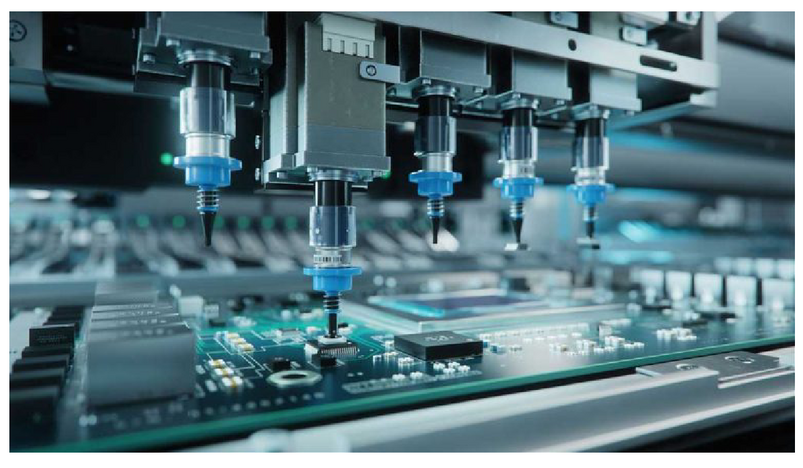
The finish should be chosen with the packaging and the storage plan, because a short shelf life is a cost even when the per-board price is attractive.
Reducing the cost without compromising the result
Most of the available savings are in the design. Standard materials and a standard stackup reduce both material and process cost, and avoiding unnecessary layers, heavier copper than the current requires, or finer features than the routing needs removes cost that buys nothing.
Size and shape are the next lever. A design optimised for panel utilization carries less waste than one with an awkward outline, and the mechanics of that decision are discussed under board outline and mounting design. Standard solder mask colour avoids a small but unnecessary premium, and consolidating orders into fewer, larger batches reduces the fixed tooling cost per board.
Engineering review is the last and cheapest measure. A design for manufacturability check before the data is released catches the details that would otherwise become change orders, and those are the most expensive kind of correction.
How the price bands behave
Small prototype orders are dominated by fixed costs, so the unit price is several times the production price for the same board. Volume brings the unit price down sharply as those fixed costs are spread, and the difference between the first and second quantity break is usually larger than the difference between the second and the third.
Two factors then move the price upwards: expedited delivery, which typically adds a significant percentage because the line has to be rearranged, and the testing and documentation required by a regulated market. Both should be planned rather than absorbed, since neither is negotiable once the schedule is set.
Choosing between finishes in practice
The decision is usually made by the assembly process rather than by the purchasing department. If any package has pads underneath its body, a flat finish is required and hot air levelling is excluded; the choice is then between immersion silver and immersion gold, and the difference comes down to storage life, cosmetic requirements, and budget.
FAQ
Is immersion silver suitable for lead-free assembly? Yes. It is a lead-free finish and satisfies the substance restrictions that apply to most consumer and industrial products.
How long can the boards be stored? Typically six to twelve months in sealed packaging with controlled humidity. Tarnished pads solder poorly, so the storage plan matters as much as the finish itself.
Can it be used for ball grid array and quad flat no-lead packages? Yes, and that is one of its main advantages over hot air levelling, because the flat surface allows the pads to sit flush under the package body.