Immersion Tin: Design Rules and Process Limits
An immersion tin coating is deposited on copper by a displacement reaction, in which tin ions in solution replace copper atoms on the surface. The result is a thin, flat, matt layer of pure tin that protects the copper and provides a solderable surface, and because the reaction stops when the copper is covered, the thickness is limited to a little over a micron. That thinness is the source of both its advantages and its limits.
This article explains how the coating forms, how it behaves during assembly, why its shelf life is limited, and where the finish is the right choice.
How The Coating Forms
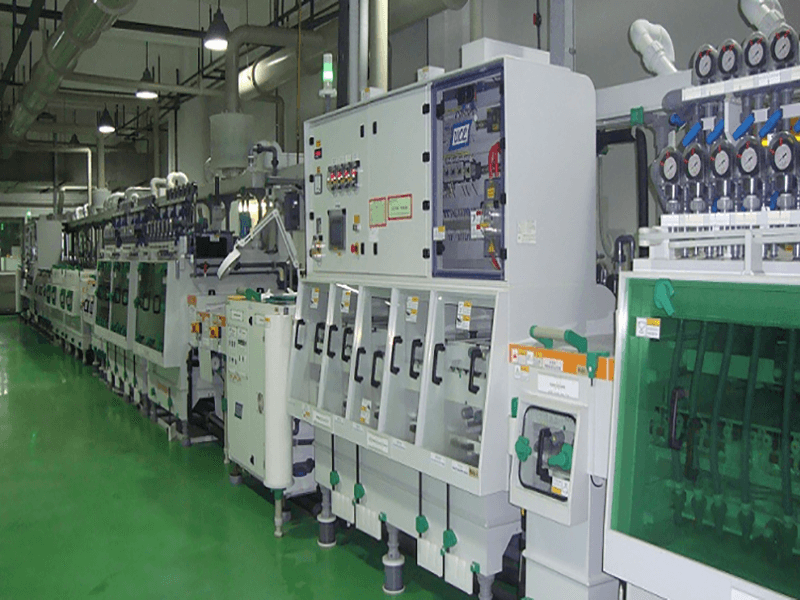
The board is dipped in a solution that contains tin ions and a complexing agent, and the tin deposits on the copper while the copper dissolves into the solution. The reaction is self limiting, because once the copper is covered the displacement cannot continue, which produces a coating of about a micron rather than the several microns that an electroplated layer would have. The coating is very uniform in thickness and follows the topography of the copper, which is why it is used on fine pitch patterns where a thick or uneven deposit would be a problem.
An intermetallic layer of copper and tin forms at the interface during the deposition itself and continues to grow afterwards. That layer is the reason for the shelf life limit: the tin available to protect the surface and to wet during soldering is gradually consumed as the intermetallic grows thicker, and once the intermetallic reaches the surface the coating is no longer solderable.
The thickness is the parameter that is specified and measured, and it is quoted in the range of about eight tenths of a micron to one and a half. Below that range the coating is not continuous and the copper beneath it oxidises through the gaps, while above it the deposit is difficult to keep uniform and the excess tin is consumed more slowly by the intermetallic but adds nothing to the solderability. The measurement is made by X-ray fluorescence on a pad or on a coupon, and the control of the bath chemistry, the temperature, and the dwell time is what keeps the deposit in the range.
The finish also has to survive the assembly process rather than only the storage period. A press fit connector is inserted into a hole that carries the coating, and the insertion rubs the tin against the copper of the barrel, which is a favourable combination for a cold weld but is sensitive to the thickness and to any oxide that has formed. A board that has been stored for a long period before the connector is pressed in may need a light activation of the hole, and the assembly house should be told which finish the board carries before the press fit process is fixed.
Behaviour During Assembly
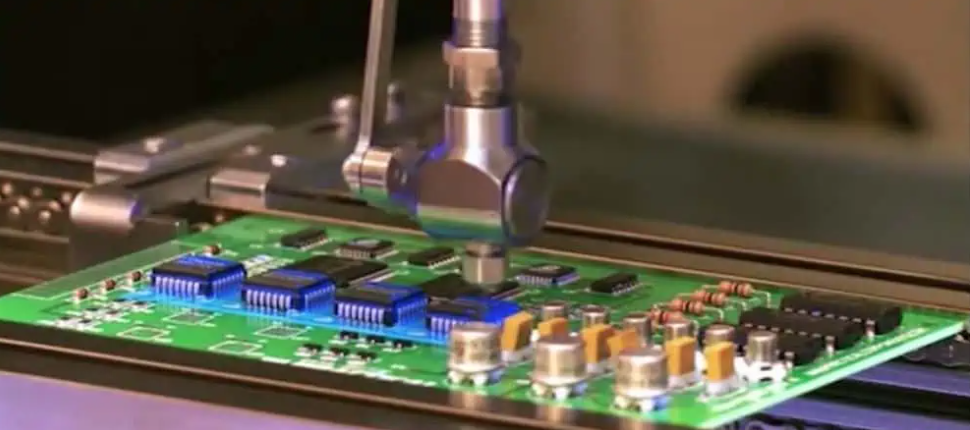
The surface is flat and the deposit is thin, so it is well suited to fine pitch work and to press fit connectors, where a plated hole must accept a compliant pin without the additional thickness that a plated finish would add. Tin dissolves readily into molten solder, so the joint forms quickly and there is no risk of the gold embrittlement that affects a gold finish, and the alloy that enters the joint is a small quantity of tin rather than a foreign metal.
The surface also wets well when it is fresh. A joint on a new board looks and behaves like a joint on a hot air levelled board, and the flux requirement is moderate. The behaviour changes with age rather than with the process, and the change is gradual: the wetting time lengthens, the fillet becomes less regular, and eventually the solder sits on the surface without spreading, which is the point at which the board has to be scrapped or reworked.
Shelf Life And The Intermetallic
The growth of the intermetallic is a diffusion process, so its rate rises with the temperature and with the time, and it is much faster at an elevated temperature than at room temperature. A board stored at ambient conditions in a sealed bag will remain solderable for the period the supplier specifies, which is typically measured in months, and the same board stored in a warm workshop loses that margin faster. Baking is particularly damaging, because the elevated temperature accelerates the diffusion and consumes the tin.
The consequence is that an immersion tin board should not be baked as a routine precaution. Where a bake is required for a moisture reason, the schedule has to be chosen with the finish in mind, and the loss of solderability has to be weighed against the moisture risk. The storage conditions, the packing, and the time between fabrication and assembly are therefore part of the finish specification rather than a detail of logistics.
Whisker Risk
Tin coatings can grow whiskers, which are thin filaments of metal that emerge from the surface and can bridge to a neighbouring conductor. The risk is greatest on a bright electroplated tin deposit, and it is lower on a thin immersion layer, but it is not zero. The condition that promotes growth is a compressive stress in the deposit, which can come from the plating chemistry, from the intermetallic that grows beneath it, and from thermal cycling.
The most effective mitigation for a board that carries an immersion tin finish is to reflow it. Once the tin is melted and resolidified as part of a solder joint, the stress state that produced the whiskers is removed, so a board that is assembled promptly is at a much lower risk than one that is stored in a warehouse as a bare board for years. Where a board must be stored, the specification of the coating thickness and the storage conditions are the controls.
Where The Finish Fits
The finish suits a board that will be assembled within its shelf life, that has fine pitch features or press fit connectors, and that must be lead free without the cost of a gold finish. It is also a reasonable choice where a flat surface matters and where the number of reflow cycles is small, since a single reflow consumes most of the tin.
It is a poor choice for a board that will be stored for a long period, for an assembly with several reflow cycles, and for a product that will be baked during assembly. Where those conditions apply, a gold finish, an organic finish with a short storage period, or an immersion silver finish is a better match. The comparison of the alloys and their processes is described under lead free and leaded soldering, the protection of the finished assembly under board level protection, and the plating sequence under PCB design and fabrication.
FAQ
Why is the tin layer so thin? Because it is deposited by a displacement reaction that stops when the copper is covered. The thickness is self limiting at a little over a micron, which is enough to protect the copper but not enough to survive many thermal cycles.
Does the finish lose solderability over time? Yes. The copper and tin intermetallic grows with time and temperature, consuming the tin, and once it reaches the surface the board no longer wets reliably.
Should an immersion tin board be baked? Only when a moisture reason requires it, and with the solderability loss in view. The bake accelerates the intermetallic growth that limits the life of the coating.