Package on Package Assembly and Solder Ball Attach
A package on package assembly stacks one package on another through a row of solder balls around the edge of the lower package. Both joints are made at the same time, and the upper package decides whether the lower one can be soldered.
Why the Assembly Is Difficult
The lower package already carries solder balls that must not be disturbed before the upper package is placed. The upper package then has to be positioned on those balls with an accuracy that the ball pitch allows.
Both rows of joints are formed in one reflow, so the heat has to reach the lower row through the upper package. The stack height and the thermal mass make that harder than it looks. Our thermal mass notes describe the profile consequence.
Warpage and Coplanarity
Both packages warp during reflow, and they warp in opposite directions if their constructions differ. The upper package can lift the outer balls out of contact before the solder melts.
The coplanarity specification of the upper package is therefore a critical parameter, and it should be verified on a sample rather than assumed from the datasheet. Our warpage notes describe how the measurement is made.
Placement and Flux
The upper package is usually placed with a flux dip or with a small amount of paste on the pads, because there is no stencil aperture for the upper row.
The flux or paste must be enough to clean the surfaces and not enough to displace the balls. The amount should be established by measurement rather than by the dip depth alone. Our paste volume notes describe the measurement.
The Reflow Window
The profile must melt both rows without overheating the upper package, whose own internal joints may be a lower temperature alloy.
Where the upper package contains a low temperature alloy, the peak must stay below it or the package will collapse internally. That limit sets the whole profile. Our mixed alloy notes describe the constraint.
Inspection
The joints between the packages cannot be seen optically, and the X-ray has to pass through two packages to reach the lower row. The upper row is visible from the side and can be checked for height and collapse.
The inspection is therefore limited, and the process control carries more of the assurance than usual. Our X-ray notes describe what can be resolved.
Rework
Rework of the upper package means removing and replacing it without disturbing the lower row. The thermal mass of the lower package makes that difficult, and the lower balls are at risk.
Where rework is expected, the process should include a preheat that brings the whole stack up evenly, and the removal should be verified by inspection of the lower row afterwards. Our repair notes describe the level of repair that is realistic.
Verification
The verification is the profile on the real stack with thermocouples in both packages, the joint height measured on a sample and a cross section of the assembled stack.
The cross section shows whether both rows formed and whether the upper package collapsed internally. It should be part of the qualification rather than an investigation after a failure.
Process Control and Verification
On a design of this kind, coplanarity is the item that decides how the rest of the board is arranged. Keeping a sample from the panel turns a dispute into a measurement, because the same coupon can be re-examined by both parties without rebuilding the batch. Reviewing the design before the data is released is cheaper than correcting it after the panel is in the tank, because every step downstream inherits the decision made at the front end.
Documenting the assumption is part of the design work, and a short note on the drawing prevents a question that would otherwise arrive a day later and cost a day of schedule. The process window is set by the narrowest step in the flow, so an improvement anywhere else shows up as margin rather than as yield until that step is addressed.
A short note on the drawing about handling, storage or packaging is often worth more than an extra decimal place on a tolerance. Where a value sits close to a process limit, the drawing should say so, since the shop can then open the process window rather than working to a nominal figure that carries no tolerance.
A stack-up that is drawn rather than described removes most of the ambiguity from a quotation, and it lets the fabricator price the board against the dielectric and copper weights that will actually be used. Where the requirement is not written down, the shop supplies its own default, and the default is chosen for the process rather than for the design.
Process Control and Verification
On a design of this kind, coplanarity is the item that decides how the rest of the board is arranged. Keeping a sample from the panel turns a dispute into a measurement, because the same coupon can be re-examined by both parties without rebuilding the batch. Reviewing the design before the data is released is cheaper than correcting it after the panel is in the tank, because every step downstream inherits the decision made at the front end.
Documenting the assumption is part of the design work, and a short note on the drawing prevents a question that would otherwise arrive a day later and cost a day of schedule. The process window is set by the narrowest step in the flow, so an improvement anywhere else shows up as margin rather than as yield until that step is addressed.
A short note on the drawing about handling, storage or packaging is often worth more than an extra decimal place on a tolerance.
Process Control and Verification
On a design of this kind, coplanarity is the item that decides how the rest of the board is arranged. Keeping a sample from the panel turns a dispute into a measurement, because the same coupon can be re-examined by both parties without rebuilding the batch. Reviewing the design before the data is released is cheaper than correcting it after the panel is in the tank, because every step downstream inherits the decision made at the front end.
Documenting the assumption is part of the design work, and a short note on the drawing prevents a question that would otherwise arrive a day later and cost a day of schedule.
A first article check confirms that the process and the drawing agree on the points listed above, and that the coupon data supports the values used in the design.
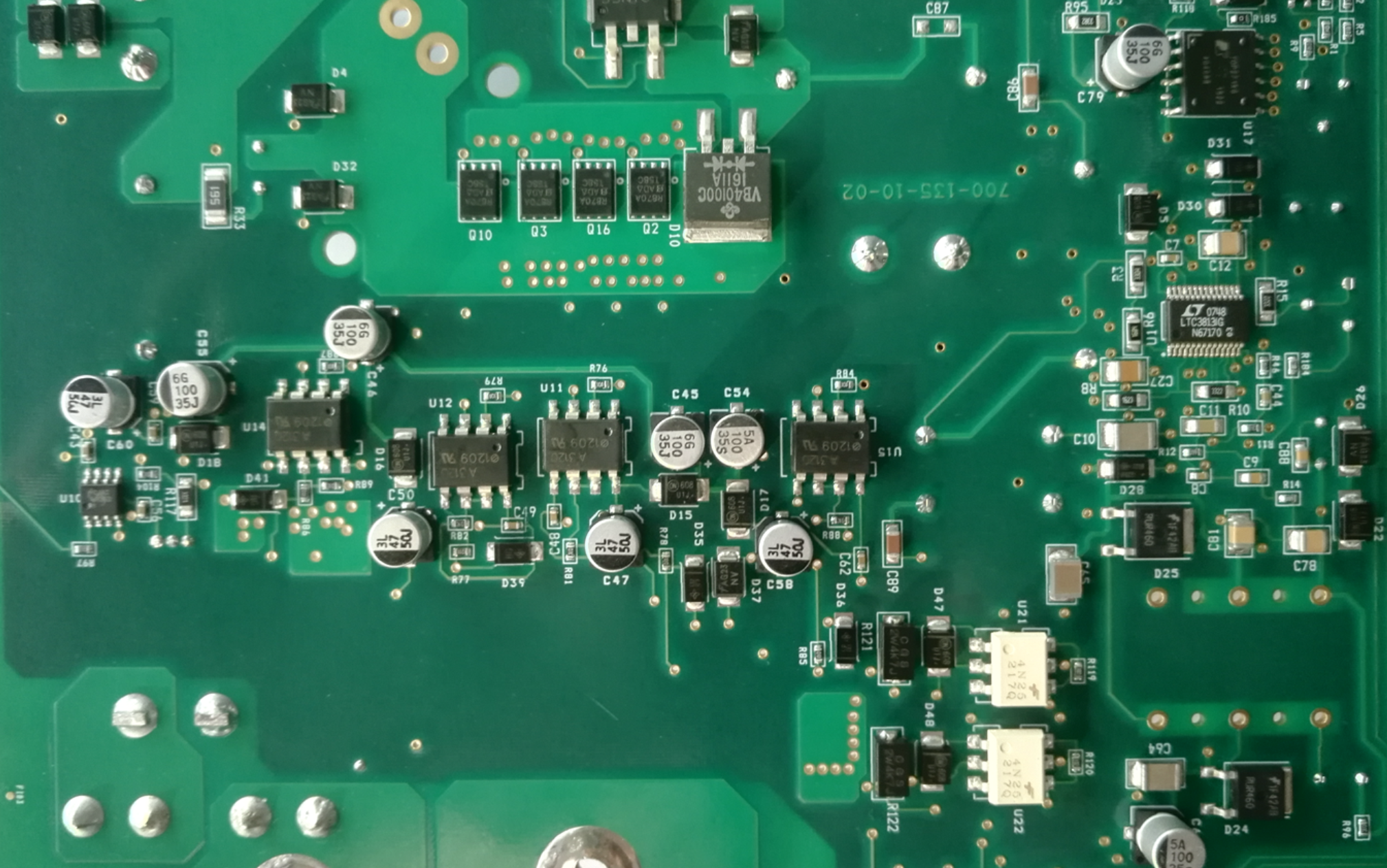
Where a measurement falls outside the expected window, the sample is retained so that the cause can be established before the balance of the batch is released.
FAQ
Can package on package be assembled with a standard profile? Only where the two packages have similar thermal mass and melting points. In most cases the profile has to be developed for the stack.
Is the upper package always soldered? Where the design uses a socket or a compression contact, it is not. Those alternatives remove the two row reflow problem at a cost in height and reliability.
What does gopcb provide for package on package assembly? We provide stack specific profile development with measurement in both packages, coplanarity verification of the incoming upper package, flux or paste amount established by measurement, upper package alloy limits respected in the profile, cross section qualification of both rows, and a rework process that protects the lower row.