Aerospace PCB Materials: How to Select the Right Material Aerospace electronics face temperature swings, vibration, pressure, radiation, and mechanical stress at the same time. A board inside an avionics bay may see very different conditions from one mounted near an engine or on a satellite. The substrate is not just…
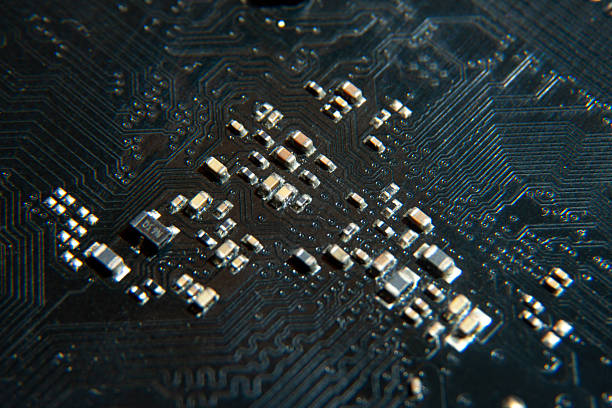
Large High-Layer PCB Manufacturing for Medical Imaging A medical imaging board can carry dense routing, several power domains and sensitive analog front ends on one panel. When that panel is large and the layer count climbs, small process drifts become expensive. Registration, lamination and drilling all interact across a bigger…
Automotive PCB Manufacturing for High Reliability Builds A vehicle exposes its electronics to heat, vibration, moisture, and long operating cycles. The bare board must hold its electrical and mechanical behaviour through all of it. That is why automotive PCB manufacturing for high reliability is a process discipline, not a single…
Precision PCB Drilling for Microvias and HDI Boards Dense boards fail at the drill, not at the schematic. A via that lands slightly off pad, or a hole wall that plates unevenly, can sink a lot that looked perfect on paper. Precision drilling for microvias and high-density interconnects is therefore…
Security Surveillance PCB Manufacturing for Reliable Systems Surveillance hardware rarely fails on the day it is installed. It fails months later, after heat, humidity and continuous power have worked on a marginal joint or a drifting impedance. That is why security surveillance PCB manufacturing deserves more attention than a simple…
Heavy Copper PCB Manufacturing for Power Electronics Power supplies, motor drives, battery systems and inverters push far more current through a board than a logic circuit ever will. Thin traces on a standard board resist that current, drop voltage and heat up. Heavy copper PCB manufacturing answers this by adding…
High-Temperature PCB Stability from -55°C to 125°C A board rated for -55°C to 125°C must survive repeated swings between those limits. Each cycle expands and contracts the laminate, the copper, and the solder joints at different rates. That mismatch builds mechanical stress inside the board and at every interface. A…
Aerospace PCB Material Selection Guide: Materials and Requirements Aerospace electronics face temperature swings, vibration, shock, humidity, pressure changes, and long service life. The laminate you choose shapes electrical performance, mechanical stability, thermal behavior, and reliability. Material selection is therefore an engineering decision, not a purchasing step. Start with the real…
Low-Volume Automotive PCB Manufacturing Guide Automotive electronics development rarely moves straight from a finished design to mass production. A typical program passes through prototype builds, engineering verification, functional testing, design optimization, pilot runs, and vehicle-level validation. Each stage needs a different board quantity, and the early stages need very few.…
Miniaturized Medical PCB Manufacturing for Implants Implantable devices keep shrinking while their electronic workload grows. Cardiac monitors, neurostimulators and sensing platforms must fit sensing, processing, communication and power management into very small spaces. The circuit board sits at the center of that squeeze. A miniaturized medical PCB carries far less…