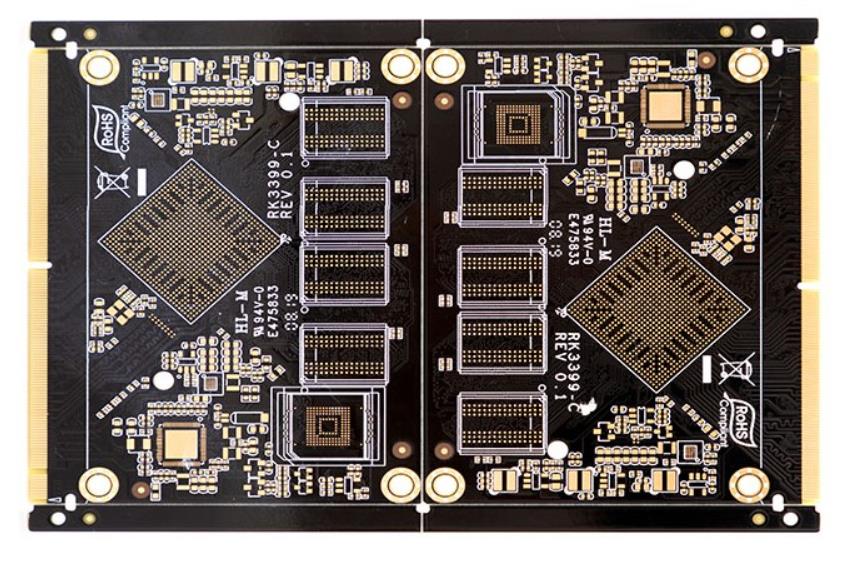
Placement accuracy verification after head calibration

PCB Design Basics: Layer Stack-Up, Grounding, and Routing Essentials

  Essential PCB Design Basics Every Engineer Should Know A reliable printed circuit board starts with a well-planned design. From schematic verification and component placement to layer stack-up, power distribution, grounding, routing, and manufacturability, every design decision can influence the electrical performance, reliability, and production cost of the final board.…
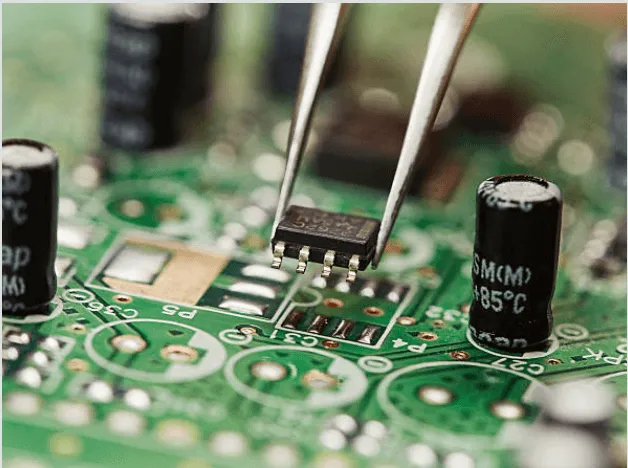
PCB Assembly

Multilayer PCB Design for EMI Suppression and Signal Integrity

  Multilayer PCB Design for EMI Suppression and Signal Integrity: Design, Process, and Quality Notes As electronic systems become faster and more compact, electromagnetic interference (EMI) has become an increasingly important consideration in PCB design. Faster IC switching speeds and shorter signal rise times generate more high-frequency energy, making power…
fr4 pcb

14 Key Characteristics of High-Reliability PCBs

14 Key Characteristics of High-Reliability PCBs: A Practical Manufacturing Guide At first glance, most printed circuit boards may look similar, regardless of their internal quality. However, the differences in materials, manufacturing processes, dimensional control, and quality assurance can have a significant impact on PCB performance, durability, and service life. Whether…
PCB Manufacturing Process

PCB Manufacturing Process Explained: A Complete Guide to PCB Fabrication and Production

Introduction to PCB Manufacturing Process The PCB Manufacturing Process is a highly precise and systematic procedure used to transform raw materials into reliable printed circuit boards for electronic products. With the rapid development of modern electronics, PCB technology continues to evolve to support higher circuit density, faster signal transmission, improved…
PCB Layer Stackup

PCB Layer Stackup Design Strategies for EMI Suppression and High-Speed PCB Performance

The Importance of PCB Layer Stackup in EMI Control With the continuous development of modern electronic products, circuit operating frequencies are increasing rapidly while device sizes continue to shrink. These trends bring significant challenges to electromagnetic compatibility (EMC), especially electromagnetic interference (EMI) control. There are many methods available to solve…
PCB dimensions

Comprehensive Guide to Custom Washing Machine PCB Manufacturing Services (2026)

Comprehensive Guide to Custom Washing Machine PCB Manufacturing Services (2026) In today’s rapidly evolving smart appliance industry, washing machines are no longer simple mechanical devices but intelligent products integrating complex electronic control systems. The washing machine PCB (Printed Circuit Board) serves as the core control unit, responsible for coordinating motor…
PCB Reliability

PCB Component Placement and Layout Guidelines for Reliable PCB Design

The correct installation and placement of electronic components on a PCB is one of the most important factors affecting soldering quality, assembly efficiency, and product reliability. A well-designed PCB Component Placement strategy can significantly reduce manufacturing defects, improve electrical performance, and enhance the overall reliability of electronic products. With the…
Printed Circuit Boards (PCBs)

PCB Quality Inspection Methods for Reliable PCBA Manufacturing

Today, almost every electronic product depends on one or more Printed Circuit Boards (PCBs) to provide electrical connections and support the operation of electronic components. From smartphones, automotive electronics, communication equipment, and industrial control systems to medical devices and intelligent wearable products, PCBs have become an essential foundation of modern…