
Component Clearance: Preparation, Placement and Process Control
Component clearance is the space that two parts need between them, and it is always larger than the space they occupy. The extra distance is for the placement nozzle, the soldering process, the inspection camera and the rework tool. A board that is packed to the outline of every part will assemble in a laboratory and fail on a production line.
Why Clearance Rules Exist
The first reason is the placement machine. The nozzle that carries a part has a body, and the body has to descend between the neighbouring parts without touching them.
The second is the soldering process. A reflow oven needs an even heat distribution, and two large parts pressed together create a shadow and a thermal gradient.
The third is rework. A part that has to be replaced needs space for a hot air nozzle, a soldering iron and a pair of tweezers, and a part that is surrounded by others cannot be removed without damaging them.
The component clearance also has to allow for the tolerance of the placement itself. A machine that places a part with an error of a tenth of a millimetre needs a margin in the courtyard that is larger than that error, otherwise two parts that are drawn apart will touch on a real board.
The fourth is inspection. An automated optical inspection system needs to see the joints from an angle as well as from above, and a part that is hidden behind another cannot be checked.
Courtyards and Neighbours
A courtyard is the footprint plus a margin, and it is the working area of the part. Two courtyards should not overlap, and the rule holds even when the bodies of the two parts would not touch.
The margin depends on the package. A small chip resistor needs a fraction of a millimetre, while a connector or a shielded part needs several millimetres for the mating direction and the tooling.
The courtyard is drawn by the library and it is usually correct, but it is often ignored during placement when the space is tight. The pad standards give the geometry and the courtyard convention that goes with it.
Where two courtyards overlap, the layout tool can flag the conflict, and the warning should be resolved rather than suppressed. A suppressed warning is the origin of most of the assembly problems on a dense board.

Assembly and Rework Access
The placement nozzle needs a vertical approach, so a tall part beside a small one can block the placement of the small one. The order of placement matters as well, since a part that is placed first can obstruct the nozzle for a part that is placed later.
The rework access is the requirement that is most often forgotten. A ball grid array in the middle of a dense area may be impossible to rework, and the product then depends on a perfect assembly with no second chance.
A part that must be reworked should have its neighbours placed at a distance that allows a nozzle to reach it, and the distance should be recorded in the layout notes rather than rediscovered in production.
The placement shift causes are closely related, because a part that has no clearance is also a part that is likely to be disturbed during placement.
Height and the Enclosure
The height of a component is a mechanical dimension of the product, and it has to be checked against the enclosure and against anything that passes over the board.
A tall component in the wrong place can hit the lid, a shield or a cable, and the collision is found only when the product is assembled. The height profile should be part of the mechanical review.
The height also affects the clearance to a neighbouring board in a stack. A mezzanine arrangement has to account for the tallest part on the board below, and the value is often the connector rather than a component.
A thermal consideration applies as well, because a part that runs hot needs space for the air to move around it. A hot part buried under a shield has a much higher temperature than the same part in the open.
Thermal and Electrical Clearance
Electrical clearance is a different rule from mechanical clearance, and it is set by the voltage and by the pollution degree of the environment. A high voltage part needs a distance to its neighbour that is far larger than the assembly needs.
The creepage and the clearance distances are quoted in the safety standard for the product, and they are usually larger than the layout designer expects. A switching supply is the classic case.
The thermal clearance is the distance needed to keep a component within its temperature limit. A hot part beside a temperature sensitive part creates a gradient that no amount of copper will remove.
Both rules apply on the same board and they can conflict, since a high voltage part may need more space than the assembly does and a hot part may need less. The larger of the two always governs.
Panel and Board Edge
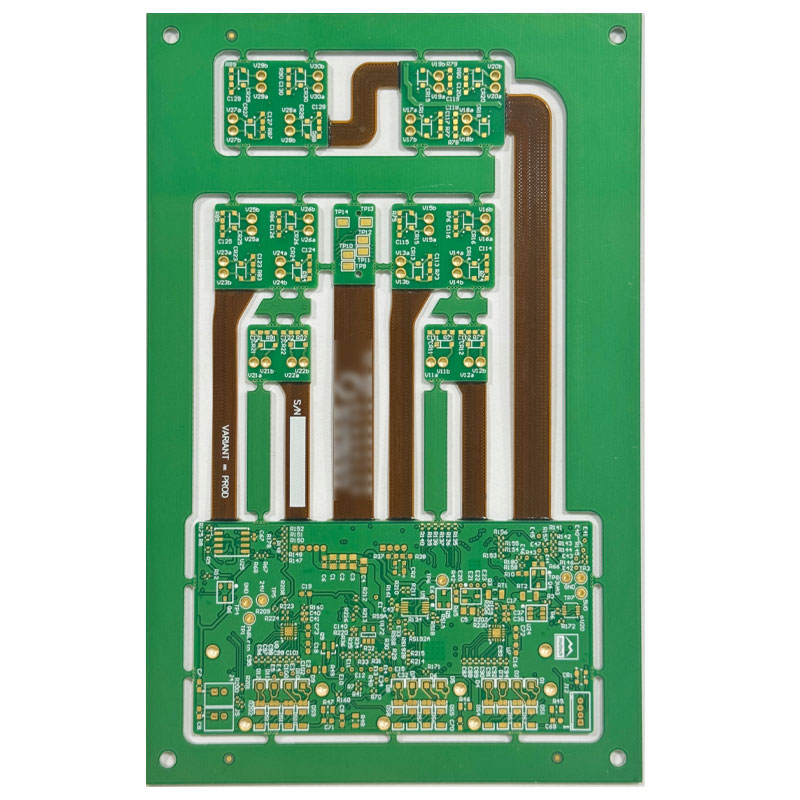
A component near the board edge interferes with the panel rail, the breakaway tab and the router. The clearance to the edge is usually a few millimetres, and it is larger than the electrical rule.
A part that overhangs the edge is a part that will be hit by the depanelisation tool. The error is found when the panel is separated, and by then the components are already soldered.
The cap or the nozzle that handles the panel also needs space, and a part that is placed too close to the rail can be knocked off by the conveyor. The design and fabrication practice includes the panel rules.
A connector that hangs over the edge is sometimes acceptable, because the housing is stronger than a component and the overhang is deliberate. The mechanical drawing should show the overhang and the panel layout has to keep the rail clear of it.
A mounting hole, a fiducial or a tooling hole also has a keep out area, and a component placed inside it blocks the fixture rather than the assembly.
Practical Rules
Use the courtyard from the library and resolve every overlap, rather than judging by the body outline in the drawing.
Check the rework access for the parts that are likely to fail, and leave a nozzle path where the product can be repaired.
Review the height profile with the mechanical engineer, and the voltage clearance with the safety engineer, before the placement is frozen.
Record the exceptions with a note and a reason, and keep the release checklist as the place where they are listed.
FAQ
How much clearance does a component need? Enough for the courtyard of the neighbouring part, plus any extra for the assembly nozzle, the rework tool and the voltage rule. The largest requirement governs.
Why do courtyards matter if the bodies do not touch? Because the space is needed for the process rather than for the part. A nozzle or a rework tool needs room that the body outline does not show.
Does a component need clearance from the board edge? Yes, several millimetres in most cases, for the panel rail, the router and the depanelisation tool.