PCB Conformal Coating: Types, Process, Application Methods, Benefits and Design Considerations
Outdoor electronics and industrial equipment are increasingly dependent on printed circuit boards (PCBs) to control critical functions. In controlled indoor environments, electronic assemblies are generally protected from excessive moisture, dust, chemicals, and temperature fluctuations. However, outdoor and harsh-environment applications expose PCBs to a much wider range of environmental stresses.
Dust, humidity, condensation, salt spray, chemicals, corrosive gases, temperature cycling, and mechanical vibration can gradually degrade PCB performance and shorten product life. In severe conditions, these factors may cause corrosion, leakage current, insulation failure, solder-joint degradation, and ultimately electronic system failure.
To improve environmental reliability, engineers use several protection technologies, including PCB conformal coating, potting, encapsulation, and protective housings. Among these methods, conformal coating provides a thin protective barrier while preserving the overall size, weight, and serviceability of the PCB assembly.
This guide explains conformal coating materials, coating processes, application methods, design considerations, advantages, applications, challenges, and how to select a reliable conformal coating service provider.
What Is Conformal Coating?
Conformal coating is a thin polymeric protective layer applied to the surface of a PCB assembly (PCBA). Depending on the material and application requirements, the coating thickness is typically around 25–250 μm.
Unlike potting compounds, conformal coatings closely follow the contours of components and PCB surfaces without completely encapsulating the assembly. This allows the coating to provide environmental protection while maintaining relatively low weight and preserving access to selected components for inspection or rework.
The primary functions of conformal coating include:
- Protecting PCBs from moisture and condensation
- Reducing corrosion caused by humidity and contaminants
- Providing insulation against leakage currents
- Protecting against dust and airborne pollutants
- Improving resistance to chemicals and salt spray
- Reducing the risk of fungal growth
- Increasing long-term PCB reliability
- Supporting operation in harsh temperature environments
However, conformal coating does not eliminate the need for appropriate enclosure design, sealing, thermal management, or PCB material selection. The coating should be considered one part of an overall environmental protection strategy.
Types of Conformal Coating Materials
Material selection depends on operating temperature, humidity, chemical exposure, mechanical stress, repair requirements, production volume, and cost.
Common coating materials include acrylic, silicone, polyurethane, epoxy, and parylene. Among these, acrylic, silicone, and polyurethane are widely used for general PCB protection.
1. Acrylic Conformal Coating (AR)
Acrylic conformal coating is one of the most widely used PCB coating materials because of its relatively simple processing and good overall performance.
Typical advantages include:
- Easy application
- Fast drying
- Good moisture resistance
- Good dielectric properties
- Transparent appearance
- Relatively low material cost
- Easy inspection
- Relatively easy removal and rework
However, acrylic coatings generally provide lower chemical resistance and abrasion resistance than polyurethane or epoxy-based materials.
Acrylic coatings are commonly selected for consumer electronics, industrial controls, automotive electronics, and general-purpose PCB assemblies where extreme chemical resistance is not required.
2. Silicone Conformal Coating (SR)
Silicone conformal coating remains flexible after curing and is particularly suitable for applications exposed to wide temperature fluctuations and thermal cycling.
Its advantages include:
- Excellent temperature resistance
- High flexibility
- Good resistance to thermal cycling
- Good moisture protection
- Good UV resistance
- Suitable for outdoor applications
The main disadvantages are relatively high material cost and greater difficulty during coating removal or rework.
Silicone coatings are frequently used in automotive electronics, outdoor control equipment, LED systems, renewable-energy equipment, and other applications exposed to temperature extremes.
3. Polyurethane Conformal Coating (UR)
Polyurethane conformal coating provides a relatively hard and durable protective layer.
Its advantages include:
- Excellent chemical resistance
- Good abrasion resistance
- Strong moisture protection
- High mechanical durability
- Good resistance to harsh operating environments
The primary disadvantages are longer curing times and greater difficulty during rework.
Polyurethane is particularly useful when a PCB must withstand aggressive chemicals, mechanical wear, or demanding industrial environments.
4. Epoxy and Parylene Coatings
Epoxy coatings can provide excellent chemical and mechanical protection but are generally more difficult to remove once cured. They are therefore more suitable for applications where long-term environmental protection is more important than serviceability.
Parylene is deposited through a vapor-phase process and can provide extremely uniform coverage, including around complex component geometries. It is often selected for specialized medical, aerospace, automotive, and high-reliability applications.
The material should always be selected based on actual environmental requirements rather than simply choosing the coating with the highest nominal performance.
PCB Conformal Coating Process
A controlled PCB conformal coating process is essential for achieving consistent protection and long-term reliability. Even a high-performance coating can fail if the PCB surface is contaminated or the coating thickness is inconsistent.
A typical process includes the following stages.
1. PCB Cleaning and Preparation
Before coating, the PCB surface must be clean and dry.
Potential contaminants include:
- Flux residues
- Oils and grease
- Dust
- Fingerprints
- Ionic contamination
- Moisture
- Processing residues
Cleaning may involve aqueous cleaning, solvent cleaning, or other approved methods depending on the assembly and materials.
After cleaning, the PCB must be thoroughly dried. Residual moisture beneath the coating can cause adhesion problems, blistering, corrosion, or electrical leakage.
2. Masking
Areas that must remain uncoated should be properly masked before application.
Typical keep-out areas include:
- Connectors
- Test points
- Switch contacts
- Programming interfaces
- Ground contacts
- RF contacts
- Heat-transfer surfaces
- Mechanical interfaces
- Selected sensors
Masking can be performed using tapes, plugs, caps, custom fixtures, or automated masking systems.
3. Coating Application
The selected coating is applied using an appropriate method, such as spraying, brushing, dipping, selective coating, or vapor deposition.
The application parameters must be controlled carefully, including:
- Coating viscosity
- Spray pressure
- Nozzle distance
- Application speed
- Environmental humidity
- Temperature
- Coating thickness
After application, sufficient leveling time should be provided to reduce bubbles and allow solvents to evaporate where applicable.
4. Curing
The coating must be properly cured before the PCB assembly is subjected to its normal operating conditions.
Depending on the material, curing may use:
- Air drying
- Thermal curing
- Moisture curing
- UV curing
- Multi-stage curing
The curing profile should follow the coating manufacturer’s technical data sheet. Excessive temperature or insufficient curing can negatively affect coating adhesion and component reliability.
5. Inspection and Quality Control
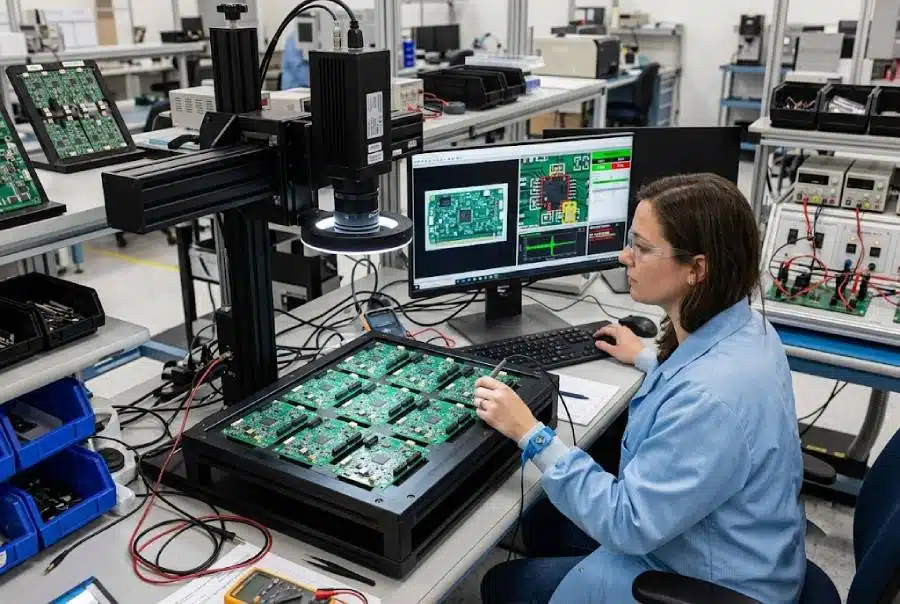
Final inspection verifies coating coverage, thickness, adhesion, and overall appearance.
Common inspection techniques include:
- Visual inspection
- UV inspection
- Optical inspection
- Coating thickness measurement
- Adhesion testing
- Cross-section analysis
- Electrical insulation testing
Automated inspection can improve repeatability in medium- and high-volume manufacturing.
Methods of Applying Conformal Coating
The appropriate coating method depends on PCB geometry, production volume, coating material, required precision, and manufacturing cost.
Brush Coating
Brush application is one of the simplest methods.
An operator manually applies the coating using a suitable brush. It is particularly useful for:
- Prototypes
- Small production batches
- Repair work
- Rework
- Field maintenance
Its main limitation is process variability. Coating thickness and coverage depend heavily on operator skill.
Spray Coating
Spraying is one of the most commonly used methods for PCB protection.
The coating can be applied manually or through automated spray equipment.
Advantages include:
- Relatively uniform coverage
- High processing efficiency
- Good adaptability
- Suitable for medium-volume production
However, sensitive areas require careful masking, and overspray must be controlled.
Selective Coating
Selective coating applies the material only to predefined PCB areas.
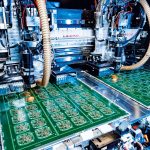
An automated machine follows programmed paths to coat specific components or regions while avoiding connectors, test points, heat-transfer surfaces, and other keep-out zones.
Major advantages include:
- High precision
- Reduced material consumption
- Less masking
- Better process repeatability
- Compatibility with automated production
The primary disadvantage is the higher initial equipment investment.
Dip Coating
Dip coating immerses the PCB assembly into the coating material and then removes it at a controlled speed.
It can provide comprehensive coverage and is suitable for certain high-volume applications. However, masking requirements and coating accumulation around component edges must be carefully controlled.
PCB Conformal Coating Design Considerations
Conformal coating requirements should be considered during the PCB layout and mechanical design stages rather than after the PCB has already entered production.
A coating-related design for manufacturability (DFM) review can identify potential problems before fabrication.
Masking Requirements
The PCB design documentation should clearly identify coating keep-out areas.
Gerber files, assembly drawings, and manufacturing documentation should specify areas that must remain uncoated, including:
- Connectors
- Test points
- Switches
- Programming interfaces
- RF contacts
- Ground contacts
- Heat sinks
- Mechanical mounting interfaces
Clear documentation reduces the risk of accidental coating on sensitive areas.
Component Selection and Placement
Component spacing affects coating coverage and curing.
Very narrow gaps can prevent coating from reaching certain surfaces, while tall components placed close to shorter components may create a shadowing effect.
Engineers should consider:
- Component height
- Component spacing
- Underside clearance
- Coating accessibility
- Curing requirements
- Potential coating accumulation
Component selection should also consider chemical compatibility with the selected coating material.
Thermal Management
Although conformal coating is relatively thin, it can influence heat transfer under certain conditions.
High-power components should therefore be evaluated carefully.
Thermal management may involve:
- Thermal vias
- Heat sinks
- Thermal interface materials
- Copper heat-spreading areas
- Appropriate coating keep-out zones
Thermal interfaces should generally remain free of conformal coating when coating could interfere with heat transfer.
Creepage and Clearance
Coating can improve insulation performance, but it should not be treated as a substitute for appropriate PCB creepage and clearance design.
High-voltage PCB layouts should still comply with applicable safety requirements and product standards.
Benefits of PCB Conformal Coating
Environmental protection is one of the main reasons manufacturers use PCB conformal coating services.
Corrosion Protection
Moisture, oxygen, salt, and contaminants can accelerate corrosion of copper traces, solder joints, connectors, and component leads.
A properly applied coating creates a protective barrier that reduces direct exposure to these environmental factors.
This can significantly improve long-term reliability in outdoor and industrial applications.
Moisture Protection
Moisture can create conductive paths between PCB traces, resulting in leakage current, corrosion, insulation degradation, and potentially short circuits.
Conformal coating reduces the possibility of moisture reaching sensitive surfaces and helps maintain electrical insulation performance.
However, coating should not be considered completely waterproof encapsulation. Water can still enter through connectors, damaged coating, interfaces, or uncoated areas.
Improved Mechanical and Environmental Reliability
Depending on the coating material, the protective layer can improve resistance to:
- Dust
- Chemicals
- Salt spray
- Humidity
- Condensation
- UV exposure
- Mechanical contamination
- Fungal growth
Reduced Maintenance Costs
A properly protected PCB can maintain stable operation for longer periods in demanding environments.
As a result, conformal coating can reduce:
- Failure rates
- Repair frequency
- Field maintenance
- Warranty claims
- Replacement costs
Applications of PCB Conformal Coating

Conformal coating is widely used where electronic assemblies must operate reliably under environmental stress.
Industrial Equipment
Industrial environments may contain dust, oils, chemicals, moisture, and corrosive substances.
Conformal coating can protect:
- PLC systems
- Industrial controllers
- Motor drives
- Automation equipment
- Sensors
- Control panels
- Industrial communication systems
Automotive Electronics
Automotive electronic systems experience temperature cycling, humidity, vibration, dust, and chemical exposure.
Conformal coating may be applied to:
- ADAS electronics
- Sensor modules
- Lighting systems
- Power electronics
- Control units
- Battery-management electronics
Material selection should consider the actual temperature and chemical environment of the vehicle system.
Aerospace and Defense
Aerospace and defense electronics may experience extreme temperature changes, humidity, vibration, and corrosive environments.
Applications include:
- Navigation systems
- Communication equipment
- Flight-control electronics
- Avionics
- Marine electronics
- Radar and sensing systems
For safety-critical applications, coating material and process qualification must be carefully controlled.
Renewable Energy Systems
Renewable-energy equipment often operates outdoors for many years.
Conformal coating can be used for:
- Solar inverters
- Energy-storage systems
- Wind-turbine controllers
- Power converters
- Battery-management systems
- Charging equipment
The coating helps protect electronic assemblies from humidity, dust, salt, and temperature cycling.
Consumer Electronics
Outdoor and semi-outdoor consumer products can also benefit from conformal coating.
Potential applications include:
- LED lighting
- Smart-home devices
- Outdoor sensors
- Security equipment
- Smart appliances
- Portable electronics
Conformal Coating vs. Potting
Conformal coating and potting are both used to protect electronic assemblies, but they provide different levels of environmental protection.
| Parameter | Conformal Coating | Potting |
|---|---|---|
| Protection method | Thin protective film covering PCB surfaces | PCB assembly partially or completely encapsulated in resin |
| Typical thickness | Approximately 25–250 μm | Usually much thicker |
| Weight increase | Minimal | Significant |
| Environmental protection | Good | Very high |
| Heat dissipation | Relatively easy to manage | Depends strongly on resin properties |
| Inspection | Relatively easy | More difficult |
| Rework | Possible with appropriate methods | Often difficult or impossible |
| Material cost | Generally lower | Generally higher |
| Typical applications | Industrial, automotive, consumer and outdoor electronics | High-severity environments and high-protection applications |
The choice depends on the required protection level, serviceability, thermal requirements, mechanical stress, and product life cycle.
In some applications, a hybrid protection strategy combining conformal coating with localized potting or sealing can provide an effective balance between protection and serviceability.
Common Challenges in Conformal Coating
Despite its advantages, conformal coating introduces additional manufacturing requirements.
Rework Difficulty
Once a coating has been applied, component replacement and PCB repair become more difficult.
Some materials are relatively easy to remove, while polyurethane, epoxy, and other highly durable coatings may require specialized mechanical or chemical removal techniques.
Therefore, critical test points and service areas should be considered during PCB layout.
Thermal Management
A conformal coating can influence heat transfer, particularly when applied around high-power components.
Engineers should therefore avoid excessive coating thickness and maintain appropriate thermal interfaces.
Process Complexity
The coating process introduces additional manufacturing stages, including:
- Cleaning
- Masking
- Coating
- Curing
- Inspection
- Rework if necessary
Each stage requires process control.
Poor masking, inconsistent coating thickness, bubbles, voids, poor adhesion, and incomplete curing can reduce reliability.
Material Compatibility
Not every coating material is compatible with every electronic component.
Potential compatibility concerns include:
- Component encapsulants
- Plastics
- Adhesives
- Labels
- Connectors
- Rubber materials
- Optical components
- Solder flux residues
Manufacturers should evaluate material compatibility before production.
VOC and Environmental Requirements
Some solvent-based coating systems release volatile organic compounds (VOCs). Depending on the manufacturing location and process, appropriate ventilation, worker protection, emission control, and environmental compliance may be required.
Water-based and solvent-free coating technologies can be considered where appropriate.
How to Choose a Conformal Coating Service Provider
Selecting a reliable PCB conformal coating manufacturer is important because coating quality directly affects long-term product reliability.
Cost should not be the only selection criterion. A slightly higher manufacturing cost may be justified if the supplier provides stronger engineering support, process control, testing, and quality assurance.
Evaluate Technical Capability
A qualified supplier should understand:
- PCB layout requirements
- Coating material properties
- Application methods
- Curing profiles
- Environmental requirements
- Component compatibility
- Inspection standards
- Reliability testing
The supplier should also be able to recommend an appropriate coating system according to the final operating environment.
Review Application Capabilities
A capable supplier should have access to multiple application methods, such as:
- Selective coating
- Spray coating
- Brush coating
- Dip coating
- Automated coating
- Vapor deposition for specialized applications
Automated application is particularly valuable for improving coating thickness consistency and production repeatability.
Verify Quality Systems and Standards
A reliable PCB manufacturing and assembly partner should maintain a robust quality management system and follow applicable industry standards.
Relevant standards may include IPC requirements and material-specific qualification standards such as IPC-CC-830.
The supplier should also be able to provide appropriate process documentation and inspection records when required.
Evaluate DFM Support
A strong supplier should participate in the project before production begins.
Engineering review should cover:
- Coating keep-out zones
- Component spacing
- Masking requirements
- Coating thickness
- Thermal interfaces
- Component compatibility
- Inspection accessibility
- Rework requirements
Early DFM collaboration can significantly reduce production defects and rework.
Why Choose Kingda for PCB Conformal Coating?
For projects requiring reliable environmental protection, Kingda can integrate PCB fabrication, PCB assembly, testing, and conformal coating considerations into a coordinated manufacturing workflow.
A professional PCB partner should not treat conformal coating as an isolated final process. Instead, coating requirements should be considered from PCB layout and component selection through assembly, cleaning, coating, curing, inspection, and final testing.
For demanding applications, Kingda can focus on:
- PCB manufacturing and assembly coordination
- Conformal coating process planning
- Material and component compatibility
- Selective coating requirements
- DFM engineering support
- Quality inspection
- Prototype validation
- Production scalability
This integrated approach helps reduce process risks and supports consistent PCB reliability in demanding operating environments.
Conclusion
PCB conformal coating has become an important protection technology for electronic assemblies operating in outdoor, industrial, automotive, renewable-energy, aerospace, and other harsh environments.
By creating a thin protective barrier around the PCB assembly, conformal coating can reduce exposure to moisture, dust, chemicals, salt spray, corrosion, and other environmental stresses. When the correct material, application method, coating thickness, and curing process are selected, it can significantly improve PCB reliability and service life.
However, conformal coating should not be treated as a simple post-assembly process. Its requirements should be considered during PCB design through DFM, component selection, layout, thermal management, masking, testing, and manufacturing planning.
As electronic products continue to become smaller, more powerful, and more environmentally demanding, advanced coating technologies and automated application processes will become increasingly important. Selecting an experienced manufacturing partner such as Kingda can help engineers validate coating requirements early, control manufacturing risks, and achieve consistent PCB performance throughout the product life cycle.