PCB Copper Weight and Trace Width – The Essential Design Guide for Engineers
In PCB design, copper weight and trace width are two core parameters that directly affect electrical performance, thermal dissipation, current‑carrying capacity, and product reliability. Whether you are designing consumer electronics, industrial controls, power modules, or automotive systems, choosing the right copper weight and trace width is essential for stable circuit operation.
If traces are too narrow, they may overheat, cause excessive voltage drop, or even burn out. If they are too wide, they increase PCB size and manufacturing cost. Understanding the relationship between copper weight and trace width is fundamental knowledge for every PCB engineer.
This article explains PCB copper weight definitions, the relationship between copper weight and trace width, common current‑capacity tables, and design optimisation tips – helping you quickly design high‑reliability PCBs.
1. What Is PCB Copper Weight?
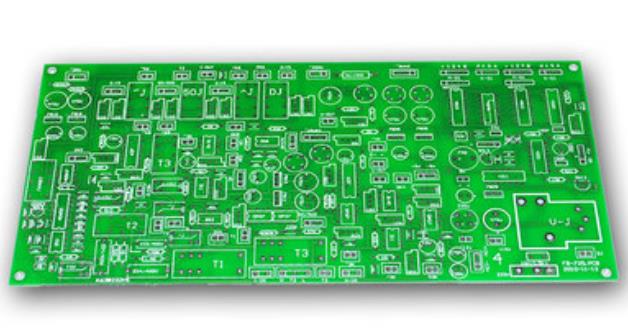
PCB copper weight refers to the thickness of the copper layer on the laminate surface, commonly expressed in ounces (oz). One ounce of copper (1 oz) means that one ounce of copper is evenly spread over one square foot of area, corresponding to a thickness of about 35 μm (1.4 mil).
Common PCB copper weight specifications:
- 0.5 oz – 17 μm (0.6 mil)
- 1 oz – 35 μm (1.4 mil) – the most common standard
- 2 oz – 70 μm (2.8 mil) – used in power and industrial equipment
- 3 oz – 105 μm (4.1 mil)
- 4 oz – 140 μm (5.5 mil)
- 6 oz – 210 μm (8.3 mil)
- 10 oz – 350 μm (13.8 mil) – heavy copper for high‑current applications
2. Why Is PCB Copper Weight So Important?
Copper weight directly determines:
- Current‑carrying capacity: thicker copper can carry more current.
- Thermal dissipation: thicker layers spread heat better, reducing hot spots.
- Voltage drop: lower resistance reduces IR losses.
- Reliability: lower heating improves long‑term stability.
- Manufacturing cost: heavier copper increases fabrication difficulty and cost.
3. Relationship Between Copper Weight and Trace Width
For the same current:
- Higher copper weight allows narrower trace widths.
- Lower copper weight requires wider traces.
For example, to carry 10 A:
- With 1 oz copper, you may need ~120 mil trace width.
- With 2 oz copper, about 60 mil is sufficient.
- With 3 oz copper, only about 40 mil is needed.
Thus, in high‑power designs, increasing copper weight saves board space.
4. PCB Copper Weight vs. Trace Width Reference Tables
The following data are based on IPC‑2152 standard for outer layer traces with a 10°C temperature rise.
1 oz Copper – Trace Width vs. Current
- 1 A → 10 mil (0.25 mm)
- 2 A → 20 mil (0.51 mm)
- 5 A → 50 mil (1.27 mm)
- 10 A → 120 mil (3.05 mm)
- 15 A → 210 mil (5.33 mm)
- 20 A → 320 mil (8.13 mm)
2 oz Copper – Trace Width vs. Current
- 1 A → 5 mil (0.13 mm)
- 2 A → 10 mil (0.25 mm)
- 5 A → 25 mil (0.64 mm)
- 10 A → 60 mil (1.52 mm)
- 15 A → 100 mil (2.54 mm)
- 20 A → 160 mil (4.06 mm)
3 oz Copper – Trace Width vs. Current
- 1 A → 4 mil (0.10 mm)
- 2 A → 8 mil (0.20 mm)
- 5 A → 18 mil (0.46 mm)
- 10 A → 40 mil (1.02 mm)
- 15 A → 75 mil (1.91 mm)
- 20 A → 120 mil (3.05 mm)
5. IPC‑2152 vs. IPC‑2221 Standards
Many engineers still use IPC‑2221 for trace width calculation, but IPC‑2152 is now the recommended standard.
Advantages of IPC‑2152:
- Based on extensive experimental data, more realistic.
- Considers copper area, airflow, and heat‑sinking conditions.
- Supports copper‑pour assisted heat dissipation – suitable for modern high‑density designs.
- Higher accuracy for automotive, power, and industrial control systems.
For new projects, it is strongly recommended to use IPC‑2152 for trace width calculations.
6. How to Choose the Right PCB Copper Weight
- 1 oz: Consumer electronics, smart home, communication, general control boards (Bluetooth modules, routers, industrial sensors).
- 2 oz: Switching power supplies, LED drivers, industrial automation, motor drives (AC‑DC, UPS, servo drives).
- 3–4 oz: Automotive, BMS, solar inverters, EV chargers (OBC, battery protection, new energy control).
- 6 oz+: Welding equipment, high‑power inverters, industrial distribution, military systems.
7. Impact of Copper Weight on PCB Cost
Heavier copper increases manufacturing cost. Approximate cost multipliers relative to 1 oz:
- 1 oz – baseline
- 2 oz – +10% to +20%
- 3 oz – +20% to +40%
- 4 oz – +35% to +60%
- 6 oz+ – custom quote
For example, a standard 4‑layer PCB with 1 oz copper might cost $50–100; with 3 oz heavy copper, it could be $80–150.
8. Best Practices for PCB Trace Width Design
- Add design margin: design for 120–150% of the actual current.
- Use copper pours: large copper areas reduce impedance, improve thermal dissipation, and enhance EMC.
- Control temperature rise: for high‑reliability products, aim for ≤15°C (industrial), ≤10°C (automotive/medical).
- Prefer wider traces over thicker copper: increasing width is often more cost‑effective than increasing copper weight.
- Perform thermal simulation: tools like Altium Designer, Cadence Allegro, Ansys SIwave, and HyperLynx can verify current‑carrying capacity and temperature rise.
9. Frequently Asked Questions
Q1: How much current can a 1 oz copper trace carry?
Typically, a 10‑mil wide trace can carry about 1 A, but actual capability depends on temperature rise and environment.
Q2: What are the advantages of 2 oz copper over 1 oz?
Higher current capacity, lower resistance, better heat dissipation, and longer product life.
Q3: What copper weight is commonly used in automotive electronics?
Typically 2 oz, 3 oz, or 4 oz; EV power modules may use 6 oz or more.
Q4: Can heavier copper reduce trace width?
Yes. Thicker copper allows narrower traces for the same current.
Q5: What is the most common PCB copper weight?
1 oz is the most widely used standard worldwide.
10. Conclusion
PCB copper weight and trace width are critical design parameters that directly affect performance and reliability. Properly matching them ensures sufficient current capacity, lower temperature rise, and longer product life.
For high‑current, automotive, power, and industrial control PCBs, we recommend using the IPC‑2152 standard for trace width calculation and selecting the appropriate copper weight based on the operating environment.
gopcb has extensive experience in heavy‑copper PCB manufacturing, offering custom solutions from 1 oz to 10 oz copper weight. Whether you need prototyping or volume production, our engineering team can help you optimise your design for performance and cost.
Explore our PCB design & layout services, or learn about our PCB manufacturing capabilities. For assembly needs, check our prototype PCB assembly and high‑volume assembly options.