PCB SMT vs Manual Assembly: Key Differences & Selection Guide
In electronics manufacturing, the choice of PCB assembly method directly impacts production cost, lead time, solder quality, product reliability, and volume efficiency. Today, PCB assembly primarily includes SMT (Surface Mount Technology), THT (Through-Hole Technology), and manual assembly.
SMT PCB assembly uses automated equipment such as solder paste printers, SPI, pick-and-place machines, reflow ovens, and AOI to place and solder components. Manual PCB assembly relies on skilled technicians to place, solder, inspect, and rework components by hand.
So, what exactly differentiates SMT from manual assembly? Is SMT always superior? Which method should you choose for low-volume or prototype runs? This comprehensive guide compares SMT and manual PCB assembly across process, cost, speed, precision, quality, component types, applications, and supplier selection — helping OEMs, engineers, and procurement professionals make the right decision.
Whether you need prototype PCB assembly, high-volume production, or a mixed-technology approach, gopcb offers tailored solutions to match your project requirements.
1. What Is PCB SMT Assembly?
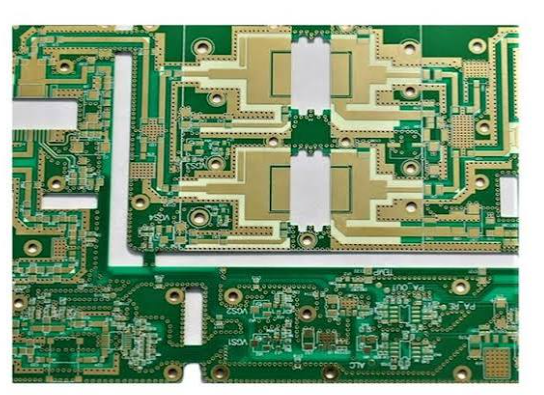
PCB SMT assembly is a surface-mount based process where components are mounted directly onto the surface of a printed circuit board. Unlike through-hole parts, SMDs do not require leads inserted into drilled holes. Instead, solder paste is applied to pads, and components are placed and reflow-soldered to form reliable electrical and mechanical joints.
A typical SMT assembly line includes: PCB → Solder Paste Printing → SPI → Pick-and-Place → Reflow Soldering → AOI → X-Ray (if needed) → Electrical Test → Final Inspection. Modern SMT lines enable high-speed, continuous, and highly repeatable placement, making them ideal for medium- and high-volume production.
Common SMT packages include 0201, 01005, QFN, QFP, BGA, LGA, CSP, fine-pitch ICs, and various SMD resistors, capacitors, and inductors. For high-density designs, miniaturized electronics, and precision placement, SMT is the go-to technology.
2. What Is Manual PCB Assembly?
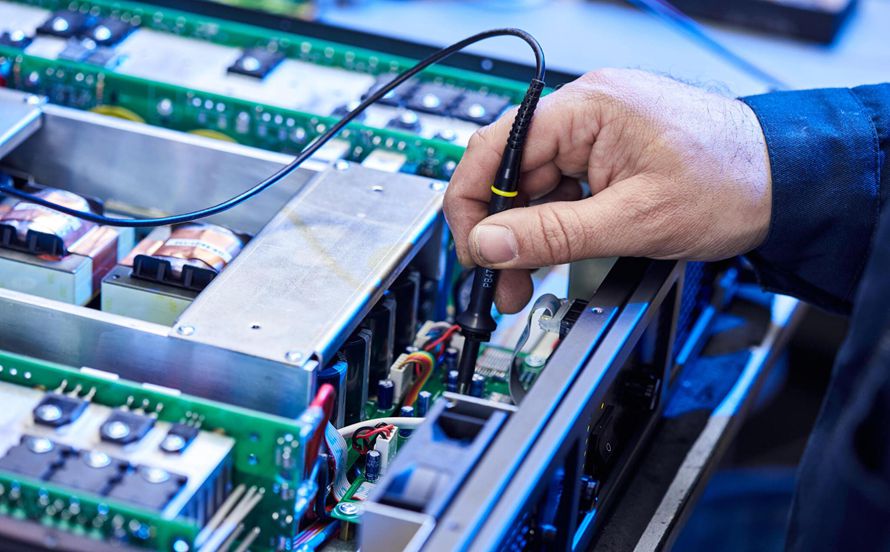
Manual PCB assembly is performed by technicians who place and solder components by hand. The process typically involves preparing the PCB and components, cross-checking against the BOM, hand-placing parts, hand-soldering with irons or hot-air stations, trimming leads, visual inspection, electrical testing, and rework if necessary.
Manual assembly is often used for PCB prototypes, engineering samples, small-batch production, rework, repair, large through-hole components, special parts, and highly customized electronics. While it relies on human skill, manual assembly often incorporates aids such as hot-air rework stations, selective soldering units, and test fixtures.
For projects requiring flexibility and quick turnaround on simple boards, low-volume PCB assembly with manual techniques can be an excellent choice.
3. SMT vs Manual Assembly: Key Differences
The fundamental difference lies in automation. SMT uses automated stencil printers, pick-and-place machines, reflow ovens, and inspection systems, while manual assembly depends on operator experience and skill.
| Aspect | PCB SMT Assembly | PCB Manual Assembly |
|---|---|---|
| Component Placement | Automated | Manual |
| Production Speed | High | Low to moderate |
| Placement Precision | High (±0.01mm) | Operator dependent |
| Labor Requirement | Low | High |
| High-Volume Suitability | Excellent | Poor |
| Prototype Suitability | Good | Excellent |
| Micro Components | Excellent | Limited |
| Through-Hole Parts | Requires additional process | Excellent |
| Process Consistency | High | Variable |
| Initial Setup Cost | Higher | Lower |
| Per-Unit Cost (High Volume) | Lower | Higher |
| Rework Flexibility | Requires specialized tools | High |
| Process Flexibility | High | Very high |
Neither method is universally superior. SMT excels at standardized, high-efficiency, and medium-to-high volume production, while manual assembly remains ideal for prototypes, small batches, rework, and special components.
4. Cost Comparison: SMT vs Manual Assembly
Cost is often the primary concern. Manual assembly may appear cheaper initially because it requires no expensive SMT equipment. However, cost structures shift dramatically as order quantities increase.
Manual Assembly Costs: Low initial setup, but labor costs rise linearly with volume and component count. For a simple PCB with 20–40 components and only a few units, manual assembly can be cost-effective. But for 1,000 or 10,000 boards, labor becomes prohibitively expensive and slow.
SMT Assembly Costs: Higher upfront setup including stencils, pick-and-place programming, feeder configuration, BOM/centroid processing, SPI/AOI programming, and line validation. Once set up, the line runs at high speed, driving per-unit labor costs down significantly.
General rule:
- Ultra-small batches: Manual may be more economical.
- Medium volumes: SMT typically offers cost advantage.
- High volumes: Automated SMT is clearly superior.
A more accurate cost model is: Total Assembly Cost = Setup + Labor + Equipment + Inspection + Rework + Scrap + Testing. This holistic view prevents misleading comparisons based solely on setup fees.
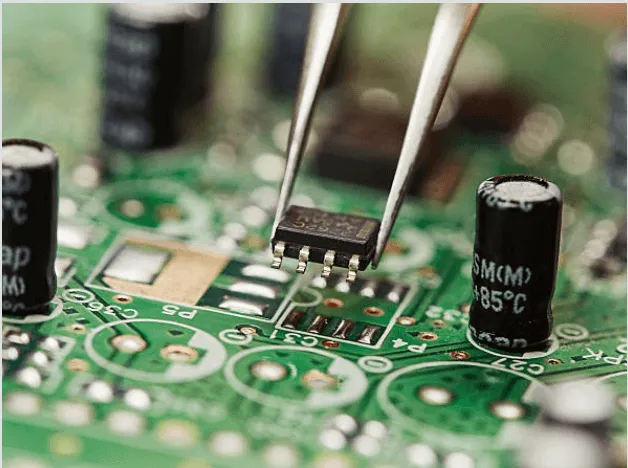
5. Production Speed & Throughput
Speed is where SMT shines. Modern high-speed placement machines can place thousands of components per minute. Manual assembly, by contrast, involves individual identification, picking, placing, and soldering — each step consuming significant time.
SMT is preferred for: High-volume consumer electronics, automotive, industrial controls, communications, IoT, and smart devices.
Manual assembly suits: Prototypes, engineering samples, small orders, repair, rework, and special components.
If your priority is fast turnaround and stable capacity for volume production, SMT PCB assembly from a reliable partner like gopcb ensures consistent throughput.
6. Component Size & Placement Accuracy
As electronics trend toward miniaturization and high density, component sizes shrink. Automated pick-and-place machines place components with micron-level precision, making SMT ideal for 0201, 01005, fine-pitch ICs, QFN, BGA, CSP, and high-density SMD arrays.
Manual handling of ultra-small components is challenging and error-prone. While operators can comfortably handle large resistors, capacitors, and connectors, placing 01005 or 0201 parts requires exceptional skill and specialized tools. For high-density designs, SMT is clearly advantageous.
7. Quality & Reliability
PCB assembly quality depends on design, materials, solder paste, stencil design, placement accuracy, reflow profile, inspection standards, and operator skill. SMT offers superior consistency and repeatability. With correct parameter settings, SMT lines control solder paste volume, placement coordinates, component angles, placement force, reflow temperature, and dwell time with high precision.
Moreover, SMT integrates automated inspection:
- SPI (Solder Paste Inspection): Checks paste volume, height, area, position, and shape before placement.
- AOI (Automated Optical Inspection): Detects missing, wrong, misaligned, or polarity-reversed components, solder bridges, insufficient or excess solder, and visual defects.
- X-Ray Inspection: For BGA, QFN, and other hidden-solder-joint packages, X-Ray ensures internal joint quality.
These capabilities deliver high-quality PCB manufacturing and assembly that meets the strictest reliability standards.
8. Process Comparison: SMT vs Manual
Typical SMT Process Flow
- PCB Incoming Inspection: Verify dimensions, pads, solder mask, surface finish, and visual quality.
- Solder Paste Printing: Apply precise solder paste through stencil onto pads.
- SPI: Inspect paste thickness, area, volume, and registration.
- Pick-and-Place: Automated placement of SMD components per centroid data.
- Reflow Soldering: Profile-controlled heating melts solder to form reliable joints.
- AOI: Post-reflow optical inspection.
- X-Ray & Electrical Test: For BGA and other complex packages, plus ICT, flying probe, or functional test.
Typical Manual Assembly Process
- Component Preparation: Sort and verify components per BOM.
- Hand Placement: Place components according to silk screen and assembly drawings.
- Hand Soldering: Use soldering irons, hot-air stations, or selective soldering tools.
- Visual Inspection: Check orientation, solder joints, and completeness.
- Rework & Test: Correct defects and perform electrical verification.
Manual assembly offers high flexibility but lower consistency and throughput.
9. When to Choose SMT Assembly
Consider SMT for projects with:
- High component count per board
- High-density PCB design
- Micro SMD components (0201, 01005, etc.)
- BGA, QFN, QFP, or fine-pitch ICs
- Demanding placement accuracy
- Need for consistent, repeatable quality
- Medium to large production volumes
- Short production cycle requirements
- Automated inspection (SPI, AOI, X-Ray)
- Long-term mass production
For consumer electronics, automotive, industrial controls, communications, and smart devices, SMT is the mainstream choice.
10. When Manual Assembly Is More Suitable
Manual assembly remains essential in many scenarios. Consider it when:
- Only a few PCBs are needed
- The product is in prototype or concept stage
- PCB design is still frequently modified
- Component count is very low
- Large or non-standard components are used
- Special or custom parts require hand assembly
- PCB repair or rework is required
- Automation is not economically justified
For example, an engineer needing five boards for functional verification rarely benefits from a full SMT setup. In such cases, prototype PCB assembly with manual techniques provides flexibility and speed.
11. Can SMT and Manual Assembly Be Combined?
Absolutely. Mixed assembly is common in modern manufacturing. Many boards use a hybrid approach: SMT for most SMDs, plus manual or selective soldering for through-hole, large connectors, and special parts.
Typical mixed flow: Solder Paste → SMT Placement → Reflow → THT Insertion → Manual/Selective Soldering → AOI → Electrical Test.
This approach leverages SMT speed for small components and manual flexibility for large or unusual parts. It is especially useful for industrial control boards, power supplies, communication equipment, automotive electronics, relays, connectors, terminals, and large transformers. For complex projects, mixed-technology PCB assembly offers a practical and cost-effective solution.
12. How to Choose the Right PCB Assembly Method
Evaluate these factors before deciding:
- Production Volume: A few prototypes? Manual. Hundreds or thousands? SMT.
- Component Count: 10 components vs. 500 components — the more parts, the greater SMT’s advantage.
- Component Packages: BGA, QFN, QFP, CSP, 01005, 0201, fine-pitch? If yes, SMT is strongly recommended.
- PCB Complexity: High routing density, fine pitch, high component density, BGA? SMT is better suited.
- Quality Requirements: Automotive, medical, industrial, telecom — choose a manufacturer with robust inspection and quality systems.
- Total Cost: Compare total cost including setup, labor, equipment, inspection, testing, rework, and scrap — not just setup fee.
- Lead Time: For rapid volume production, SMT offers clear speed advantages.
13. Why Choose gopcb for PCB SMT Assembly?
For OEMs, ODMs, and electronics manufacturers, partnering with a supplier that offers both PCB fabrication and assembly reduces supply chain coordination overhead. gopcb provides integrated solutions from PCB manufacturing to assembly, supporting prototypes, small batches, and high-volume production.
A professional SMT assembly partner should offer:
- PCB fabrication capability
- SMT assembly
- THT assembly
- Mixed assembly
- Component procurement
- SPI, AOI, and X-Ray inspection
- Electrical testing
- Prototype, low-volume, and mass production
When PCB fabrication and assembly are handled by the same provider, data transfer, logistics, and quality coordination become seamless.
For a quotation, prepare: Gerber files, BOM, pick-and-place/centroid files, PCB specifications, assembly drawings, component datasheets, target quantity, test requirements, and special process needs. Complete documentation helps gopcb accurately assess process, materials, lead time, and pricing.
14. FAQ: PCB SMT vs Manual Assembly
Q1: Is SMT assembly better than manual assembly?
For medium to high volumes, SMT offers higher efficiency, precision, and consistency. For prototypes, ultra-small batches, rework, and special components, manual assembly is often more appropriate.
Q2: Is SMT PCB assembly cheaper than manual?
Not always. For small quantities, manual assembly has lower upfront costs. As volume increases, SMT automation reduces per-unit labor and overall cost.
Q3: Can SMT be used for PCB prototyping?
Yes. SMT is well-suited for prototypes, especially those with micro SMDs, fine-pitch ICs, BGA, or high-density circuits. gopcb supports prototype PCB assembly with both SMT and manual options.
Q4: What is the biggest advantage of SMT assembly?
High-speed, high-precision, high-consistency, and high-component-density capability — ideal for modern compact electronics.
Q5: What is the biggest advantage of manual PCB assembly?
Flexibility. It excels at prototypes, small batches, special components, repair, and rework.
Q6: Can SMT and manual assembly be used together?
Yes. Many boards use SMT for most components, with manual or selective soldering for connectors, large through-hole parts, and special items — this is mixed PCB assembly.
Q7: Which assembly method is best for high-volume production?
For most products, automated SMT assembly is the preferred choice due to its speed, repeatability, and lower per-unit labor cost. gopcb offers high-volume PCB assembly with state-of-the-art SMT lines.
15. Final Decision: SMT vs Manual Assembly
There is no absolute winner — the right choice depends on your product and production needs.
SMT is better for:
- Medium to high-volume production
- High-density PCBs
- Micro SMD components
- Fine-pitch ICs, BGA, QFN, QFP
- High placement accuracy
- Fast PCB assembly turnaround
- High consistency and automated inspection
Manual assembly is better for:
- PCB prototypes and engineering samples
- Ultra-small batch orders
- Large or non-standard components
- PCB repair and rework
- Frequently changing designs
For boards with many SMDs plus connectors, large through-hole parts, or special components, a mixed assembly approach (SMT + THT + manual) is often the most practical solution.
When evaluating a PCB assembly partner, look beyond per-unit price. Assess SMT equipment, placement accuracy, SPI/AOI/X-Ray capability, component procurement, prototype support, quality systems, and production capacity.
gopcb offers comprehensive PCB fabrication and SMT assembly solutions, helping customers move smoothly from prototyping and small-batch production to stable mass manufacturing.