Preventing Board Warpage Through Reflow
A board that goes into a reflow oven flat and comes out bowed has not been damaged by a single event. It has been deformed by a temperature gradient, and the deformation has persisted because the material lost its stiffness while it was hot. Preventing it is a matter of controlling the temperature, the material and the way the panel is supported.
This article covers the measures that reduce board warpage through reflow, from the ramp rate and the glass transition temperature of the laminate to the orientation of the panel on the oven chain and the use of a carrier. Each of them either lowers the temperature the board reaches, raises the temperature at which it stops being stiff, or supports the board while it is soft.
Why Boards Warp in the Reflow Oven
Every material in the assembly expands at its own rate when it is heated, and the copper, the laminate and any large components do not agree on a number. Where the expansion is uniform across the board, the result is a small change in size; where it is not, because one area is hotter or holds more copper, the result is a bending moment.
Above the glass transition temperature the laminate becomes soft enough for that moment to bend it permanently rather than elastically. The board is therefore most vulnerable in the middle of the profile, when it is hottest and least stiff, and it is the state of the assembly at that moment that decides the finished flatness. Cooling matters as much as heating, because the board sets in whatever shape it happens to hold when it passes back below that temperature.
Temperature: Ramp Rate and Peak
Temperature is the source of the stress, so reducing it reduces the deformation. Slower ramps through the heating and cooling stages give the assembly time to expand and contract evenly, and a lower peak temperature reduces how long the laminate spends in its softened state.
The trade-off is that a slower profile changes the soldering. Long soak times and slow ramps affect flux activation and can leave the alloy above liquidus for longer than intended, which promotes intermetallic growth and, in some pastes, an increased risk of bridging. The profile is therefore adjusted within the alloy manufacturer window rather than beyond it, and the difference between lead-free and leaded alloys sets how much room there is.
Choosing a Laminate With a Higher Tg
The glass transition temperature, usually written Tg, marks the point at which the resin changes from a rigid glassy state into a softer rubbery one. A laminate with a low Tg softens earlier in the profile and stays soft for longer, so it has more time to be bent by the stresses that are present.
A higher Tg laminate holds its stiffness further up the profile, and the deformation it suffers is correspondingly smaller. The cost is in the material and sometimes in the lamination parameters, which is why the choice is usually reserved for boards that are thin, large or densely populated, or for products that will be reflowed more than once. The wider question of how a board behaves through thermal cycles is covered under dimensional stability and expansion.
Board Thickness and Stiffness
Stiffness rises steeply with thickness, so a board that is 1.6 mm thick resists bending far better than one of 0.8 mm. Products that chase thinness give up that protection, and a 0.6 mm board going through a full reflow profile is being asked to stay flat with very little material to help it.
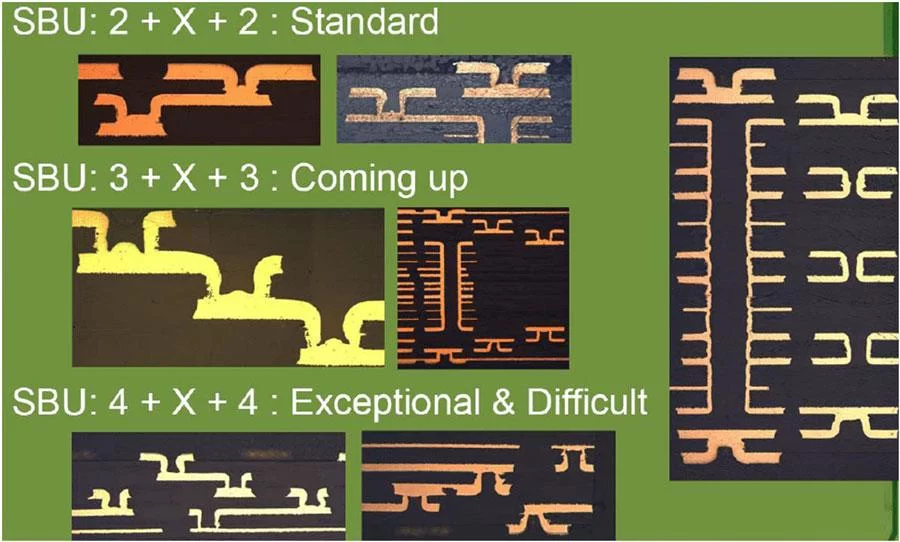
Where the product does not require the reduction, staying at a conventional thickness is one of the cheapest anti-warpage measures available. Where it does, the remaining stiffness has to come from the stack-up and from the copper distribution inside it, and those are decided before the board is ever built. Heavier copper and a symmetrical construction both help, but neither can compensate for a stack that is fundamentally unbalanced.
Size, Panel Design and Orientation
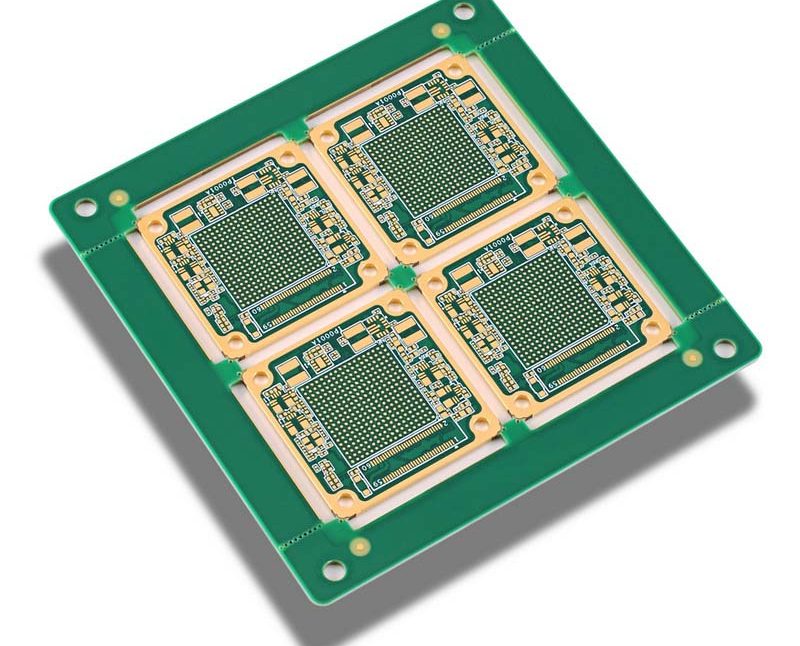
An oven chain supports the panel at its two edges, so the middle of a large panel is unsupported and carries its own weight at a temperature where the laminate is soft. Reducing panel size, and reducing the number of boards on the panel, shortens the unsupported span and the sag that comes with it.
Panel orientation is the second lever. Passing the panel with its long edge on the chain minimises the span between the rails, and it also sets the direction in which the board is stiffest. The rule is to make the long dimension of the panel the one that runs along the chain, which is a decision taken with the panel layout and the stack-up rather than at the oven. The chain width is fixed by the machine, so the panel design is the only variable the designer can still change at that point.
Carriers and Reflow Fixtures
Where the geometry cannot be changed, a carrier is the remaining control. The panel is placed in a tray that holds it flat while it is hot, and the tray continues to hold it while it cools back below the glass transition temperature, so the board stiffens in the flat condition rather than in the bent one.
A carrier has to be made from a material that survives the profile, and it has to be designed for the panel it will hold, including the relief for components on the underside. It adds handling and cost, which is why it is used on boards where flatness is a functional requirement rather than a preference. The requirements for a prototype multilayer build usually mention it when the assembly is known to be sensitive.
Copper Balance in the Stack
Copper expands at a different rate from the laminate, so a layer that is almost solid copper and the layer facing it that is nearly empty will pull the board in opposite directions as they heat. Balancing the copper distribution across the stack removes a bending moment before it can act.
The practical measure is to keep the total copper area on opposite sides of the neutral axis similar, and to avoid a large plane on one side of a thin core with no counterpart on the other. Uneven plating can produce the same effect as uneven artwork, and the causes are collected in the notes on copper plating defects.
FAQ
Can warpage be corrected after assembly? Only by reflowing the board in a fixture that holds it flat while it cools, which is a second thermal cycle and carries its own risk. Preventing it is much cheaper than correcting it.
Is a thicker board always flatter? Thicker boards resist bending better, but the stack-up and the copper balance still decide the result. A thick board with an unbalanced stack will still bow.
How much bow is acceptable? It depends on the assembly and the solder process rather than on a single number. What matters is whether the board can be placed, soldered and mounted without the flatness causing a defect. In practice the limit is agreed with the assembly house and set by the placement equipment rather than taken from a general standard.