Electronic components are available in a wide range of sizes, shapes, packages, and electrical specifications. Even the same type of integrated circuit (IC) can be manufactured in several package configurations to meet different electrical, mechanical, thermal, and assembly requirements.
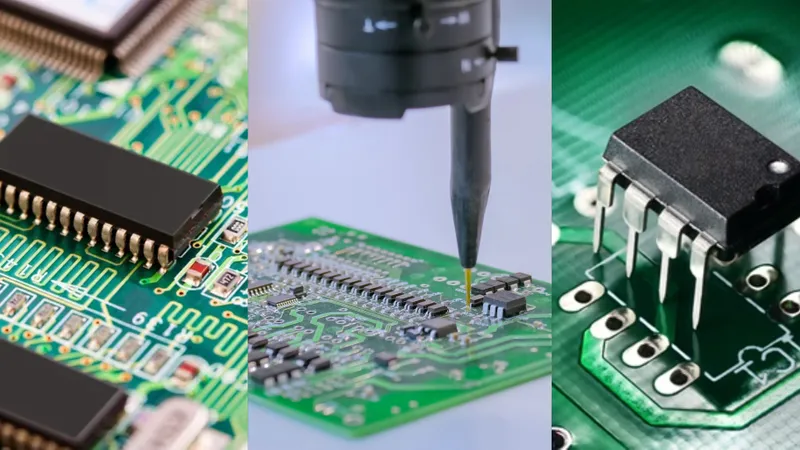
When designing a printed circuit board (PCB), two major component mounting technologies are commonly used: Surface Mount Technology (SMT) and Through-Hole Technology (THT). Components designed for these technologies have different package structures, PCB footprints, mechanical characteristics, and manufacturing requirements.
Understanding the difference between SMD components and through-hole components is essential for PCB designers and engineers. The right component package can affect PCB size, component density, signal integrity, mechanical strength, thermal performance, manufacturing cost, and long-term reliability.
As an experienced PCB manufacturer and PCB assembly service provider, Kingda provides PCB prototype manufacturing, quick-turn PCB prototyping, SMT assembly, through-hole assembly, and integrated PCB assembly solutions, helping customers select and implement the appropriate technology from initial design verification through production.
What Are Through-Hole Components?
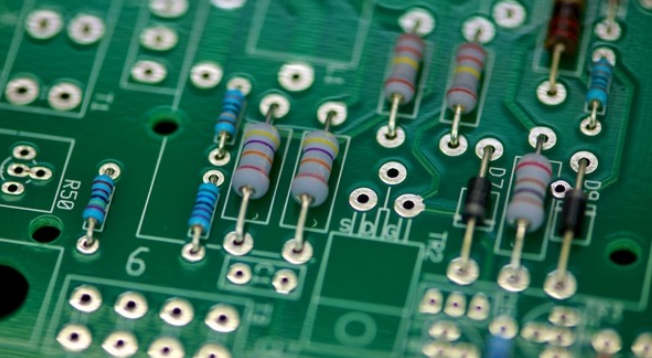
Through-hole components are electronic components with metal leads designed to pass through plated through-holes (PTHs) in a PCB. During assembly, the component leads are inserted through the drilled holes and soldered to conductive pads, creating both an electrical connection and a strong mechanical attachment.
Compared with SMD packages, through-hole components are generally larger and have greater lead spacing. Their physical structure makes them particularly suitable for applications where components must withstand mechanical stress, vibration, repeated insertion forces, or relatively high electrical loads.
Common through-hole components include:
- Transformers
- Relays
- Large electrolytic capacitors
- Power resistors
- Inductors
- Connectors
- Terminal blocks
- Switches
- Fuse holders
- Power semiconductor devices
The component leads extend through the PCB and are soldered on the opposite side, creating a strong mechanical connection. This makes through-hole PCB assembly particularly valuable for industrial equipment, power electronics, automotive systems, aerospace electronics, and other products exposed to demanding operating conditions.
Through-hole components can be inserted manually or with automated insertion equipment depending on component type, production volume, and assembly complexity.
What Are SMD Components?
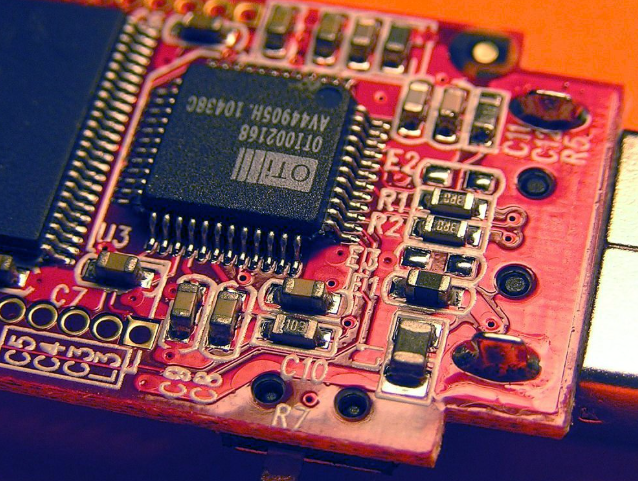
SMD, or Surface Mount Device, refers to an electronic component designed to be mounted directly onto the surface of a PCB without requiring its leads to pass through the board.
SMD components are generally smaller and lighter than comparable through-hole components. They are specifically designed for automated SMT assembly, allowing manufacturers to achieve high component density and high production efficiency.
Common SMD components include:
- SMD resistors
- SMD capacitors
- SMD inductors
- SMD diodes
- SMD transistors
- Integrated circuits (ICs)
- LEDs
- Crystal oscillators
- Sensors
- RF components
- Power management devices
Because SMD components can be installed on both sides of a PCB, they provide excellent utilization of board space. This makes them particularly suitable for compact electronic products such as smartphones, wearable devices, IoT products, communication equipment, medical electronics, and automotive electronics.
SMD vs Through-Hole Components: Key Differences
Although both component types perform electrical functions on a PCB, their mechanical structures and assembly methods are significantly different.
1. Mechanical Strength
One of the most important differences between SMD and through-hole components is mechanical attachment.
Through-hole components use leads that pass through the PCB, creating a mechanically reinforced connection after soldering. This makes them well suited to components such as connectors, transformers, switches, and large power devices that may experience significant mechanical stress.
SMD components are mounted directly onto PCB pads. Although modern SMT solder joints provide excellent reliability for most applications, large or heavy components subjected to significant mechanical forces may benefit from additional mechanical support.
Therefore, through-hole components are often preferred when mechanical robustness is a primary requirement.
2. Component Size and PCB Density
SMD components offer a major advantage in terms of miniaturization.
Because SMD components do not require dedicated through-holes for component leads, designers can place components more closely together. Components can also be mounted on both sides of the PCB.
This enables:
- Higher component density
- Smaller PCB dimensions
- Lower product weight
- More compact electronic systems
- Greater layout flexibility
By comparison, through-hole components require drilled holes and additional keep-out areas around the component body and leads.
For compact electronics, SMD components are usually the preferred solution.
3. PCB Routing Flexibility
Through-hole components can affect PCB routing because their drilled holes pass through the board and occupy space across multiple PCB layers.
Depending on the design, through-holes may consume routing channels and restrict the placement of traces, vias, and components on internal layers.
SMD components generally provide greater routing flexibility because they occupy pads primarily on the surface layer and do not require component leads to pass through the entire PCB.
This is especially important for multilayer PCBs, HDI PCBs, and high-density designs.
4. Prototyping and Debugging
Through-hole components are often convenient for prototyping because their larger physical size and wider lead spacing make them easier to handle, measure, remove, and replace.
They can also be used with breadboards and other prototyping platforms.
SMD components are more difficult to handle manually, especially when using very small packages such as 0201 or fine-pitch ICs. However, professional PCB assembly manufacturers can efficiently process these components using precision placement and rework equipment.
For early-stage development, engineers may use through-hole components for certain circuits and transition to SMD components during production optimization.
5. Manufacturing and Automation
SMT assembly is highly compatible with automated production. Solder paste printing, SPI, pick-and-place, reflow soldering, AOI, and X-ray inspection can be integrated into a highly automated production line.
This makes SMT particularly suitable for:
- High-volume production
- High-density PCB assembly
- Miniaturized products
- Fine-pitch components
- Automated manufacturing
Through-hole assembly can also be automated using insertion equipment and selective soldering systems, but some component types and low-volume assemblies may still require manual insertion or soldering.
6. Thermal and Power Handling
Large through-hole components often provide strong electrical and mechanical connections and can accommodate larger leads and terminals. This makes them suitable for applications involving high current, high voltage, or significant mechanical loading.
Typical examples include:
- Power supplies
- Motor controllers
- Transformers
- Large capacitors
- Power resistors
- High-current connectors
- Industrial control equipment
However, SMT technology also supports many power applications. Specialized power SMD packages can provide excellent thermal performance when combined with appropriate copper areas, thermal vias, heatsinks, and PCB materials.
Therefore, component selection should be based on the actual electrical and thermal requirements rather than assuming that one mounting technology is always superior.
7. Repair and Rework
Another important difference between SMD and through-hole components is repairability.
Through-hole components typically have larger leads and more accessible solder joints, making them easier to remove and replace during manual repair.
Small SMD components, particularly fine-pitch ICs, QFNs, and BGAs, require specialized rework equipment and experienced technicians.
Professional SMT assembly facilities can use hot-air rework stations, infrared systems, microscopes, and X-ray inspection to safely repair complex SMD assemblies.
Through-Hole Components: Main Characteristics
The primary advantages and limitations of through-hole components include:
- Excellent mechanical strength for demanding applications
- Strong electrical connections for many power and connector applications
- Good serviceability and relatively easy manual rework
- Suitable for high-power and high-current components
- Convenient for prototyping and debugging
- Larger physical size
- Lower component density
- Greater PCB routing constraints
- Higher drilling and processing requirements
- Potentially higher assembly labor requirements for some products
These characteristics make through-hole technology particularly suitable for products where mechanical strength and serviceability are more important than extreme miniaturization.
SMD Components: Main Characteristics
The main characteristics of SMD components include:
- Very compact package sizes
- High component density
- Excellent compatibility with automated assembly
- Ability to mount components on both PCB sides
- Short electrical interconnections
- Good suitability for high-speed and high-frequency circuits
- Lower assembly labor requirements at scale
- Excellent compatibility with high-volume manufacturing
- More challenging manual handling and rework
- Greater sensitivity to certain PCB design and assembly process variables
These characteristics make SMD technology the dominant choice for most modern compact electronic products.
Applications of Through-Hole Components
Although SMT dominates modern electronics manufacturing, through-hole components remain essential in applications where mechanical strength, power handling, or serviceability is important.
Power Supplies
Switch-mode power supplies and other power conversion systems often use through-hole transformers, inductors, capacitors, connectors, and power components.
The stronger mechanical connection and larger component structures can be beneficial in high-power applications.
Automotive Electronics
Automotive electronics must withstand vibration, thermal cycling, and demanding operating conditions.
Through-hole components are commonly used for selected connectors, relays, power components, and mechanically stressed components.
Industrial Equipment
Industrial controllers, motor drives, automation equipment, and instrumentation often combine THT and SMT components.
Through-hole components can provide additional mechanical strength for connectors, terminals, transformers, and large components.
Safety and Protection Circuits
Fuses, varistors, high-voltage components, and certain protection devices are frequently available in through-hole packages where larger clearances and stronger mechanical connections are beneficial.
Connectors
Connectors are one of the most common applications for through-hole technology because they may experience repeated insertion and removal forces.
Applications of SMD Components
SMD components are widely used across modern electronics because of their compact size and compatibility with automated assembly.
Consumer Electronics
Smartphones, tablets, laptops, smartwatches, and other portable products rely heavily on SMD components to achieve compact dimensions and high functionality.
IoT Devices
IoT products require compact PCBs with wireless connectivity, sensors, microcontrollers, memory, and power-management circuits. SMT enables these functions to fit into small form factors.
High-Speed Electronics
Shorter electrical paths make SMD packages highly suitable for many high-speed and high-frequency circuits.
They are widely used in:
- Communication equipment
- Networking devices
- RF modules
- 5G equipment
- Computing systems
- Data-processing equipment
LED Lighting and Displays
SMD LEDs and resistors are widely used in LED lighting, displays, signage, and other applications where high component density and compact dimensions are required.
Medical Electronics
Portable medical devices and diagnostic equipment benefit from compact SMD packages that allow manufacturers to integrate more functionality into smaller products.
SMD vs Through-Hole Components Comparison
| Feature | SMD Components | Through-Hole Components |
|---|---|---|
| Mounting method | Mounted directly on PCB pads | Leads pass through PCB holes |
| Component size | Very small to compact | Generally larger |
| Component density | Very high | Lower |
| PCB space utilization | Excellent | More limited |
| Mechanical strength | Good | Excellent |
| High-power applications | Good with suitable packages | Excellent for many large components |
| High-frequency performance | Generally excellent | More parasitic effects possible |
| Automated assembly | Excellent | Possible, depending on component type |
| Manual assembly | Difficult for small packages | Relatively easy |
| Repairability | More challenging | Generally easier |
| Prototyping | Requires specialized tools | Convenient for manual prototyping |
| High-volume manufacturing | Excellent | Suitable but generally less efficient |
| Double-sided assembly | Excellent | More restricted |
| Typical applications | Consumer, IoT, communications, medical | Power, industrial, connectors, high-mechanical-stress applications |
SMT and THT: Why Many PCBs Use Both
Modern electronics manufacturing is not necessarily a choice between SMT and THT. Many sophisticated products use a combination of both technologies.
This approach is known as mixed-technology PCB assembly or hybrid PCB assembly.
For example, a control board may use:
- SMD resistors and capacitors for high-density signal processing
- SMD ICs and microcontrollers for digital functions
- Through-hole connectors for mechanical strength
- Through-hole transformers for power conversion
- THT switches for repeated physical operation
- Large power components in through-hole packages
This combination allows designers to balance miniaturization, electrical performance, manufacturing efficiency, mechanical strength, and serviceability.
For many industrial, automotive, medical, communication, and power electronics products, mixed SMT/THT assembly provides the most practical solution.
How to Choose Between SMD and Through-Hole Components
The correct component technology depends on the overall product requirements.
Choose SMD When:
- PCB space is limited
- High component density is required
- The product requires miniaturization
- Automated assembly is preferred
- Production volume is medium to high
- High-speed or high-frequency performance is important
- Components must be placed on both sides of the PCB
- Low manufacturing cycle time is important
Choose Through-Hole When:
- Strong mechanical attachment is required
- Components experience vibration or repeated mechanical stress
- High-current or high-power components are required
- Connectors require strong mechanical anchoring
- Components need frequent replacement
- Manual prototyping or debugging is important
- Large transformers, relays, capacitors, or terminal blocks are required
Choose Mixed SMT/THT Assembly When:
- The PCB contains both compact ICs and large power components
- Mechanical strength is required for selected components
- The design requires both high density and robust connectors
- The product combines signal-processing and power circuits
- The design must balance manufacturing efficiency with mechanical reliability
Kingda: Integrated SMT and Through-Hole PCB Assembly Solutions
Choosing the correct component technology is only one part of successful PCB manufacturing. The PCB layout, component footprint, soldering process, inspection strategy, material selection, and manufacturing controls must also work together.
As an experienced PCB manufacturer and PCB assembly service provider, Kingda provides integrated solutions covering PCB prototype manufacturing, quick-turn PCB prototyping, SMT assembly, through-hole PCB assembly, and production support.
PCB Prototype Manufacturing
Kingda supports PCB development from initial design verification through prototype manufacturing, helping engineers validate component selection, PCB layout, electrical functionality, and assembly feasibility before moving into larger production volumes.
Quick-Turn PCB Prototyping
For projects requiring rapid design validation, quick-turn PCB prototyping can help shorten development cycles and identify potential manufacturing issues earlier.
SMT and THT Assembly
Kingda supports both SMT assembly and through-hole assembly, allowing customers to use pure SMT, pure THT, or mixed-technology assembly according to product requirements.
DFM Engineering Support
Design for Manufacturing (DFM) review helps identify potential issues related to component footprints, PCB fabrication, component spacing, soldering, assembly orientation, and manufacturability before production.
Component Sourcing and Assembly Integration
Integrating PCB manufacturing, component sourcing, and PCB assembly can simplify the supply chain and improve coordination between fabrication and assembly processes.
Inspection and Testing
A professional PCB assembly process should incorporate appropriate inspection and testing methods based on product complexity and reliability requirements. Depending on the project, this may include SPI, AOI, X-ray inspection, ICT, and functional testing.
Prototype-to-Production Support
Kingda’s capabilities are designed to support customers from initial PCB prototype manufacturing and quick-turn PCB prototyping to small-batch and volume production, helping maintain consistency as projects move through different development stages.
Kingda PCB Assembly Workflow
A typical integrated manufacturing workflow can be structured as:
PCB Design → DFM Engineering Review → PCB Prototype Manufacturing → Component Sourcing → SMT/THT Assembly → Inspection & Testing → Design Optimization → Small-Batch Production → Volume Manufacturing
This integrated approach helps engineers reduce manufacturing risks and create a smoother transition from prototype validation to production.
Conclusion
The choice between SMD and through-hole components depends on the electrical, mechanical, thermal, dimensional, and manufacturing requirements of the final product.
SMD components are generally preferred for compact, high-density, high-speed, and automated electronic products. Their small package sizes and excellent compatibility with automated SMT assembly make them the dominant component technology in modern electronics.
Through-hole components, meanwhile, remain highly valuable for applications requiring strong mechanical connections, high power handling, robust connectors, and easy serviceability.
In many modern products, the best solution is not to choose one technology exclusively. Mixed SMT and THT assembly allows designers to combine the compactness and manufacturing efficiency of SMT with the mechanical strength and power-handling advantages of through-hole technology.
With integrated PCB manufacturing, PCB prototype manufacturing, quick-turn prototyping, SMT assembly, THT assembly, component sourcing, and inspection/testing, Kingda helps customers develop reliable PCB solutions from initial design validation through full-scale production.