High-Quality, Low-Cost PCB Assembly in China
- More than 15 years of PCB assembly manufacturing experience
- PCB component sourcing and turnkey PCB assembly
- Prototype, low-volume, and high-volume PCB assembly
- BGA, uBGA, QFN, SOP, CSP, and fine-pitch components
- Support for small passive packages and advanced SMT components
- AOI, X-ray, ICT, FCT, and other inspection and testing processes
- Flexible manufacturing solutions for cost-sensitive electronic products
Low-Cost PCB Assembly in China
Cost-effective manufacturing does not have to mean compromising product quality. Our low-cost PCB assembly solutions are designed to help OEMs, electronics companies, engineering teams, and product developers control manufacturing costs while maintaining consistent quality and reliable performance.
As an experienced PCB Assembly China supplier, we combine efficient production processes, component sourcing, engineering support, and systematic quality control to provide practical manufacturing solutions for different project requirements. From prototype builds and engineering validation to recurring production orders, our production capabilities can be adapted to different quantities, technologies, and delivery schedules.
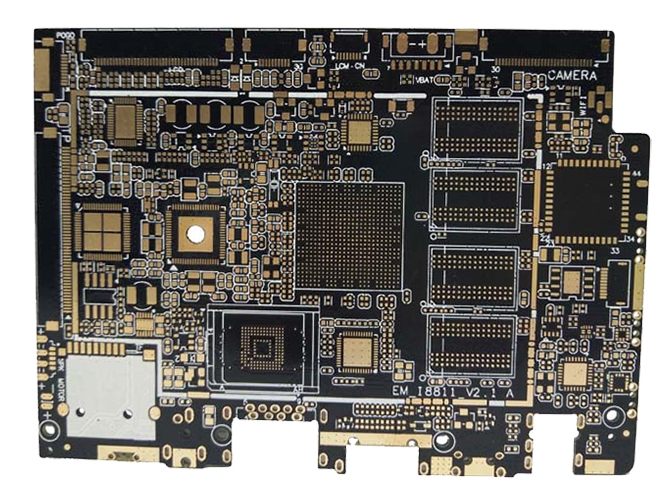
A major advantage of manufacturing in China is the mature electronics supply chain. PCB fabrication, electronic component sourcing, PCB assembly, testing, and logistics can be coordinated within an integrated supply network. This helps reduce unnecessary procurement costs, transportation expenses, and production delays.
For customers looking for a complete manufacturing solution, our PCB Assembly service can integrate component procurement, SMT, through-hole assembly, inspection, testing, and final delivery into one streamlined process.
What Determines the Cost of PCB Assembly?
The final cost of PCB assembly depends on much more than the number of components placed on a board. PCB design, component selection, board construction, order quantity, assembly technology, testing requirements, and production schedule can all affect the total manufacturing cost.
Understanding these factors before production begins can help engineers reduce unnecessary expenses and improve overall manufacturing efficiency.
1. PCB Assembly Manufacturer Capabilities
The capabilities of the manufacturer are one of the most important considerations when selecting a cost-effective PCB assembly partner.
A competitive supplier should have the equipment, engineering expertise, production capacity, and quality-control systems required for your specific PCB design. The manufacturer should also be able to recommend practical DFM improvements and cost-saving alternatives when appropriate.
Modern automated assembly equipment can improve placement accuracy, production efficiency, and process consistency. At the same time, experienced engineers can identify potential manufacturing problems before production begins, helping prevent costly rework and repeated prototype builds.
2. Manufacturer Location and Supply Chain
Manufacturing location can have a significant impact on the overall cost of PCBA production.
China has an extensive electronics manufacturing ecosystem covering PCB fabrication, semiconductor and passive component distribution, assembly equipment, packaging, logistics, and supporting services. This mature supply chain can help manufacturers source materials efficiently and coordinate different production stages.
Shorter supply-chain distances can also reduce transportation costs and simplify production scheduling. For international customers, an experienced Chinese manufacturer can combine local sourcing and manufacturing with global logistics to create a more efficient production workflow.
3. PCB Design Complexity
PCB design complexity directly affects manufacturing cost.
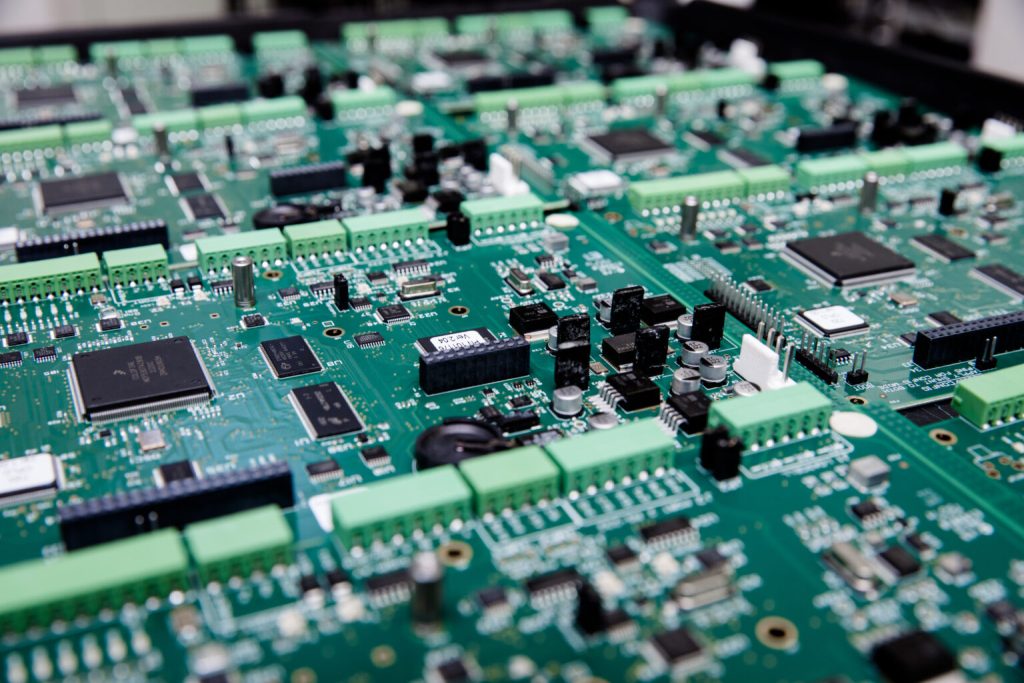
Simple board designs with practical component spacing, standard materials, conventional layer structures, and manufacturable hole sizes are generally easier and less expensive to produce. More complex designs may require advanced fabrication and assembly processes, specialized equipment, additional inspection, or longer production times.
PCB layer count is another important factor. Increasing the number of layers generally increases material usage and fabrication complexity. Copper thickness, surface finish, controlled impedance, via structures, and special PCB materials can also influence manufacturing costs.
Small mechanical holes and high-density interconnect structures may require specialized fabrication processes. Therefore, engineers should consider manufacturability during the PCB design stage rather than trying to reduce costs after the design has already been finalized.
When necessary, professional PCB Manufacturing and engineering support can help evaluate board construction and identify opportunities to optimize the design for production.
4. PCB Materials and Electronic Components
Material and component selection has a direct effect on PCBA cost.
Although lower-cost components may reduce the initial BOM price, component quality, availability, lifecycle, electrical performance, and long-term supply stability must also be considered. The lowest unit price is not always the lowest total manufacturing cost.
A detailed Bill of Materials (BOM) should include manufacturer part numbers, quantities, approved alternatives, package types, and other relevant procurement information. This allows the assembly manufacturer to evaluate sourcing options and identify potential supply risks.
Professional component sourcing can also help reduce procurement costs through consolidated purchasing and supplier management. Our Components Procurement service supports component sourcing as part of a broader PCB assembly workflow.
5. PCB Size and Panelization
PCB dimensions can influence both fabrication and assembly costs.
Smaller boards generally consume less raw material, while efficient panelization can allow multiple PCB units to be manufactured from a single production panel. Proper panel utilization can reduce material waste and improve production efficiency.
However, panelization should not be based on size alone. PCB spacing, tooling requirements, component placement, assembly orientation, depanelization, and production equipment must also be considered.
An experienced manufacturer can review the design and recommend a practical panelization strategy that balances material utilization, assembly efficiency, and product quality.
6. PCB Order Quantity
Production quantity is another major factor affecting unit cost.
Prototype and very-low-volume PCB assembly generally have a higher unit cost because engineering, setup, programming, stencil, tooling, procurement, and inspection costs are distributed across fewer units.
As production volume increases, these fixed or semi-fixed costs can be distributed across more assemblies. Larger orders may also benefit from better component purchasing conditions and improved production-line utilization.
For this reason, Prototype PCB Assembly is often used during product development, while low- and high-volume production can be introduced after the design has been validated.
7. Production Lead Time
Lead time can also influence the total cost of PCB assembly.
Rush manufacturing may require expedited component procurement, additional production scheduling, special logistics, or overtime resources. In contrast, well-planned production allows manufacturers to optimize material purchasing, line scheduling, and manufacturing resources.
A streamlined PCB assembly process can reduce non-value-added activities, improve production efficiency, and shorten delivery times without sacrificing quality.
For customers developing new electronic products, rapid prototyping can help identify design issues earlier and reduce the time required to move from engineering samples to production.
Applications of Low-Cost PCB Assembly
Cost-effective PCB assembly can be used across a wide range of electronic products and industries, including:
- Industrial control and automation equipment
- Telecommunications and wireless products
- 5G communication equipment
- Consumer electronics
- Test and measurement equipment
- Automotive electronics
- Medical electronics
- Information technology equipment
- Computers, laptops, and peripheral devices
- Tablets and mobile devices
- Digital cameras and recording equipment
- LED lighting and lighting controls
- IoT devices and smart sensors
- Robotics and automation systems
- Wearable electronics
- Smart home products
- Research and development equipment
The appropriate assembly process depends on the product design, component technology, reliability requirements, production quantity, and target cost.
Advantages of Low-Cost PCB Assembly for Small and Medium Production
Cost-effective PCB assembly is particularly valuable for startups, engineering teams, OEMs, and companies developing products with variable demand.
A well-designed manufacturing process can provide several advantages:
- Reduced material and procurement costs
- Efficient component sourcing
- Flexible production quantities
- Faster prototype-to-production transition
- Reduced manufacturing waste
- Improved production-line utilization
- Consistent assembly quality
- Professional inspection and testing
- Flexible SMT, THT, and mixed-technology assembly
- Better control over total manufacturing costs
Our PCBA Capabilities cover different PCB technologies and assembly requirements, helping customers select an appropriate manufacturing process based on product specifications and production volume.
How to Choose a Cost-Effective PCB Assembly Manufacturer
Choosing the lowest quotation does not necessarily mean choosing the lowest total manufacturing cost. A reliable supplier should provide the right balance of price, quality, engineering support, production capability, and delivery performance.
1. Professional Equipment and Engineering Team
Check whether the manufacturer has appropriate SMT, through-hole, inspection, and testing equipment. Engineering support is equally important because DFM analysis and process optimization can prevent expensive manufacturing problems.
2. Proven Industry Experience
Experience can help manufacturers handle different PCB technologies, component packages, production volumes, and quality requirements more effectively.
A manufacturer with experience in prototype, low-volume, and volume production can also provide a smoother transition as your product demand increases.
3. Transparent Manufacturing Process
A professional supplier should clearly explain component sourcing, PCB fabrication, assembly, inspection, testing, packaging, and delivery procedures.
Transparent communication helps customers understand where manufacturing costs originate and makes it easier to identify legitimate opportunities for cost reduction.
4. Quality Control and Testing
Cost reduction should never be achieved by eliminating essential quality controls.
Depending on the product requirements, PCB assemblies may require AOI, X-ray inspection, ICT, FCT, visual inspection, or other testing methods. The appropriate inspection strategy should be determined according to component density, assembly technology, product complexity, and reliability requirements.
5. Customer Support and Technical Communication
Good communication can reduce manufacturing errors and unnecessary delays.
Before production, the supplier should review Gerber files, BOMs, drawings, component specifications, and other manufacturing documents. During production, clear communication regarding engineering changes, component substitutions, delivery schedules, and quality issues can help keep the project on track.
Balancing Quality and Cost in PCB Assembly
The goal of Low-Cost PCB Assembly should not simply be to achieve the lowest possible quotation. The better objective is to achieve the lowest practical total manufacturing cost while maintaining the required quality, reliability, and performance.
Design optimization is one of the most effective ways to achieve this balance. Engineers can review PCB layer count, component packages, material selection, board dimensions, panelization, component availability, and assembly processes before production.
Supply-chain optimization is equally important. Stable component sourcing can reduce purchasing costs and minimize the risk of production interruptions caused by component shortages or long lead times.
Manufacturing process optimization can further improve efficiency by reducing unnecessary handling, setup time, material waste, rework, and inspection bottlenecks.
A professional PCB assembly manufacturer should therefore work as an engineering and manufacturing partner rather than simply as a production vendor.
Get a Cost-Effective PCB Assembly Quote
Whether you need a small prototype run, low-volume production, or larger-scale manufacturing, a complete quotation should consider the PCB design, BOM, component availability, assembly technology, testing requirements, production quantity, and delivery schedule.
Providing accurate Gerber files, BOM information, PCB drawings, and assembly requirements allows the manufacturer to evaluate the project more efficiently and provide a more accurate quotation.
If you are looking for a reliable partner for PCB Manufacturing and assembly, an integrated manufacturing approach can simplify procurement, production, testing, and delivery while helping control overall project costs.
Frequently Asked Questions
What are the benefits of low-cost PCB assembly?
The main benefits include lower manufacturing costs, efficient component procurement, flexible production volumes, reduced material waste, and better production efficiency. Cost reduction should always be balanced with product quality and reliability.
What are the disadvantages of low-cost PCB assembly?
Choosing a supplier based only on the lowest price can create risks related to component quality, process control, testing, communication, and delivery. A better approach is to evaluate total cost, manufacturing capability, quality systems, and technical support together.
How can I choose a cost-effective PCB assembly service?
Compare manufacturers based on assembly technology, component sourcing, engineering support, quality-control procedures, testing capability, production capacity, lead time, and total quoted cost—not simply the lowest unit price.
How much does low-cost PCB assembly cost?
There is no universal price because PCB assembly costs depend on PCB specifications, component count, component types, BOM cost, assembly technology, testing requirements, order quantity, and production lead time. Providing the Gerber files and BOM allows a manufacturer to prepare a project-specific quotation.
Is China suitable for low-cost PCB assembly?
China has a mature electronics manufacturing supply chain and extensive PCB fabrication, component sourcing, assembly, testing, and logistics capabilities. This can make China an attractive manufacturing location for cost-sensitive PCB assembly projects.
How long does PCB assembly take?
Lead time depends on component availability, PCB complexity, assembly technology, production quantity, testing requirements, and shipping method. Prototype and low-volume projects can often be scheduled faster than larger production orders when materials are readily available.
What are the risks of low-cost PCB assembly?
Potential risks include counterfeit or substituted components, insufficient process control, inadequate testing, poor documentation, inconsistent quality, and unexpected delays. These risks can be reduced by working with a manufacturer that has established sourcing, engineering, inspection, and quality-control procedures.
What is the difference between low-cost PCB manufacturing and low-cost PCB assembly?
PCB manufacturing refers primarily to fabricating the bare printed circuit board, while PCB assembly involves mounting and soldering electronic components onto the PCB. A one-stop supplier can integrate both processes to simplify procurement and production management.
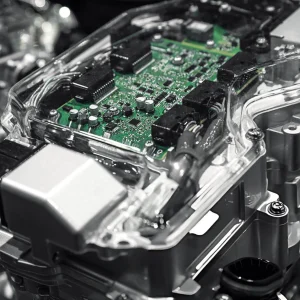
Start Your PCB Assembly Project
From prototype development to volume production, choosing the right manufacturing strategy can help reduce costs while maintaining consistent product quality.
For a complete solution, our PCB Assembly services can support component sourcing, PCB fabrication, SMT and through-hole assembly, inspection, testing, and production coordination.
Submit your Gerber files, BOM, drawings, and production requirements to receive a project-specific quotation and manufacturing evaluation.
Start your PCB assembly project today and build a more efficient, reliable, and cost-effective electronics manufacturing process.