Top 15 Ceramic PCB Manufacturers in 2026: Benefits, Technologies, and How to Choose the Right Supplier
As electronic devices continue to become more powerful, compact, and densely integrated, effective thermal management has become a critical design requirement. This trend has increased demand for reliable ceramic PCB manufacturers capable of producing high-performance circuit boards for demanding applications.
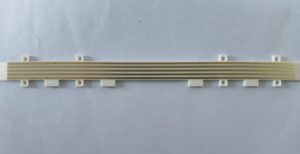
Compared with conventional FR-4 boards, ceramic PCBs offer superior thermal conductivity, electrical insulation, dimensional stability, and resistance to harsh operating conditions. These characteristics make ceramic substrates particularly suitable for high-power electronics, automotive systems, LED applications, RF devices, aerospace equipment, and other high-reliability electronic products.
Choosing the right ceramic circuit board manufacturer is essential for achieving consistent product quality, thermal performance, manufacturing reliability, and long-term service life. This guide explains the fundamentals of ceramic PCB technology, its major advantages, common manufacturing methods, leading manufacturers, and the key factors to consider when selecting a manufacturing partner for your next project.
What Is a Ceramic PCB?
A ceramic PCB is a printed circuit board that uses a ceramic substrate instead of conventional fiberglass-reinforced epoxy materials such as FR-4.
Ceramic substrates combine excellent thermal conductivity with outstanding electrical insulation. This makes them particularly valuable in applications where conventional PCB materials may struggle with heat dissipation, high operating temperatures, thermal cycling, or high power density.
Common ceramic substrate materials include:
- Alumina (Al₂O₃): A cost-effective and widely used ceramic material offering good electrical insulation, thermal stability, and mechanical strength.
- Aluminum Nitride (AlN): Provides significantly higher thermal conductivity than alumina and is suitable for high-power and advanced thermal-management applications.
- Silicon Nitride (Si₃N₄): Offers excellent mechanical strength, fracture resistance, and thermal-cycle reliability, making it suitable for demanding power electronics and industrial environments.
It is important to distinguish ceramic substrates from aluminum-based metal-core PCBs. Aluminum is not a ceramic material. Aluminum PCBs are classified as metal-core PCBs (MCPCBs), while alumina, aluminum nitride, and silicon nitride are ceramic substrate materials.
Ceramic PCB Manufacturing Process
A typical ceramic PCB manufacturing process may include substrate preparation, copper deposition or bonding, circuit pattern formation, drilling or laser processing, metallization, surface finishing, inspection, and electrical testing.
Depending on the substrate and application, manufacturers may use technologies such as:
- Direct Bonded Copper (DBC)
- Direct Plated Copper (DPC)
- Thick-film technology
- Thin-film technology
- Active Metal Brazing (AMB)
The manufacturing method should be selected according to thermal requirements, copper thickness, circuit density, mechanical requirements, operating temperature, and application environment.
Typical Ceramic PCB Applications
Ceramic PCBs are widely used in applications where thermal performance and reliability are critical, including:
- Electric vehicles and automotive electronics
- LED lighting and high-power LED modules
- Aerospace and defense electronics
- Medical equipment
- Industrial automation
- Power electronics
- RF and microwave devices
- Semiconductor packaging
- Power semiconductor modules
- Renewable energy systems
- High-temperature electronic systems
In these applications, efficient heat dissipation can directly influence component lifetime, electrical stability, and overall system reliability.
Key Advantages of Ceramic PCB Technology
Conventional FR-4 materials are suitable for a wide range of electronic products, but they may not provide the thermal and mechanical performance required by high-power or high-temperature applications.
The unique combination of thermal, electrical, and mechanical properties offered by ceramic substrates makes ceramic circuit boards an attractive solution for advanced electronic systems.
Excellent Thermal Conductivity
One of the most important advantages of ceramic PCBs is their superior thermal performance.
Materials such as aluminum nitride can provide very high thermal conductivity, allowing heat to move efficiently away from high-power components. Better thermal management can reduce junction temperatures, improve system stability, and extend component service life.
Excellent Electrical Insulation
Ceramic materials provide excellent electrical insulation while maintaining strong thermal performance.
This combination allows ceramic substrates to support high-voltage and high-power applications while reducing the risk of electrical breakdown and unwanted current leakage.
High-Temperature Resistance
Ceramic substrates can maintain stable electrical and mechanical characteristics under elevated temperatures.
This makes ceramic PCBs suitable for automotive power electronics, aerospace systems, industrial equipment, LED modules, and other applications exposed to demanding thermal conditions.
Excellent Mechanical Stability
Ceramic materials offer excellent dimensional stability and relatively low coefficients of thermal expansion.
Their thermal expansion characteristics can be better matched with semiconductor devices than conventional PCB materials in certain applications. This helps reduce mechanical stress during repeated heating and cooling cycles and can improve solder-joint and component reliability.
Strong Chemical and Environmental Resistance
Ceramic materials generally provide good resistance to moisture, oxidation, and many chemical environments.
As a result, ceramic substrates can be used in demanding industrial and outdoor environments where conventional materials may experience greater environmental degradation.
Long Service Life
Effective thermal management, high-temperature stability, and mechanical reliability can reduce stress on electronic components over time.
When properly designed and manufactured, ceramic PCBs can therefore provide excellent long-term reliability in demanding applications.
Top 15 Ceramic PCB Manufacturers in 2026
The global ceramic PCB industry includes companies specializing in ceramic materials, ceramic substrates, DBC and DPC technologies, thick-film circuits, thin-film circuits, hybrid microelectronics, and complete electronic assembly.
The following companies are recognized for their capabilities in advanced ceramics, ceramic substrates, electronic packaging, or specialized ceramic circuit technologies.
1. Rogers Corporation
Rogers Corporation is a U.S.-based advanced materials manufacturer known for high-performance materials used in electronics, thermal management, RF systems, and automotive applications.
Its advanced ceramic and thermal-management technologies support applications requiring high thermal conductivity, electrical insulation, and dimensional stability.
Rogers has extensive experience in high-performance electronic materials and serves demanding markets including automotive, aerospace, defense, industrial electronics, and telecommunications.
2. Kyocera Corporation
Kyocera Corporation is a major Japanese manufacturer of advanced ceramics, electronic components, and semiconductor-related materials.
The company produces ceramic substrates and components based on materials such as alumina and aluminum nitride for semiconductor, automotive, telecommunications, industrial, and medical applications.
Its advanced manufacturing infrastructure and strong materials-science expertise make Kyocera an important supplier in the global ceramic electronics industry.
3. CoorsTek
CoorsTek is a global manufacturer of engineered technical ceramics serving demanding industrial and electronic applications.
Its material portfolio includes alumina, aluminum nitride, silicon nitride, and other advanced ceramics used in semiconductor equipment, aerospace, defense, medical technology, and industrial systems.
The company’s expertise in ceramic materials and precision manufacturing supports applications requiring high temperature resistance, electrical insulation, mechanical strength, and thermal management.
4. Maruwa Co., Ltd.
Maruwa is a Japanese manufacturer specializing in advanced ceramic components and substrates for electronic and power applications.
Its ceramic technologies support applications such as LED lighting, automotive electronics, industrial equipment, renewable energy systems, and power electronics.
The company has particular expertise in high-thermal-conductivity ceramic materials and electronic packaging solutions.
5. Toshiba Materials Co., Ltd.
Toshiba Materials specializes in advanced materials and components used in thermal management, power electronics, and semiconductor applications.
Its ceramic substrate technologies include aluminum nitride solutions designed for applications requiring efficient heat dissipation and reliable electrical insulation.
These materials are used across semiconductor, automotive, industrial, and communications applications.
6. Ferrotec Holdings Corporation
Ferrotec is a global advanced materials and engineering company serving semiconductor, electronics, industrial, and thermal-management markets.
Its ceramic-related products include aluminum nitride substrates, ceramic components, and thermal-management solutions.
The company’s vertically integrated manufacturing capabilities allow it to support demanding applications requiring tight dimensional control, thermal performance, and manufacturing consistency.
7. Remtec, Inc.
Remtec specializes in thick-film ceramic circuits, hybrid microelectronics, and customized electronic assemblies.
Its products and services support demanding applications in aerospace, defense, medical equipment, telecommunications, and industrial control.
The company’s expertise in thick-film ceramic technology makes it particularly suitable for specialized electronic applications requiring compact, reliable, and highly customized circuit solutions.
8. CeramTec
CeramTec is a German advanced ceramics manufacturer with extensive expertise in engineered ceramic materials and components.
Its material portfolio includes alumina, aluminum nitride, silicon nitride, and other technical ceramics used in automotive, medical, semiconductor, industrial, and electronic applications.
CeramTec’s advanced ceramic technologies can support applications requiring high thermal conductivity, electrical insulation, wear resistance, and mechanical stability.
9. Niterra
Niterra, formerly known as NGK Spark Plug, is a Japanese manufacturer with extensive experience in advanced ceramics and electronic components.
The company develops ceramic materials and components for automotive electronics, semiconductor-related applications, industrial equipment, and other high-reliability markets.
Its advanced ceramic technologies are particularly relevant to applications requiring high-temperature stability, electrical insulation, and reliable ceramic packaging.
10. Tong Hsing Electronic Industries, Ltd.
Tong Hsing Electronic Industries is a Taiwan-based manufacturer specializing in ceramic substrates, semiconductor packaging, and electronic component solutions.
Its product capabilities include alumina, aluminum nitride, and direct-bonded copper (DBC) ceramic substrates for applications such as semiconductors, LEDs, automotive electronics, and communications.
The company’s expertise in electronic packaging and ceramic substrate manufacturing makes it a notable supplier for high-performance electronic systems.
11. Stellar Industries Corp.
Stellar Industries specializes in customized thick-film ceramic circuits and hybrid electronic assemblies.
The company serves demanding markets including aerospace, defense, medical, and industrial electronics.
Its engineering and manufacturing capabilities are particularly suited to applications requiring customized ceramic circuit structures, precision processing, and high reliability.
12. ICP Technology
ICP Technology is a Taiwan-based electronics manufacturer providing customized ceramic substrate and electronic packaging solutions.
Its capabilities include DBC and DPC technologies as well as alumina and aluminum nitride ceramic substrates.
These technologies are suitable for LED lighting, automotive electronics, industrial automation, power electronics, and other applications where thermal performance and electrical reliability are critical.
13. PCBMay
PCBMay is a China-based PCB manufacturer providing PCB fabrication and assembly services, including ceramic PCB solutions.
Its capabilities cover ceramic substrate applications using materials such as alumina and aluminum nitride.
The company supports applications including medical electronics, telecommunications, automotive electronics, industrial equipment, and other specialized electronic products.
14. Best Technology
Best Technology is a China-based manufacturer specializing in advanced PCB and ceramic substrate solutions.
Its services include customized ceramic PCB manufacturing, prototyping, and electronic assembly for automotive, medical, LED, industrial, and other high-performance applications.
For customers requiring customized ceramic circuit solutions, engineering support and production flexibility can be important advantages when moving from prototype development to volume production.
15. RayMing Technology
RayMing Technology is a Shenzhen-based PCB manufacturer offering ceramic PCB and other specialized PCB technologies.
Its capabilities include ceramic PCBs, multilayer PCBs, RF PCBs, and HDI PCBs for applications such as telecommunications, automotive electronics, industrial automation, and medical electronics.
Its engineering support and customized manufacturing capabilities allow customers to develop specialized PCB solutions according to their application requirements.
Key Capabilities of Leading Ceramic PCB Manufacturers
A capable ceramic PCB manufacturer should provide more than substrate fabrication. The best manufacturing partners combine material expertise, precision processing, engineering support, testing, quality control, and assembly capabilities.
Precision Ceramic PCB Manufacturing
Modern ceramic PCB production can use technologies including:
- Direct Bonded Copper (DBC)
- Direct Plated Copper (DPC)
- Active Metal Brazing (AMB)
- Thick-film technology
- Thin-film technology
Each process offers different advantages in terms of copper thickness, circuit resolution, thermal performance, mechanical reliability, and manufacturing cost.
The appropriate process should therefore be selected according to the application’s electrical, thermal, mechanical, and production requirements.
Design and Engineering Support
Experienced ceramic PCB manufacturers can provide engineering support before production begins.
Typical services include:
- Design-for-Manufacturing (DFM) review
- Thermal analysis
- Material selection
- Stack-up optimization
- Copper thickness evaluation
- Circuit layout review
- Reliability analysis
- Prototype validation
Early engineering collaboration can identify potential manufacturing problems before they become expensive production issues.
Prototyping and Mass Production
A strong manufacturing partner should be able to support the complete product-development cycle, from initial prototypes to low-volume production and high-volume manufacturing.
This allows engineers to validate thermal performance, electrical characteristics, mechanical reliability, and assembly compatibility before committing to large-scale production.
Ceramic PCB Assembly
Some suppliers can provide both ceramic PCB fabrication and complete PCB assembly services.
These services may include:
- SMT assembly
- Through-hole assembly
- Component sourcing
- Soldering
- X-ray inspection
- AOI
- Electrical testing
- Functional testing
An integrated manufacturing model can simplify project management, reduce communication gaps, and shorten overall production lead times.
Testing and Quality Assurance
Quality control is essential for high-reliability ceramic circuit boards.
Depending on the product, manufacturers may use:
- Automated Optical Inspection (AOI)
- X-ray inspection
- Electrical testing
- Dimensional inspection
- Solderability testing
- Thermal cycling
- Reliability testing
- Functional testing
A comprehensive inspection system helps identify defects before products reach the customer.
International Quality Certifications
When selecting a supplier, customers should evaluate certifications and quality systems relevant to their application.
Common standards may include:
- ISO 9001
- IATF 16949
- ISO 13485
- UL
- RoHS
- IPC standards
The appropriate certification depends on the intended market and application. For example, automotive electronics may require different quality-management requirements than medical or consumer electronics.
Global Supply Chain Support
For international projects, supply-chain capabilities are also important.
A reliable supplier should be able to provide stable material sourcing, production scheduling, quality documentation, logistics support, and technical communication throughout the project lifecycle.
How to Choose the Best Ceramic PCB Manufacturer
Selecting the right ceramic PCB manufacturer can directly affect product performance, reliability, development time, and total manufacturing cost.
Rather than choosing a supplier based solely on price, evaluate the following factors.
Manufacturing Experience
Look for a manufacturer with proven experience in ceramic PCB production and applications similar to your project.
Experienced suppliers are more likely to understand the challenges associated with ceramic substrate processing, copper bonding, thermal expansion, circuit pattern formation, and assembly.
Ceramic Material Selection
Make sure the manufacturer can provide the ceramic material required for your application.
For example:
- Alumina for cost-effective general applications
- Aluminum nitride for high thermal conductivity
- Silicon nitride for high mechanical reliability and thermal cycling
The correct substrate should be selected according to thermal conductivity, dielectric performance, coefficient of thermal expansion, mechanical strength, operating temperature, and cost.
Manufacturing Technology
Ask which technologies the manufacturer supports, including DBC, DPC, AMB, thick-film, and thin-film processes.
The selected technology should match the required circuit density, copper thickness, thermal performance, voltage requirements, and mechanical characteristics.
Engineering Support
A qualified ceramic PCB manufacturer should be able to provide DFM analysis, thermal analysis, design review, and material recommendations.
Strong engineering support can reduce design iterations and improve manufacturing yield.
Quality Certifications
Review the supplier’s relevant quality certifications and manufacturing standards.
Certifications such as ISO 9001, IATF 16949, ISO 13485, UL, and applicable IPC standards can provide valuable evidence of a structured quality-management system.
However, certifications should be evaluated together with actual manufacturing capabilities, inspection procedures, and product-specific reliability data.
Testing and Inspection
Ask the manufacturer how the ceramic PCB will be inspected throughout production.
Important capabilities may include AOI, X-ray inspection, electrical testing, dimensional inspection, thermal cycling, and functional testing.
For high-power applications, thermal and reliability testing can be particularly important.
Ceramic PCB Assembly Capability
If the project requires a complete electronic assembly, choosing a supplier capable of both PCB fabrication and assembly can simplify procurement and quality management.
An integrated solution can reduce the number of external suppliers and potentially shorten the overall production cycle.
Customer and Engineering Support
Responsive technical communication is particularly important during prototype development and production ramp-up.
A good manufacturing partner should be able to quickly address questions involving material selection, design changes, manufacturing tolerances, testing requirements, and production issues.
Cost and Total Value
Price should not be the only factor when evaluating a ceramic PCB supplier.
Consider the total value provided by the manufacturer, including:
- Material quality
- Manufacturing capability
- Engineering expertise
- Production yield
- Quality certifications
- Testing capability
- Delivery reliability
- Assembly services
- Technical support
- Long-term supply stability
A supplier with a slightly higher unit price may provide significantly lower total project costs if it reduces defects, redesigns, delays, and quality problems.
Conclusion
Ceramic PCBs have become an important technology for modern electronic systems requiring efficient heat dissipation, excellent electrical insulation, high-temperature stability, and long-term reliability.
Their unique combination of thermal, electrical, and mechanical properties makes ceramic substrates particularly valuable in automotive electronics, aerospace and defense systems, telecommunications, medical equipment, industrial automation, LED lighting, semiconductor packaging, and power electronics.
As electronic systems continue to become smaller while operating at higher power densities, the demand for advanced ceramic substrates is expected to continue increasing.
Choosing the right ceramic PCB manufacturer is just as important as selecting the correct ceramic material. A qualified supplier should provide advanced ceramic PCB manufacturing technology, strong engineering support, rigorous quality control, reliable testing, and, when required, complete ceramic PCB assembly services.
For prototype development or large-scale production, Kingda can provide customized PCB manufacturing and assembly solutions based on the specific requirements of your electronic application. By evaluating material options, manufacturing technologies, engineering capabilities, quality systems, testing procedures, production capacity, and total cost, engineers can select a reliable manufacturing partner capable of supporting both current projects and long-term product development.