In modern electronics manufacturing, managing PCB fabrication, component procurement, assembly, testing, and logistics through multiple suppliers can create unnecessary complexity. Different vendors may have different lead times, documentation requirements, quality systems, and communication processes, making it difficult to maintain consistent production control.
Turnkey PCB assembly provides an integrated alternative.
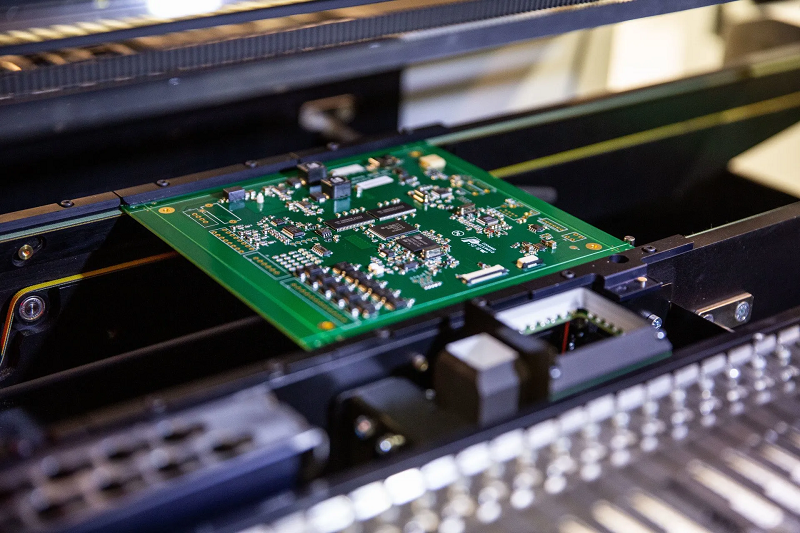
With a turnkey model, one manufacturing partner manages the major stages of the PCBA process, from PCB fabrication and electronic component sourcing to SMT/THT assembly, inspection, testing, packaging, and delivery. This approach can simplify supplier management, reduce procurement risks, improve production coordination, and accelerate time-to-market.
For startups, OEMs, engineering teams, and established electronics manufacturers, choosing the right turnkey PCB assembly manufacturer can make the transition from prototype to mass production significantly more efficient.
This guide explains what turnkey PCB assembly is, how the full process works, the difference between full and partial turnkey assembly, the major benefits, and what to consider when selecting a manufacturing partner.
What Is Turnkey PCB Assembly?
Turnkey PCB assembly is a complete electronics manufacturing service in which a single supplier manages the major processes required to convert a PCB design into a finished and tested PCBA.
Instead of separately coordinating a PCB manufacturer, component distributors, PCB assembler, testing provider, and logistics company, the customer works with one integrated manufacturing partner.
A typical full turnkey PCB assembly project can include:
- PCB fabrication
- Electronic component sourcing
- BOM verification and management
- SMT assembly
- THT assembly
- Mixed-technology PCB assembly
- Solder paste printing
- Reflow soldering
- Wave or selective soldering
- SPI and AOI inspection
- X-ray inspection
- ICT and functional testing
- IC programming
- Conformal coating
- Final inspection
- Packaging and shipping
The main advantage is not simply convenience. By connecting procurement, fabrication, assembly, quality control, and delivery into one workflow, a turnkey PCBA manufacturing model can reduce communication gaps and improve overall process visibility.
Kingda provides one-stop services covering PCB design and development, PCB manufacturing, component procurement, SMT, DIP, finished-product assembly, and testing. (Kingda)
What Services Are Included in Turnkey PCB Assembly?
A professional turnkey PCB assembly manufacturer should be able to manage most or all of the following manufacturing activities.
PCB Fabrication
The supplier manufactures bare PCBs according to the customer’s Gerber, ODB++, IPC-2581, or other approved manufacturing data.
Depending on project requirements, capabilities may include:
- Single-sided PCBs
- Double-sided PCBs
- Multilayer PCBs
- HDI PCBs
- High-frequency PCBs
- High-speed PCBs
- Heavy-copper PCBs
- Metal-core PCBs
- Flexible PCBs
- Rigid-flex PCBs
- Controlled-impedance PCBs
Kingda’s published capabilities include PCB structures from single-layer to 48-layer assemblies, as well as advanced PCB technologies for HDI, high-frequency, flexible, rigid-flex, and other applications. (Kingda)
Electronic Component Procurement
Component sourcing is one of the most important elements of a turnkey service.
A professional supplier should review the BOM and evaluate:
- Manufacturer Part Number (MPN)
- Availability
- Lead time
- Lifecycle status
- Package type
- Approved alternatives
- Date code
- Lot traceability
- Compliance requirements
- Counterfeit prevention
Kingda provides component sourcing and inventory-management support and uses an ERP-based system to manage component procurement information and inventory data. (Kingda)
SMT PCB Assembly
Surface Mount Technology (SMT) is widely used for modern electronic products because it supports high component density and automated production.
A typical SMT process includes:
Solder Paste Printing → SPI → Pick-and-Place → Reflow Soldering → AOI → X-Ray/Testing
Kingda’s published SMT capabilities include advanced component packages, high-density assembly, AOI, SPI, and X-ray inspection. (Kingda)
Through-Hole PCB Assembly
THT PCB assembly remains important for connectors, transformers, relays, large capacitors, power components, and other parts where mechanical strength or specialized assembly is required.
Common processes include:
- Manual insertion
- Automated insertion
- Wave soldering
- Selective soldering
- Lead-free soldering
Kingda supports SMT, THT, and mixed-technology assembly, including wave and selective soldering. (Kingda)
Inspection and Testing
Quality control should be implemented throughout production rather than relying only on final inspection.
Typical methods include:
- SPI
- AOI
- X-ray inspection
- FAI
- ICT
- FCT
- Visual inspection
- Reliability testing
Kingda’s quality-control process includes incoming material inspection, SPI, SMT/THT assembly, AOI, X-ray, ICT/FCT, and outgoing quality inspection. (Kingda)
Turnkey PCB Assembly Process: Step by Step
Step 1: Design File Review
The process begins when the customer submits the manufacturing data package.
Typical files include:
- Gerber files
- BOM
- Pick-and-Place/Centroid files
- Assembly drawings
- PCB stackup
- Impedance specifications
- Special process requirements
- Testing documentation
The engineering team reviews the files for consistency and manufacturability.
Particular attention should be given to:
- BOM and placement-file consistency
- Footprint accuracy
- Component polarity
- DNP components
- Board dimensions
- Component clearance
- Trace and spacing
- Assembly orientation
- Thermal requirements
A complete engineering package at this stage can prevent unnecessary clarification and production delays later.
Step 2: DFM and DFA Analysis
DFM (Design for Manufacturability) evaluates whether the PCB can be fabricated reliably.
DFA (Design for Assembly) evaluates whether the components can be assembled efficiently and consistently.
Typical issues include:
- Incorrect footprints
- Insufficient component spacing
- Solder-mask problems
- Incorrect polarity
- Difficult-to-assemble components
- Poor panelization
- Thermal problems
- Manufacturing tolerance conflicts
Kingda provides DFM, DFA, DFX, BOM verification, Gerber review, Pick-and-Place verification, and engineering optimization to identify potential manufacturing risks before production. (Kingda)
Step 3: PCB Fabrication
After engineering review and design approval, bare PCBs are manufactured.
A typical process is:
Imaging → Etching → Lamination → Drilling → Copper Plating → Solder Mask → Surface Finish → Silkscreen → Electrical Testing
Advanced designs may require:
- Laser drilling
- Sequential lamination
- Blind vias
- Buried vias
- Microvias
- Stacked microvias
- Copper-filled vias
- Controlled impedance
- Fine-line fabrication
Step 4: Component Procurement
After BOM validation, the manufacturer sources the required electronic components.
The procurement team should verify:
- Manufacturer
- MPN
- Quantity
- Availability
- Lead time
- Lifecycle status
- Approved substitutes
- Supplier reliability
- Traceability
For high-reliability projects, customers should define their requirements for date codes, certificates of conformity, lot traceability, and approved supplier sources.
Step 5: Solder Paste Printing
For SMT production, solder paste is deposited onto the PCB pads through a precision stencil.
The quality of printing directly affects solder-joint reliability.
Important process variables include:
- Stencil thickness
- Aperture design
- Paste characteristics
- Printing speed
- Squeegee pressure
- Board support
- Stencil alignment
SPI inspection can verify paste volume and position before component placement.
Step 6: SMT Component Placement
Automated pick-and-place machines install SMT components according to the approved placement data.
Vision systems can verify:
- Component identity
- Position
- Orientation
- Polarity
- Placement accuracy
Kingda publishes SMT capabilities supporting miniaturized passive components and fine-pitch packages, including 01005 components, BGA, QFN, and other advanced packages. (Kingda)
Step 7: Reflow Soldering
After placement, the populated board passes through a controlled reflow oven.
The thermal profile is optimized to achieve reliable solder joints while reducing risks such as:
- Cold solder joints
- Tombstoning
- Solder bridging
- Insufficient wetting
- Component overheating
- Excessive thermal stress
The appropriate profile depends on the solder alloy, PCB construction, component thermal limits, and production requirements.
Step 8: THT Assembly
For mixed-technology boards, through-hole components are installed using manual or automated insertion.
Depending on the design, the manufacturer may use:
- Wave soldering
- Selective soldering
- Manual soldering
- Automated insertion
Kingda provides SMT, DIP/THT, and mixed-technology assembly, allowing customers to combine different component technologies within one production workflow. (Kingda)
Step 9: Inspection and Testing
Multiple inspection methods can be combined depending on the product’s complexity and risk.
SPI
Inspects solder paste deposition before component placement.
AOI
Detects:
- Missing components
- Incorrect placement
- Polarity errors
- Solder bridges
- Visible solder defects
X-Ray
Provides internal inspection for hidden solder joints, particularly on:
- BGA
- QFN
- LGA
- CSP
ICT
Checks electrical continuity and circuit characteristics.
FCT
Tests the assembled PCBA under actual or simulated operating conditions.
Kingda’s published quality-control flow includes IQC → SPI → SMT/THT → AOI → X-ray → ICT/FCT → OQC, providing multiple quality checkpoints throughout manufacturing. (Kingda)
Step 10: Final Inspection, Packaging and Delivery
After testing, the completed PCBAs undergo final quality verification.
Depending on customer requirements, additional services may include:
- Cleaning
- Conformal coating
- IC programming
- Labeling
- ESD-safe packaging
- Moisture protection
- Customized packaging
- Cable and wire-harness integration
- Box-build assembly
Kingda’s one-stop manufacturing offering extends beyond board-level assembly into system integration and final product assembly. (Kingda)
How to Prepare a Turnkey PCB Assembly Order
A successful turnkey PCBA project starts with accurate and consistent engineering documentation.
Gerber Files
Provide complete information for:
- Copper layers
- Solder mask
- Silkscreen
- Board outline
- Drill data
BOM
The BOM should contain precise manufacturer part numbers (MPNs) rather than only generic component descriptions.
A complete BOM normally includes:
| BOM Information | Purpose |
|---|---|
| Reference designator | Identifies the component position |
| MPN | Defines the exact component |
| Description | Provides technical information |
| Quantity | Defines procurement requirements |
| Manufacturer | Identifies approved source |
| Approved alternative | Provides sourcing flexibility |
| DNP status | Identifies parts not to be populated |
Pick-and-Place File
The placement file should include:
- Reference designator
- X coordinate
- Y coordinate
- Rotation
- Board side
The BOM and placement file should come from the same design revision to avoid inconsistencies.
Assembly Drawing
The assembly drawing should clearly indicate:
- Polarity
- Pin 1
- DNP components
- Special components
- Mechanical restrictions
- Assembly instructions
Testing Requirements
For functional testing, provide:
- Test specifications
- Test points
- Expected values
- Test sequence
- Operating conditions
- Pass/fail criteria
Benefits of Turnkey PCB Assembly
1. Lower Overall Manufacturing Costs
A turnkey manufacturing model can reduce indirect costs related to:
- Multiple suppliers
- Multiple shipments
- Procurement administration
- Inventory management
- Engineering communication
- Quality coordination
The lowest quoted unit price does not always result in the lowest total manufacturing cost. An integrated supply chain can reduce costs across the complete project.
2. Simplified Supply Chain Management
A single supplier coordinates:
PCB Fabrication → Component Procurement → Assembly → Testing → Delivery
This greatly reduces the number of supplier handoffs.
3. Shorter Time-to-Market
Turnkey production allows PCB fabrication, component sourcing, and assembly scheduling to be coordinated together.
This is especially useful for:
- Prototypes
- New Product Introduction (NPI)
- Low-volume production
- Urgent production
- Product revisions
4. Better Quality Accountability
When multiple vendors are involved, determining where a defect originated can be difficult.
A turnkey supplier manages the PCB, components, assembly, inspection, and testing within one manufacturing system, making quality investigation and corrective action easier.
5. Easier Production Scaling
The same supplier can support the project from:
Prototype → Low Volume → Medium Volume → High Volume Production
This reduces the need to qualify a completely new supplier when a product moves into its next production stage.
6. Stronger Engineering Collaboration
Because the PCB manufacturer, component procurement team, and assembly engineers work together, potential problems can be identified earlier.
This can improve:
- DFM
- DFA
- BOM optimization
- Component selection
- Manufacturing yield
- Production reliability
Full Turnkey vs. Partial Turnkey PCB Assembly
The two primary turnkey models are full turnkey PCB assembly and partial turnkey PCB assembly.
| Feature | Full Turnkey PCB Assembly | Partial Turnkey PCB Assembly |
|---|---|---|
| PCB fabrication | Manufacturer-managed | Manufacturer-managed |
| Component sourcing | Manufacturer sources all components | Customer and manufacturer share sourcing |
| BOM management | Primarily manufacturer-managed | Shared responsibility |
| Customer-supplied components | Generally unnecessary | Some components may be supplied |
| Supply-chain management | Fully outsourced | Partially outsourced |
| Procurement control | Lower customer involvement | Greater customer control |
| Customer inventory | Minimal | Higher |
| Best for | Startups, OEMs, product developers | Customers with existing inventory or preferred components |
| Main benefit | Maximum convenience | Greater control over selected components |
Full Turnkey PCB Assembly
With full turnkey PCB assembly, the manufacturer is responsible for:
PCB Fabrication + Component Procurement + PCB Assembly + Testing + Packaging + Delivery
This model is ideal for customers who want to outsource most manufacturing responsibilities to one partner.
Partial Turnkey PCB Assembly
With partial turnkey PCB assembly, customers provide selected components while the manufacturer sources the remaining parts.
This model is useful when:
- The customer already owns inventory
- Certain components are proprietary
- Specific suppliers must be maintained
- Customer-controlled components are required
- Existing purchasing contracts need to be preserved
Kingda supports full turnkey, partial turnkey, and kitted/consigned PCB assembly, allowing customers to choose the sourcing model that fits their project. (Kingda)
Full Turnkey PCB Assembly vs. Consigned Assembly
Turnkey and consigned models address different manufacturing strategies.
With consigned PCB assembly, the customer provides the required PCB and components, while the manufacturer focuses primarily on assembly and testing.
With turnkey PCB assembly, the manufacturing partner manages PCB fabrication and component procurement in addition to assembly.
For companies with established procurement resources, consigned assembly may provide greater purchasing control. For startups and OEMs seeking to simplify operations, turnkey manufacturing can significantly reduce procurement and supplier-management workload.
Potential Challenges of Turnkey PCB Assembly
Turnkey manufacturing is highly useful, but several factors should still be evaluated before selecting a supplier.
Component Substitution
When a component becomes unavailable, the manufacturer may recommend an alternative.
For substitution-sensitive components, clearly specify “No Substitute” requirements.
This is particularly important for:
- RF components
- Sensors
- Precision references
- Microcontrollers
- Safety-critical components
Long-Lead Components
Component availability can become the primary production constraint.
A good supplier should identify long-lead or allocated components during the BOM review rather than after PCB fabrication has already started.
Component Traceability
For medical, automotive, aerospace, and other high-reliability applications, customers may require:
- Lot numbers
- Date codes
- Manufacturer information
- Certificates of conformity
- Incoming inspection records
Testing Scope
AOI alone does not provide complete quality assurance.
Depending on the product, the appropriate strategy may combine:
SPI + AOI + X-Ray + ICT + FCT + FAI
The exact combination should be determined by product complexity, reliability requirements, and customer test specifications.
Why Choose Kingda for Turnkey PCB Assembly?
Kingda is a one-stop PCB and PCBA manufacturing provider founded in 2013. Its published service portfolio covers PCB design and development, PCB fabrication, component procurement, SMT, DIP, finished-product assembly, and testing. (Kingda)
One-Stop Manufacturing Capability
Kingda integrates:
PCB Manufacturing → Component Sourcing → SMT/THT Assembly → Inspection → Testing → Final Product Integration
Its published turnkey services also include material procurement, assembly, testing, system integration, inspection, wire-harness and cable assembly, box-build assembly, and customized packaging. (Kingda)
Full and Partial Turnkey Options
Kingda supports:
- Full turnkey PCB assembly
- Partial turnkey PCB assembly
- Kitted/consigned assembly
This allows customers to determine how much procurement responsibility they want to retain. (Kingda)
Strong Component Procurement
Kingda provides component procurement services and uses ERP-based inventory management to improve sourcing visibility and reduce procurement-related errors. (Kingda)
Kingda also states that it maintains stable component-supplier relationships to support availability and delivery requirements. (Kingda)
Advanced PCB Assembly
Kingda’s published PCB assembly capabilities include:
- SMT assembly
- THT/DIP assembly
- Mixed-technology assembly
- BGA
- QFN
- Fine-pitch components
- 01005 components
- Lead-free assembly
- Wave soldering
- Selective soldering
Its published assembly capability extends from single-layer to 48-layer PCBAs. (Kingda)
Comprehensive Quality Control
Kingda’s quality system covers the complete manufacturing flow:
IQC → SPI → SMT/THT → AOI → X-Ray → ICT/FCT → OQC
The company also states that its production process incorporates ERP-based traceability and standardized quality-management procedures. (Kingda)
Engineering and DFM Support
Kingda provides engineering assistance including:
- DFM
- DFA
- DFX optimization
- BOM verification
- Gerber review
- Component analysis
- Production-process improvement
This engineering involvement helps identify problems before they become manufacturing defects or costly redesigns. (Kingda)
Quality Certifications
Kingda states that it has obtained IATF 16949, ISO 13485, and ISO 9001 quality management system certifications. It also lists ISO 14001 and UL certification among its quality and compliance credentials. (Kingda)
These certifications and systems support projects across industries such as:
- Automotive
- Medical
- Industrial automation
- AI hardware
- Communications
- Consumer electronics
- Power electronics
- Aerospace
When Should You Choose Turnkey PCB Assembly?
Turnkey PCB assembly is especially suitable when:
You want to simplify supplier management
One manufacturing partner coordinates multiple production stages.
Your BOM contains many components
The manufacturer handles procurement and sourcing coordination.
You need rapid prototyping
PCB fabrication, procurement, assembly, and testing can be coordinated within one workflow.
You are moving from prototype to production
The same manufacturer can support product development through volume manufacturing.
Your product requires advanced testing
The supplier can combine assembly, AOI, X-ray, ICT, FCT, programming, and other testing methods.
You need finished-product integration
Products requiring cable harnesses, mechanical assembly, packaging, or box-build integration can benefit from a broader one-stop manufacturing partner.
Turnkey PCB Assembly Checklist
Before selecting a turnkey PCB assembly manufacturer, evaluate the following areas.
Engineering
- DFM capability
- DFA support
- DFT support
- BOM verification
- Gerber review
- Component lifecycle analysis
PCB Manufacturing
- Layer capability
- HDI capability
- Material options
- Copper thickness
- Surface finishes
- Controlled impedance
Assembly
- SMT
- THT/DIP
- Mixed technology
- BGA
- QFN
- Fine-pitch assembly
- Lead-free assembly
Testing
- SPI
- AOI
- X-ray
- ICT
- FCT
- FAI
- Reliability testing
Procurement
- Component sourcing
- Authorized supply channels
- Alternative component management
- Counterfeit prevention
- Long-lead component management
- Component traceability
Quality
- ISO certifications
- Industry-specific certifications
- IPC-based process controls
- Traceability
- Corrective-action procedures
Conclusion
Turnkey PCB assembly provides a streamlined approach to electronics manufacturing by integrating PCB fabrication, component sourcing, SMT/THT assembly, inspection, testing, packaging, and delivery under one manufacturing partner.
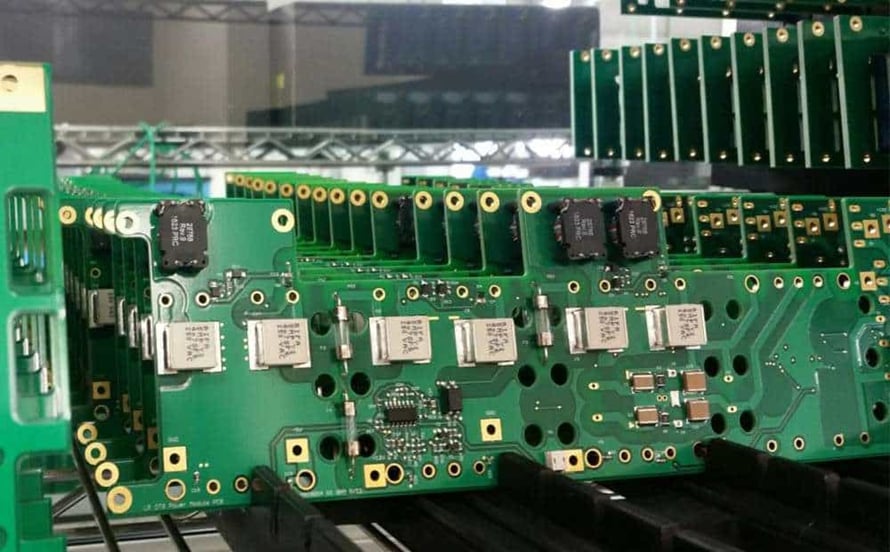
Compared with managing multiple independent suppliers, a turnkey model can reduce communication gaps, simplify procurement, improve production visibility, and shorten the path from engineering design to finished PCBA.
For prototypes, turnkey PCB assembly can accelerate development and validation. For low-volume production, it can reduce procurement complexity. For mass production, it provides a scalable framework for consistent manufacturing, quality control, and supply-chain management.
The choice between full turnkey PCB assembly and partial turnkey PCB assembly ultimately depends on how much procurement and inventory control the customer wants to retain.
Kingda provides full turnkey, partial turnkey, and kitted/consigned PCBA solutions, combining PCB manufacturing, component sourcing, SMT/THT assembly, inspection, testing, and final system integration. With engineering support, advanced assembly capabilities, comprehensive quality control, and multiple quality-management certifications, Kingda can support projects from prototype development through volume production. (Kingda)