What Is a 65% Keyboard PCB?
A 65% keyboard PCB is the electronic circuit board designed for a compact 65% mechanical keyboard layout. It connects the keyboard switches, LEDs, controller, and other electronic components to ensure reliable key input and communication with a computer.
Compared with a full-size keyboard, a 65% layout removes the numeric keypad and most dedicated function keys while retaining the arrow keys and selected navigation keys. This creates a compact keyboard that saves desk space without sacrificing essential functionality.
For developers, gamers, office users, and keyboard enthusiasts, a well-designed 65% keyboard PCB provides the foundation for a compact, responsive, and customizable keyboard.
If you are developing a new keyboard project, you can also explore professional PCB Manufacturing Services for prototype and production requirements.
What Is a 65% Keyboard PCB?
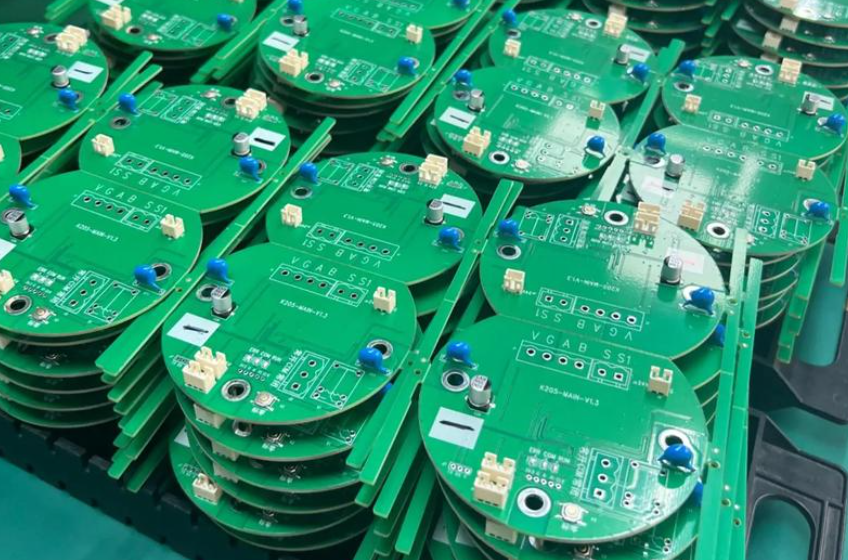
The PCB is one of the most important components inside a mechanical keyboard. It provides the electrical pathways required to detect key presses and communicate those inputs to the keyboard controller.
A typical 65% keyboard PCB can integrate:
- Mechanical switch connections
- Hot-swappable switch sockets
- LED or RGB lighting circuits
- Keyboard controller
- USB interface
- ESD protection
- Diodes for key scanning
- Firmware support
- Optional wireless connectivity components
The exact PCB design depends on the keyboard layout, mounting structure, switch type, connectivity requirements, and intended functions.
A professionally manufactured mechanical keyboard PCB should provide stable electrical performance, accurate key detection, reliable solder joints, and consistent dimensional accuracy.
Benefits of a 65% Keyboard PCB
Compact Design and Better Desk Space
One of the main advantages of a 65% keyboard is its compact footprint. By eliminating the numeric keypad and most dedicated function keys, the keyboard requires significantly less desk space than a traditional full-size keyboard.
The smaller layout also provides more room for mouse movement, making it particularly attractive to gamers and users with limited workspace.
For portable setups, a compact custom keyboard PCB can also make the final keyboard easier to transport while maintaining a familiar typing experience.
Balanced Functionality
A 65% keyboard provides a useful balance between compactness and functionality.
Unlike smaller 60% keyboards, many 65% layouts retain dedicated arrow keys and several navigation keys. This makes the format practical for programming, office work, spreadsheet editing, gaming, and everyday typing.
The PCB determines which keys and functions are supported, so layout compatibility should always be considered before selecting a board.
Flexible Customization
Customization is one of the biggest advantages of mechanical keyboards. A properly designed 65% keyboard PCB can support different switch configurations, key mappings, lighting systems, and firmware options.
Depending on the design, users may be able to customize:
- Key assignments
- Macros
- RGB lighting effects
- Switch configurations
- Multimedia controls
- Layer functions
- Connection modes
This flexibility makes the 65% format particularly popular among keyboard enthusiasts and custom keyboard developers.
Hot-Swappable Switch Support
Many modern keyboard PCBs use hot-swappable sockets, allowing users to replace mechanical switches without soldering.
This feature is especially valuable for custom keyboard projects because users can test different switch types and adjust the typing feel without replacing the entire PCB.
However, not every PCB supports hot-swappable switches. Compatibility with switch socket types and the intended plate design should therefore be confirmed before purchasing or manufacturing a board.
How to Choose the Right 65% Keyboard PCB
Selecting the right PCB requires more than simply matching the number of keys. Several technical factors can affect compatibility, performance, and the final keyboard design.
Layout Compatibility
The PCB must match the intended 65% keyboard layout and physical dimensions.
Different 65% keyboards may use different bottom-row configurations, spacebar sizes, stabilizer positions, mounting holes, and navigation-key arrangements.
Before manufacturing or purchasing a PCB, confirm:
- Key count
- ANSI or ISO layout
- Bottom-row configuration
- Spacebar size
- Stabilizer positions
- Mounting-hole locations
- PCB dimensions
- Case compatibility
A PCB that does not match the keyboard case or plate may require significant mechanical modifications.
Switch Compatibility
Check whether the PCB supports the mechanical switches you intend to use.
Common switch families include Cherry MX-compatible, Gateron, Kailh, and other MX-style switches. A PCB may also support either soldered switches or hot-swappable sockets.
For a custom keyboard PCB, switch compatibility should be determined during the initial design stage rather than after PCB production.
PCB Quality and Reliability
PCB quality directly affects the reliability of the finished keyboard.
A high-quality board should provide stable electrical connections, accurate drilling, consistent copper traces, reliable solderability, and appropriate surface treatment.
Poor PCB manufacturing can result in issues such as key failures, intermittent connections, soldering defects, or unwanted electrical interference.
Choosing an experienced 65% keyboard PCB manufacturer can help ensure that the board meets the required dimensional, electrical, and manufacturing specifications.
For projects that require both board fabrication and assembly, PCB Assembly Services can help streamline the transition from bare PCB production to a finished electronic assembly.
Backlighting and RGB Support
If the keyboard requires illumination, confirm whether the PCB supports the required lighting configuration.
Depending on the design, this may include:
- Single-color LEDs
- Per-key RGB LEDs
- Underglow RGB
- Addressable LEDs
- Custom lighting effects
The PCB layout must provide sufficient space and electrical support for the selected LED configuration.
Firmware and Programmability
Programmability is another important consideration for modern mechanical keyboards.
Depending on the controller and firmware architecture, a mechanical keyboard PCB may support firmware platforms such as QMK or VIA. These systems can allow users to customize key assignments, layers, macros, and other keyboard functions.
For a custom keyboard, firmware compatibility should be evaluated together with the PCB controller and electrical design.
Wired or Wireless Connectivity
65% keyboards can be designed for wired, wireless, or dual-mode operation.
USB connectivity is widely used because it provides a simple and reliable connection. Wireless designs may incorporate Bluetooth or other wireless technologies to provide greater flexibility.
For gaming applications, connection stability and latency should be considered carefully. For portable keyboards, wireless connectivity can provide a cleaner and more convenient setup.
Manufacturing Requirements
When developing a new keyboard PCB, manufacturing capability should also be considered.
Important factors include PCB layer count, board thickness, copper weight, minimum trace and spacing requirements, surface finish, solder mask, via technology, component placement, and production volume.
A reliable manufacturing partner should be able to support the project from PCB prototyping through volume production.
You can learn more about the company’s capabilities, manufacturing experience, and quality approach on the About Us page.
Applications of 65% Keyboard PCBs
Work and Productivity
The 65% layout is well suited to professional users who want to reduce desk clutter without giving up dedicated arrow keys and essential navigation functions.
Its compact design can be particularly useful for programming, writing, design work, and office environments where desk space is limited.
Gaming
Gaming is one of the most popular applications for 65% keyboards.
The reduced keyboard footprint creates additional space for mouse movement while retaining commonly used keys. A programmable custom keyboard PCB can also provide support for macros, remapped controls, and RGB lighting.
For competitive gaming, a reliable PCB with stable key scanning and low input latency is especially important.
Mechanical Keyboard Enthusiasts
Keyboard enthusiasts often choose 65% layouts because they offer extensive opportunities for customization.
Users can combine different switches, keycaps, stabilizers, plates, cases, firmware configurations, and lighting systems to create a personalized keyboard.
A flexible 65% keyboard PCB serves as the electronic foundation for these customized builds.
Portable Workstations
The compact dimensions of a 65% keyboard make it easier to carry between home, office, studio, and other work locations.
When combined with wireless connectivity and a durable enclosure, the format can provide a practical solution for users who want a consistent typing experience across multiple workspaces.
Why PCB Manufacturing Quality Matters
The PCB is the electronic foundation of the keyboard, so manufacturing quality has a direct effect on the performance of the finished product.
A reliable 65% keyboard PCB manufacturer should be capable of maintaining consistent board dimensions, hole positions, copper features, solder mask coverage, and surface finish across production batches.
For prototype projects, manufacturing flexibility is also important. Early-stage keyboard designs may require several PCB revisions before the final layout is ready for mass production.
Working with an experienced PCB supplier can help reduce manufacturing risks and improve consistency between prototypes and production units.
For complete electronic manufacturing requirements, PCB Assembly can be integrated with PCB fabrication to simplify sourcing and production management.
Conclusion
A 65% keyboard PCB is the electronic core of a compact mechanical keyboard, connecting switches, controllers, LEDs, and other components while enabling key input, lighting, programmability, and connectivity.
The best PCB depends on the intended keyboard layout, switch type, hot-swap requirements, lighting configuration, firmware, connectivity, mechanical structure, and production requirements.
Whether you are developing a gaming keyboard, productivity keyboard, portable workstation, or enthusiast-grade custom keyboard, selecting the right mechanical keyboard PCB is essential for achieving reliable performance and long-term durability.
For new product development or production projects, working with an experienced 65% keyboard PCB manufacturer can help ensure that the PCB design is suitable for both prototyping and volume manufacturing.
Ready to Develop Your Keyboard PCB Project?
From PCB prototyping and fabrication to PCB Assembly Services, the right manufacturing partner can help turn your keyboard design into a reliable finished product.
If you are developing a custom keyboard PCB, prepare your Gerber files, PCB specifications, component information, and expected production volume for evaluation.
For more information about manufacturing capabilities and company experience, visit About Us or return to the PCB Manufacturing page to explore available solutions.