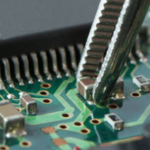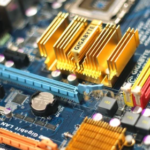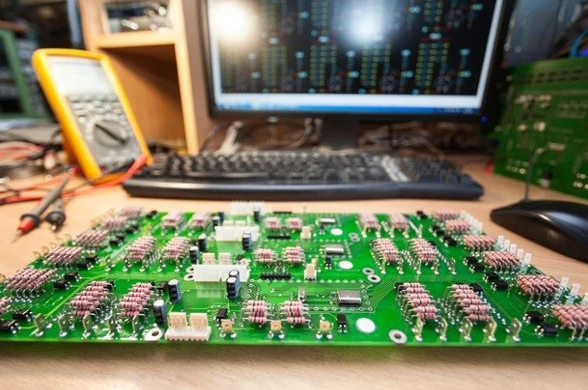
As electronics become increasingly integrated into everyday life, PCB assembly technologies have evolved to keep pace. Devices are getting smaller, faster, and more complex — and the printed circuit boards (PCBs) inside them must follow suit.
This shift has led to the widespread adoption of SMT assembly (Surface Mount Technology), which has largely replaced traditional through-hole PCB assembly since the 1980s. However, both methods still play important roles depending on the application.
If you’re planning a new product or optimizing an existing design, understanding the differences between through-hole vs SMT assembly will help you choose the most efficient and cost-effective solution.
What Is the Difference Between Through-Hole and SMT Assembly?
The main difference lies in how components are mounted onto the PCB.
- Through-hole assembly requires components to be inserted into drilled holes and soldered on the opposite side
- SMT assembly places components directly onto the surface of the PCB using solder paste and reflow soldering
As modern electronics continue to shrink, SMT PCB assembly has become the preferred choice for most designs due to its space-saving and automation advantages.
Through-Hole PCB Assembly: Advantages and Limitations
Advantages of Through-Hole Technology
Through-hole assembly remains valuable in specific scenarios where strength and durability are critical:
- Strong mechanical bonding – Components are firmly anchored through the board
- High power handling – Ideal for power electronics and connectors
- Durability in harsh environments – Suitable for military, industrial, and high-stress applications
- Reliable for large components – Better for parts subject to physical stress
Limitations of Through-Hole Assembly
Despite its strengths, through-hole technology has several drawbacks:
- Requires drilling holes, increasing manufacturing cost
- Slower production speed compared to SMT
- Limited automation capability
- Larger component size, reducing PCB density
- Decreasing component availability due to lower market demand
SMT Assembly: Advantages and Considerations
Advantages of SMT Assembly
SMT assembly services dominate modern electronics manufacturing for several reasons:
- Space-saving design – Enables compact and lightweight PCBs
- High-speed automated production – Significantly reduces assembly time
- Lower manufacturing cost – Fewer materials and less manual labor
- Better component availability – Shorter lead times due to high demand
- Improved consistency – Machine-driven placement reduces human error
In many cases, a process that takes 1–2 hours with through-hole can be completed in just minutes using SMT.
SMT Assembly Process (Simplified)
A typical SMT PCB assembly process includes:
- Solder paste printing
- Component placement using automated machines
- Reflow soldering in a controlled oven
- Inspection and quality testing
This streamlined workflow allows for high-volume, high-precision production.
Limitations of SMT Assembly
While SMT is highly efficient, there are some considerations:
- Lower mechanical strength compared to through-hole
- Sensitive to thermal, mechanical, and environmental stress
- More complex inspection for hidden joints (e.g., BGA, QFN packages)
- Requires advanced testing methods such as X-ray inspection
Cost Comparison: Through-Hole vs SMT Assembly
From a cost perspective, SMT assembly is typically more economical:
- Higher level of automation reduces labor costs
- Faster production increases output efficiency
- Easier component sourcing lowers procurement costs
Through-hole assembly, on the other hand, tends to be more expensive due to manual processes and additional drilling requirements.
For most high-volume projects, SMT PCB assembly offers the best cost-performance ratio.
Testing Considerations for Modern PCB Assembly
As PCB designs become more compact, testing methods must evolve.
For SMT boards using advanced packages like BGA or QFN:
- X-ray inspection is often required to check hidden solder joints
- Automated Optical Inspection (AOI) ensures placement accuracy
Through-hole boards also present challenges:
- Irregular shapes or large sizes may require custom testing setups
- Increased manual inspection leads to higher costs
Working with an experienced PCB assembly manufacturer ensures proper testing strategies are applied from the start.
When to Use SMT vs Through-Hole Assembly
Choose SMT Assembly When:
- You need compact, lightweight designs
- Your project requires high-volume production
- Cost efficiency and speed are priorities
Choose Through-Hole Assembly When:
- Your product requires high mechanical strength
- Components must withstand extreme conditions
- You are designing power circuits or connectors
👉 In many real-world applications, a hybrid approach (SMT + through-hole) delivers the best results.
Conclusion: Selecting the Right PCB Assembly Solution
Both SMT assembly and through-hole technology have their place in modern electronics manufacturing. While SMT dominates due to its efficiency and scalability, through-hole remains essential for specific high-reliability applications.
The key is choosing the right approach based on your product’s performance, durability, and cost requirements.
Looking for Reliable PCB Assembly Services?
Choosing the right PCB assembly partner can make a significant difference in product quality and time to market.
We provide:
- Professional SMT assembly services
- Through-hole and hybrid PCB assembly
- Component sourcing and BOM management
- Prototyping and mass production
- Advanced inspection (AOI, X-ray testing)
👉 Contact us today to discuss your project and get a competitive quote for your next PCB assembly.