What Is PCB Impedance Mismatch?
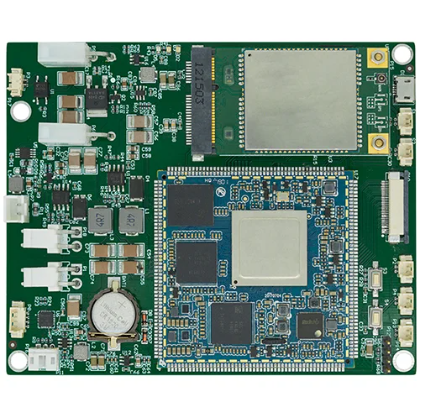
PCB impedance mismatch occurs when the characteristic impedance of a transmission line (trace) does not match the impedance of the source, load, or adjacent interconnects. This mismatch causes part of the signal to be reflected back toward the source instead of being transmitted efficiently.
In high-speed and RF PCB designs, impedance mismatch can significantly degrade signal integrity, leading to performance issues or even system failure.
Why PCB Impedance Mismatch Happens
There are several common causes of impedance mismatch in PCB design and manufacturing:
1. Incorrect Trace Width or Thickness
The impedance of a PCB trace is directly affected by its geometry.
- Narrow traces → higher impedance
- Wider traces → lower impedance
If the trace width is not properly calculated based on the target impedance (e.g., 50Ω or 100Ω differential), mismatch will occur.
2. Improper Dielectric Material Selection
PCB materials have different dielectric constants (Dk), which influence impedance.
- Variations in Dk lead to impedance variation
- Using standard FR4 in high-frequency designs can cause instability
High-frequency designs often require materials like Rogers or PTFE to maintain consistent impedance.
3. Inconsistent PCB Stackup
The distance between the signal layer and reference plane (ground/power) is critical.
- Changes in layer thickness affect impedance
- Poor stackup design leads to uncontrolled impedance
A well-defined stackup is essential for controlled impedance PCB design.
4. Poor Ground Reference
Impedance depends on a stable return path.
- Gaps in ground planes
- Split planes under high-speed signals
These issues disrupt current return paths and cause impedance discontinuities.
5. Via Transitions and Layer Changes
When signals pass through vias:
- Stub effects can introduce reflections
- Changes in geometry alter impedance
Back-drilling or optimized via design can reduce these effects.
6. Connector and Component Mismatch
Even if the PCB trace is correctly designed, mismatch can occur at:
- Connectors
- IC pins
- Cables
All interconnects must match the system impedance.
7. Manufacturing Variations
Even a perfect design can suffer from fabrication tolerances:
- Etching variations (trace width changes)
- Dielectric thickness inconsistencies
- Copper roughness
That’s why working with an experienced PCB manufacturer is critical.
Effects of PCB Impedance Mismatch
Impedance mismatch can cause several signal integrity problems:
- Signal reflections
- Ringing and overshoot
- Increased EMI (electromagnetic interference)
- Data errors in high-speed signals
- Reduced signal power in RF circuits
In RF and high-speed digital systems, even small mismatches can have a large impact.
How to Fix PCB Impedance Mismatch
To avoid or minimize impedance mismatch:
✔ Perform Controlled Impedance Design
Use simulation tools to calculate trace geometry before layout.
Optimize PCB Stackup
Define layer thickness, dielectric material, and reference planes early in the design.
✔ Use Proper Materials
Select low-loss, stable dielectric materials for high-frequency applications.
✔ Maintain Continuous Ground Planes
Avoid splits and ensure a clean return path.
✔ Minimize Via Effects
Use back-drilling or blind/buried vias where necessary.
✔ Work with an Experienced Manufacturer
Choose a PCB manufacturer that offers impedance control and testing.
Conclusion
PCB impedance mismatch is one of the most common causes of signal integrity issues in modern electronics. It can result from design errors, material choices, or manufacturing variations.
By understanding the root causes and applying proper controlled impedance design practices, you can ensure reliable performance in high-speed and RF applications.
Need Help with Controlled Impedance PCB?
We provide:
- Controlled impedance PCB fabrication
- RF and high-speed PCB manufacturing
- Stackup design support
- Signal integrity optimization
👉 Contact us today to ensure your PCB meets strict impedance requirements and performs reliably in real-world conditions.