How to Choose the Right PCB Surface Finish for Your Project
The primary purpose of a PCB Surface Finish is to protect exposed copper, maintain reliable solderability and electrical performance, and improve the long-term stability of the circuit board. Choosing the right finish requires more than simply comparing prices. Engineers should first evaluate three fundamental factors: the operating environment, expected service life, and project budget.
For example, a PCB used indoors under normal temperature and humidity conditions may not require the same surface treatment as a board installed outdoors, in a high-humidity environment, or in an industrial application exposed to corrosive substances.
The operating environment, expected product lifetime, and cost target provide the basic framework for selecting the appropriate PCB Surface Finishes. By evaluating these factors together, manufacturers and engineers can avoid unnecessarily expensive processes while ensuring the required reliability and performance.
For advanced PCB fabrication requirements, GOPCBA PCB Manufacturing Services support a wide range of board structures, materials, and manufacturing requirements from prototypes to production.
Main PCB Surface Finishes and Their Characteristics
Different PCB Surface Finishes provide different levels of solderability, corrosion resistance, surface flatness, durability, electrical performance, and cost efficiency. The most commonly used options include HASL, ENIG, immersion silver, OSP, and electroplated gold.
1. HASL – Hot Air Solder Leveling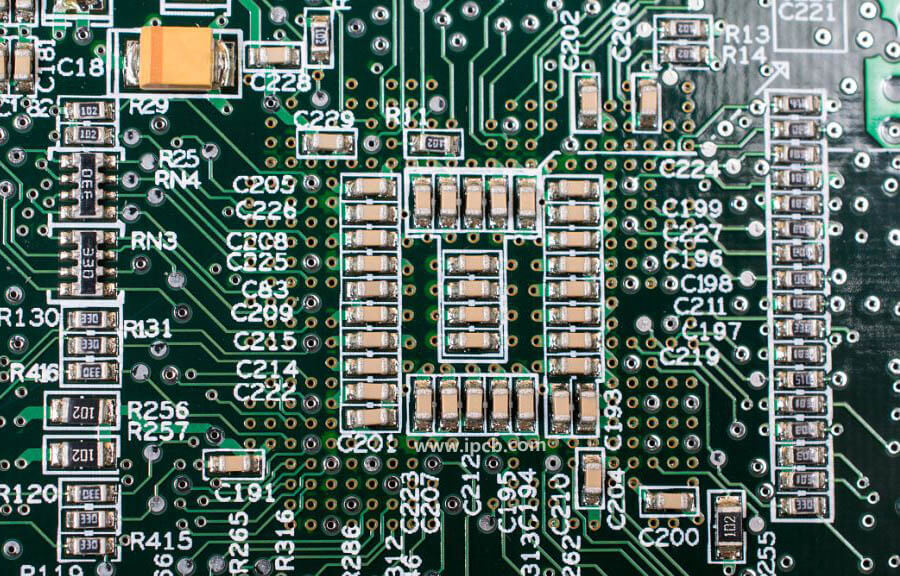
Hot Air Solder Leveling is one of the traditional and widely used PCB surface finishing processes. During HASL, the exposed copper surfaces are coated with molten solder, after which hot air is used to remove excess solder and create a relatively uniform coating.
The main advantage of HASL PCB is its relatively low cost, making it suitable for conventional PCB applications and cost-sensitive volume production.
HASL provides good solderability and can perform reliably in many standard operating environments. However, its surface flatness may not be as consistent as ENIG, particularly when used with very fine-pitch components or high-density packages.
Lead-free HASL is commonly selected when a lead-free manufacturing process is required.
2. ENIG – Electroless Nickel Immersion Gold
ENIG PCB technology uses a two-layer metallic structure consisting of an electroless nickel layer and a thin immersion gold layer.
The nickel layer acts as a barrier over the copper and provides a stable surface for the gold layer. The immersion gold protects the nickel surface from oxidation and provides a smooth, solderable finish.
One of the major advantages of ENIG is its excellent surface flatness. This makes it particularly suitable for fine-pitch components, BGA packages, and high-density SMT applications.
ENIG also provides good corrosion resistance, stable solderability, and excellent storage characteristics. However, its manufacturing cost is generally higher than HASL or OSP.
For more detailed information about ENIG technology, see the guide to ENIG PCB manufacturing and quality control.
3. Immersion Silver
Immersion silver deposits a thin layer of silver over the exposed copper surface. Silver provides excellent electrical conductivity and a relatively flat surface, while the manufacturing cost is generally lower than ENIG.
Immersion silver can be a practical option when electrical performance and surface flatness are important but project cost must remain under control.
However, silver is more sensitive to environmental conditions than gold. High humidity, sulfur-containing environments, and improper storage can cause discoloration or degradation of the surface.
Therefore, immersion silver should be evaluated carefully for products that will operate in demanding environmental conditions or require long-term storage.
4. OSP – Organic Solderability Preservative
OSP PCB technology uses a thin organic protective coating to protect exposed copper from oxidation before soldering.
OSP offers several advantages, including low cost, a very flat surface, and a relatively simple manufacturing process. Because the coating is extremely thin, it has little influence on the physical geometry of the PCB pads.
OSP can be an economical solution for cost-sensitive products and applications where the PCB will be assembled relatively soon after manufacturing.
However, OSP generally provides less environmental and mechanical protection than metallic surface finishes. Handling, humidity, storage conditions, and the number of thermal cycles during assembly should therefore be considered during the selection process.
5. Electroplated Gold
Electroplated gold uses an electrical plating process to deposit a controlled gold layer onto selected PCB surfaces. Compared with immersion gold, electroplated gold can provide greater coating thickness and better resistance to mechanical wear.
This makes it particularly suitable for applications where PCB contacts are repeatedly inserted, removed, or exposed to friction.
Typical applications include connector contacts, edge connectors, switches, keypads, and other areas requiring high wear resistance.
The main disadvantage is its higher manufacturing cost and more complex production process. Therefore, electroplated gold should normally be reserved for applications where its mechanical durability provides a clear technical benefit.
Key Factors for Selecting the Right PCB Surface Finish
Selecting the right surface finish should be based on the actual requirements of the finished product rather than choosing the most expensive option.
1. Consider the Operating Environment
The first consideration should be the environment in which the PCB will operate.
Outdoor, humid, coastal, or corrosive environments:
ENIG or electroplated gold may be considered when corrosion resistance and long-term surface stability are important.
Indoor and relatively dry environments:
HASL, ENIG, immersion silver, or OSP can all be considered depending on cost, assembly requirements, and expected service life.
High-temperature environments:
The surface finish should be evaluated together with the PCB laminate, soldering process, copper thickness, and overall thermal design. For demanding applications, engineers should avoid selecting a finish based solely on surface characteristics.
For high-speed or RF applications, surface finish should also be evaluated together with PCB materials, trace geometry, stack-up, copper roughness, and impedance requirements. High-Frequency PCB Manufacturing Requirements provides additional information about these manufacturing considerations.
2. Match the Surface Finish to the Expected Service Life
Expected product lifetime is another important factor.
Short-term products:
OSP or conventional HASL may provide an economical solution when the product has a relatively short service cycle and moderate environmental requirements.
Medium-term applications:
HASL, immersion silver, and ENIG can be evaluated based on assembly requirements, environmental exposure, and cost.
Long-term and high-reliability products:
ENIG or electroplated gold may be more appropriate when corrosion resistance, storage stability, surface durability, and long-term reliability are important.
It is important to note that the actual service life of a PCB cannot be determined by surface finish alone. Material selection, PCB design, soldering conditions, thermal cycling, humidity, contamination, mechanical stress, and operating conditions all influence final product reliability.
3. Balance Cost and Performance
Surface finish selection should also reflect the project’s cost target.
For cost-sensitive conventional PCB production, HASL and OSP are often attractive options.
For applications requiring better surface flatness and stable solderability, ENIG may provide a better balance between performance and cost.
For applications requiring exceptional contact durability, electroplated gold may justify its higher cost.
The goal should not be to select the most expensive process. Instead, engineers should select the least costly process that reliably meets the electrical, mechanical, environmental, and assembly requirements of the application.
4. Consider Special Application Requirements
Some PCB applications have additional requirements that can influence surface-finish selection.
Fine-pitch and BGA components:
A flat surface is particularly important for reliable SMT assembly. ENIG is often considered for these applications because of its relatively good surface planarity.
High-frequency and high-speed signal transmission:
Surface finish should be considered together with the entire transmission structure. Trace width, copper thickness, dielectric thickness, dielectric constant, copper roughness, and reference-plane spacing can all influence impedance and signal integrity.
For projects requiring precise impedance control, Multilayer Impedance PCB Manufacturing explains why material properties, stack-up construction, and manufacturing tolerances must be controlled together.
Frequent mechanical contact or insertion:
Electroplated gold may be more appropriate because of its greater resistance to mechanical wear.
Long storage periods:
ENIG and electroplated gold can provide stable surface protection during storage, while OSP requires more careful control of handling and environmental conditions.
Common PCB Surface Finish Selection Mistakes
Choosing a surface finish based on a single specification can result in unnecessary cost or reduced reliability. Several common mistakes should be avoided.
1. Choosing the Most Expensive Finish Without a Technical Requirement
Not every PCB requires ENIG or electroplated gold.
For conventional indoor electronics with moderate reliability requirements, HASL or OSP may provide sufficient performance at a lower cost.
The correct approach is to match the finish to the actual application rather than automatically selecting a premium process.
2. Ignoring Storage and Environmental Conditions
A PCB surface finish should be compatible with both manufacturing and storage conditions.
For example, selecting a finish that is sensitive to humidity or contamination without establishing proper storage controls can increase the risk of oxidation, discoloration, or solderability problems.
Environmental exposure should therefore be considered from manufacturing through final assembly and field operation.
3. Focusing on One Performance Characteristic
Another common mistake is evaluating surface finish based on only one factor.
High electrical conductivity does not automatically mean the finish is suitable for a corrosive environment.
Likewise, a low-cost finish may not be the best choice for a product requiring long-term reliability.
A complete evaluation should consider:
- Solderability
- Surface flatness
- Corrosion resistance
- Mechanical durability
- Electrical requirements
- Storage conditions
- Assembly process
- Expected service life
- Production volume
- Total manufacturing cost
How to Select the Right Finish for Your PCB
A practical selection process can be summarized as follows:
Step 1 – Define the operating environment
Determine whether the PCB will be exposed to humidity, temperature changes, chemicals, salt spray, vibration, or other environmental stresses.
Step 2 – Define the expected service life
Determine whether the product is intended for short-term, medium-term, or long-term operation.
Step 3 – Evaluate the assembly requirements
Consider component pitch, BGA packages, SMT requirements, soldering processes, and pad geometry.
Step 4 – Identify special electrical requirements
For high-speed or RF designs, evaluate surface finish together with materials, stack-up, trace geometry, and impedance requirements.
Step 5 – Compare cost and reliability
Select a process that satisfies the technical requirements without unnecessarily increasing manufacturing costs.
Step 6 – Validate the process
For complex or high-reliability products, prototype production and testing can help verify whether the selected finish performs correctly under actual operating and assembly conditions.
Conclusion
Choosing the right PCB Surface Finish is essentially a process of matching application requirements with manufacturing characteristics. There is no single surface finish that is ideal for every PCB project.
HASL and OSP can provide economical solutions for many conventional applications. ENIG offers a combination of surface flatness, solderability, corrosion resistance, and storage stability that makes it suitable for many advanced electronic products. Immersion silver can provide excellent conductivity and a flat surface, while electroplated gold is particularly valuable when mechanical wear resistance is critical.
The best decision should consider the operating environment, expected service life, assembly requirements, electrical performance, storage conditions, production volume, and overall budget.
For complex projects, working with an experienced PCB manufacturer during the design stage can help engineers evaluate material selection, stack-up, surface finish, manufacturability, and reliability before mass production.
By selecting the right PCB Surface Finishes based on actual project requirements rather than simply choosing the highest-end process, manufacturers can achieve a better balance between performance, reliability, and total cost.
For advanced applications requiring multilayer, HDI, high-frequency, rigid-flex, heavy-copper, or controlled-impedance technology, GOPCBA PCB Manufacturing Services can support the transition from prototype development to production manufacturing.