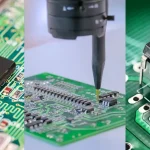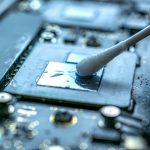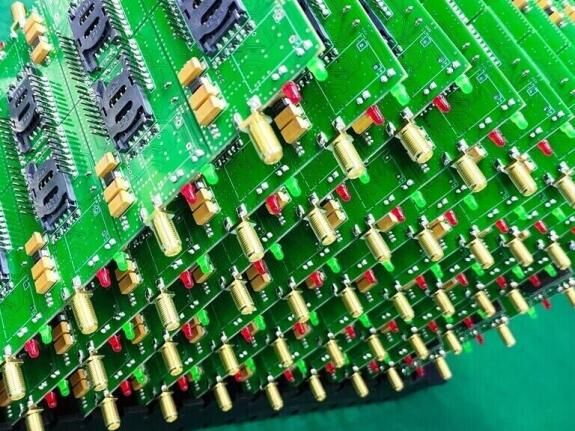
High-Volume PCB Assembly refers to the production of large quantities of assembled printed circuit boards using highly controlled and repeatable manufacturing processes. There is no universal production quantity that officially defines high-volume PCB assembly. Depending on the manufacturer, industry, and product type, high-volume production may range from several thousand units to hundreds of thousands or more.
Compared with prototype and low-volume production, high-volume manufacturing places greater emphasis on automation, throughput, process stability, supply-chain coordination, yield management, and repeatability.
A well-designed High-Volume PCB Assembly process allows manufacturers to produce large quantities of consistent PCB assemblies while controlling labor, material, equipment, and testing costs. Automated material handling, high-speed component placement, soldering, inspection, and testing can significantly improve production efficiency.
High-volume assembly is commonly used for products with established designs and predictable demand, such as consumer electronics, automotive electronics, telecommunications equipment, industrial systems, networking equipment, LED products, and other electronic products manufactured at scale.
Benefits of High-Volume PCB Assembly
Higher Production Efficiency
One of the primary advantages of High-Volume PCB Assembly is production efficiency.
Automated assembly equipment can continuously place components, solder connections, inspect boards, and perform other repetitive operations. Compared with manual assembly, automation can significantly increase throughput and improve process consistency.
Production efficiency can be further improved through:
- Automated component feeding
- High-speed SMT placement
- Automated solder paste printing
- Reflow soldering
- Automated optical inspection
- Automated material handling
- Production-line monitoring
- Automated testing
The specific level of automation should be selected according to production volume, product complexity, and cost requirements.
Consistent Quality Control
Large production runs require stable and repeatable manufacturing processes.
Manufacturers can establish standardized process parameters and inspection procedures to monitor production performance throughout the manufacturing cycle.
Important quality-control activities may include:
- Incoming material inspection
- Solder paste inspection
- Placement verification
- Reflow profile monitoring
- AOI inspection
- X-ray inspection
- Electrical testing
- Functional testing
- Process traceability
- Statistical process monitoring
Quality control should not rely exclusively on final inspection. Monitoring critical processes throughout production helps identify problems earlier and reduce the risk of producing large quantities of defective boards.
Lower Unit Cost
Large production quantities can reduce the average cost per PCB assembly because fixed costs such as engineering preparation, machine setup, programming, tooling, and testing preparation can be distributed across more units.
Large-volume purchasing may also improve component procurement efficiency.
However, high production volume does not automatically guarantee the lowest total cost. Material prices, component availability, PCB complexity, testing requirements, production yield, logistics, inventory, and product lifecycle should all be considered.
Faster Production Throughput
Automation allows manufacturers to process large quantities of PCBs efficiently.
Once the production process has been validated and optimized, automated equipment can continuously perform operations such as component placement, soldering, inspection, and testing.
The actual production lead time still depends on:
- PCB fabrication time
- Component availability
- BOM complexity
- Production scheduling
- Board complexity
- Assembly technology
- Testing requirements
- Order quantity
Therefore, high-volume production should focus on improving overall throughput rather than simply increasing machine speed.
Improved Scalability
A mature high-volume production system can support increasing demand more efficiently.
When production requirements grow, manufacturers can optimize line utilization, add appropriate equipment, expand shifts, improve material flow, or introduce additional production capacity.
Scalability is particularly important for products with rapidly increasing market demand.
Advanced Automation
Automated PCB Assembly is a key element of high-volume manufacturing.
Modern production lines may integrate automated systems for:
- PCB loading and unloading
- Solder paste printing
- Component placement
- Reflow soldering
- Optical inspection
- X-ray inspection
- Material handling
- Electrical testing
- Data collection and traceability
Automation reduces repetitive manual operations and can improve consistency when properly programmed and maintained.
Applications of High-Volume PCB Assembly
High-Volume PCB Assembly is suitable for electronic products with established designs and relatively large production requirements.
Typical applications include:
- Industrial automation and control systems
- LED lighting
- Power and energy equipment
- Telecommunications equipment
- Wireless and networking equipment
- 5G-related electronics
- Automotive electronics
- Consumer electronics
- Medical electronic equipment
- Computers and networking products
- Servers and data-center equipment
- Test and measurement instruments
- Security systems
- IoT devices
- Portable electronic products
- Smart home equipment
- Industrial electronics
The required manufacturing process depends on the product’s electrical, mechanical, thermal, environmental, and reliability requirements.
High-Volume PCB Assembly Process
The basic process is similar to standard PCB Assembly, but high-volume production requires tighter process control, stronger material planning, and greater emphasis on repeatability.
A typical process includes the following stages.
1. Incoming Material Inspection
The manufacturing process begins with the inspection and verification of incoming materials.
The PCB and electronic components should be checked against the approved BOM and manufacturing documentation.
Typical checks include:
- Part number verification
- Quantity verification
- Package verification
- PCB dimensions
- Surface condition
- Component authenticity and traceability when required
- Moisture-sensitive component handling
- Material storage conditions
For large production runs, material control is particularly important because a single incorrect component can affect a significant number of assemblies.
2. Solder Paste Printing
For SMT production, solder paste is printed onto the PCB pads using a stencil.
Printing accuracy is critical because solder paste volume and placement directly influence solder-joint quality.
SPI can be used to monitor solder paste deposition and identify problems before components are placed.
Common printing defects include:
- Excessive solder paste
- Insufficient solder paste
- Offset printing
- Bridging risk
- Blocked stencil apertures
Process parameters should be monitored and adjusted according to the solder paste, stencil, PCB design, and production conditions.
3. SMT Component Placement
After solder paste printing, SMT components are placed on the PCB using automated pick-and-place equipment.
In high-volume production, placement equipment is typically optimized for:
- High throughput
- High placement accuracy
- Stable feeder operation
- Automated component replenishment
- Repeatable programming
- Efficient line balancing
The placement program should be verified carefully before production begins.
4. Reflow Soldering
After component placement, the PCB passes through a controlled reflow oven.
The thermal profile should be developed according to the solder paste, PCB materials, component specifications, and assembly requirements.
Proper reflow control helps ensure reliable solder joints while reducing risks such as:
- Poor solder wetting
- Cold solder joints
- Component damage
- Tombstoning
- Excessive solder voiding
- Thermal stress
For high-volume manufacturing, stable reflow conditions are particularly important because even a small process deviation can affect many boards.
5. Through-Hole Assembly
Some products combine SMT and through-hole components.
Through-hole components may be installed using automated or manual insertion depending on the component type and production requirements.
Soldering methods may include:
- Wave soldering
- Selective soldering
- Manual soldering
The appropriate process depends on the PCB design, component structure, soldering requirements, and production volume.
6. AOI Inspection
After SMT soldering, PCB Testing and inspection can be performed according to the product’s quality requirements.
AOI can detect many visible assembly problems, including:
- Missing components
- Incorrect components
- Component misalignment
- Polarity errors
- Solder bridging
- Soldering abnormalities
AOI is particularly useful for high-volume production because automated inspection can process large numbers of boards consistently.
7. X-Ray Inspection
X-ray inspection can be used when hidden solder joints need to be evaluated.
It is particularly useful for packages such as:
- BGA
- QFN
- Bottom-terminated components
- Other components with hidden solder connections
Not every PCB requires X-ray inspection. The inspection strategy should be based on product requirements, package types, reliability risks, and customer specifications.
8. Electrical and Functional Testing
After assembly and visual inspection, electrical or functional testing may be performed.
Depending on the product, testing can include:
- Flying-probe testing
- ICT
- Continuity testing
- Insulation testing
- Programming
- Functional testing
- System-level testing
The appropriate test strategy should be established during product development so that test points and access requirements are incorporated into the PCB design.
Quality Control in High-Volume PCB Assembly
Quality management becomes increasingly important as production volume increases.
A defect rate that appears small on an individual board can become significant when thousands of boards are produced. Therefore, manufacturers need a systematic approach to process monitoring and corrective action.
Important quality practices include:
Incoming Quality Control
Inspect PCBs, components, solder materials, and other production materials before they enter the manufacturing process.
Process Quality Control
Monitor critical production parameters such as solder paste printing, component placement, and reflow temperature profiles.
Automated Inspection
Use AOI and, where appropriate, X-ray inspection to detect assembly defects efficiently.
Electrical and Functional Testing
Verify that the assembled PCB meets the electrical and functional requirements defined by the product specification.
Traceability
Production data can be recorded by batch, PCB, component lot, machine, operator, or process stage when required.
Traceability is particularly useful for investigating quality issues and implementing corrective actions.
Cost Optimization in High-Volume PCB Assembly
The goal of cost optimization should be to reduce unnecessary manufacturing expenses without compromising product quality or reliability.
Several approaches can help control costs.
Optimize PCB Design
A manufacturing-friendly PCB design can reduce fabrication and assembly complexity.
Important considerations include:
- Appropriate layer count
- Suitable trace width and spacing
- Efficient component placement
- Standardized components where practical
- Appropriate pad design
- Effective panelization
- Accessible test points
Improve Panel Utilization
Panelization can improve material utilization and reduce PCB fabrication waste.
The panel design should consider:
- Board dimensions
- PCB thickness
- Routing method
- Component overhang
- Depanelization
- Assembly equipment limitations
Standardize Components
Using commonly available components can simplify procurement and production.
However, substitutions should only be made after confirming electrical, mechanical, thermal, and regulatory compatibility.
Improve Production Yield
Yield improvement is one of the most important cost-control strategies in high-volume manufacturing.
Reducing recurring defects can decrease:
- Scrap
- Rework
- Material waste
- Machine downtime
- Production interruptions
- Warranty-related costs
High-Volume PCB Assembly vs. Low-Volume PCB Assembly
The primary difference between high- and low-volume manufacturing is not simply the number of boards. The manufacturing strategy, cost structure, equipment utilization, process planning, and engineering priorities are also different.
| Factor | Low-Volume PCB Assembly | High-Volume PCB Assembly |
|---|---|---|
| Production quantity | Prototypes and small batches | Large production runs |
| Main focus | Flexibility and design validation | Throughput and repeatability |
| Design changes | More frequent | Usually less frequent after qualification |
| Equipment | Flexible production systems | Highly automated production lines |
| Setup | Frequent product changeovers | Optimized for stable production |
| Unit cost | Generally higher | Lower at suitable production scale |
| Engineering | Strong NPI and DFM support | Process optimization and production control |
| Testing | Often focused on validation | Highly structured and scalable |
| Material planning | Project-specific | Long-term supply-chain planning |
| Production strategy | Flexible | Standardized and repeatable |
The appropriate production model depends on product maturity, demand, design stability, and manufacturing requirements.
How to Select a High-Volume PCB Assembly Supplier
Choosing a PCB Supplier for large-scale manufacturing requires more than comparing unit prices.
1. Evaluate Production Capacity
Confirm that the manufacturer has sufficient production capacity for the expected order volume and schedule.
Consider:
- SMT line capacity
- Assembly technologies
- Testing capacity
- Material handling
- Production shifts
- Capacity planning
- Equipment maintenance
2. Evaluate Engineering Capabilities
Engineering support should begin before production.
A supplier should be able to review:
- PCB design files
- BOM
- Assembly drawings
- Pick-and-place files
- Testing requirements
- Manufacturing specifications
Early engineering communication can identify problems before they become expensive production issues.
3. Review Quality Systems
Evaluate how the manufacturer manages incoming materials, process control, inspection, testing, traceability, and corrective actions.
A mature quality system should be integrated into the entire manufacturing process rather than relying only on final inspection.
4. Evaluate Supply-Chain Management
Large production programs require stable access to components and materials.
The supplier should have an effective process for managing:
- Component sourcing
- Lead times
- Approved vendors
- Alternative components
- Inventory
- Obsolescence risks
- Material traceability
5. Evaluate Production Scalability
The supplier should be able to support changes in production demand without creating unnecessary disruption.
Capacity planning should account for both current production requirements and potential future increases.
6. Consider Total Manufacturing Cost
The lowest quoted unit price does not necessarily represent the lowest total cost.
Customers should evaluate:
- PCB fabrication
- Component sourcing
- Assembly
- Testing
- Tooling
- Packaging
- Logistics
- Rework
- Scrap
- Inventory
- Engineering costs
A comprehensive cost analysis provides a more realistic basis for supplier comparison.
Kingda High-Volume PCB Assembly Services
Kingda provides PCB manufacturing and assembly support for products requiring scalable and repeatable production.
For high-volume projects, Kingda can support the manufacturing process through engineering review, PCB fabrication, component sourcing, SMT and through-hole assembly, inspection, and testing according to project requirements.
High-volume production requires close coordination between PCB design, procurement, engineering, production, quality control, and logistics. Establishing these processes early can help improve production stability and reduce avoidable manufacturing costs.
Kingda can also support customers during the transition from prototype and pilot production to larger-scale manufacturing. Early production feedback can be used to identify DFM issues, optimize assembly processes, and improve production consistency before volume increases.
Best Practices for High-Volume PCB Assembly
For successful large-scale manufacturing, companies should consider the following practices:
- Finalize and validate the PCB design before volume production.
- Conduct a thorough DFM review.
- Establish an approved BOM and component sourcing strategy.
- Define inspection and testing requirements in advance.
- Validate SMT and reflow processes during pilot production.
- Optimize panelization and material utilization.
- Monitor production yield and recurring defects.
- Maintain appropriate material traceability.
- Establish corrective-action procedures.
- Review production data continuously to identify improvement opportunities.
These practices help create a stable transition from product development to volume manufacturing.
Conclusion
High-Volume PCB Assembly is designed for large-scale production where efficiency, repeatability, quality control, and cost management are critical.
Compared with low-volume production, high-volume manufacturing relies more heavily on automation, standardized processes, supply-chain planning, production monitoring, and scalable testing. Automated PCB Assembly can significantly improve throughput, while effective process control helps maintain consistent product quality.
Successful high-volume manufacturing begins well before the production line starts. Proper PCB Design, DFM analysis, component planning, panelization, process validation, inspection, and testing all contribute to manufacturing efficiency.
For companies moving from prototypes to established products, selecting an experienced PCB Supplier and establishing a well-controlled production process can provide a practical foundation for stable, scalable, and cost-effective manufacturing.