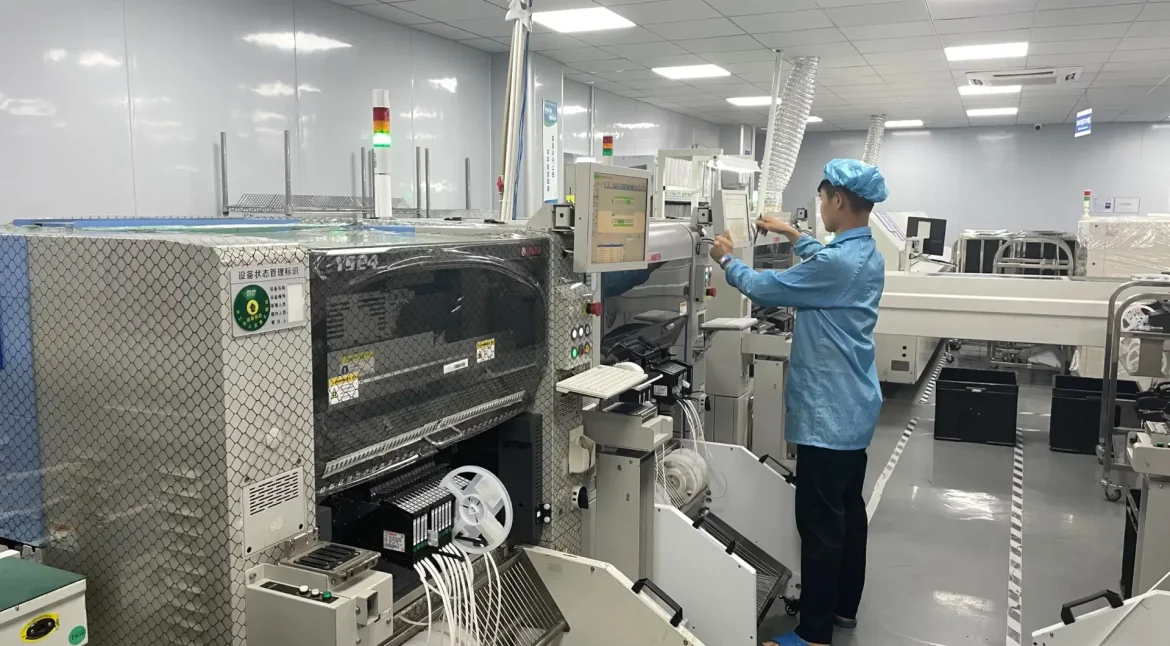
Component Counter Verification for SMT Feeders: 5 Rules A component counter records how many parts have been taken from a reel or a feeder. The count drives material planning, feeder setup and the decision to replace a nearly empty reel, so an inaccurate counter produces shortages and overages that surface…
Board Support Fixture Control in SMT Assembly: 5 Rules Board support holds a panel flat while it is printed, placed and reflowed. Without it the panel bends under the squeegee, the placement head and its own weight, and the bending changes the deposit volume and the placement height. The requirement…
Placement Nozzle Control on SMT Machines: 6 Rules A placement nozzle has to pick a component from the feeder, hold it while the head travels and seat it on the pad. It is the only interface between the machine and the part, and its condition sets the accuracy that the…
Cleanliness Test Selection for PCB Assemblies: 5 Rules Cleanliness is one of the few process outputs that cannot be judged reliably by looking at the board. A residue that is invisible under the microscope can hold enough ionic material to corrode a fine pitch circuit in service. A visible mark,…
Step Stencil Control for Mixed Paste Volumes: 6 Rules A step stencil carries two or more thicknesses in one sheet, so a heavy deposit can be printed on a power pad while a fine pitch area receives a thin one. It removes the compromise that a single thickness forces on…
Convection Airflow Balance in the Reflow Oven Convection airflow is the mechanism that carries heat from the heater bank to the board, and its balance across the tunnel decides whether two identical boards processed side by side receive the same thermal profile. An oven can hold its set points perfectly…
AOI Teaching Samples and Program Representativeness AOI teaching is the step in which the inspection program learns what an acceptable joint, fillet and component body look like on a specific product, and it decides how the machine behaves for every board that follows. A program taught on one board from…
Test Point Contamination and Contact Resistance in ICT Test point contamination raises the resistance between the probe and the pad, and the in-circuit tester reads that added resistance as part of the circuit it is measuring. A pad that should show 5 milliohms of contact resistance can show 500 milliohms…
Conveyor Finger Maintenance and Board Support in Reflow The conveyor finger is the only contact the board has with the machine, and it defines where the board sits in every zone. A finger that has bent, worn or picked up a crust of flux changes the board position, the heat…
Wave Solder Contact Time and Depth Control The wave solder contact time is the interval during which the board surface touches the molten wave, and it decides how much heat the joint receives rather than how much solder is offered. Two boards running through the same machine at different conveyor…