Nitrogen in Reflow: Oxygen Level, Wetting and Oven Maintenance Nitrogen in a reflow oven displaces the oxygen that would otherwise oxidise the solder and the pads during the critical seconds when the alloy is molten. It is a real benefit and it is not always worth the cost, and the…

I2C Bus PCB Design and Pull Up Selection The I2C bus is attractive because it needs only two wires and a pair of pull up resistors, and it is used in almost every design that has a sensor, a memory or a small display. Its simplicity hides a set of…
Thermal Simulation For Metal Core Board Design A metal core board is chosen when the heat a circuit produces cannot be moved by copper alone. The aluminium base spreads heat far better than a laminate, but the path from the device to that base passes through a thin insulating layer…
Selecting Surface Mount Bridge Rectifiers A bridge rectifier converts alternating current into direct current with four diodes in a single package. The surface mount versions are compact, inexpensive and available in a wide range of ratings, and the differences between them matter more than the headline current figure suggests. Choosing…
Stencil Life and Replacement Criteria in SMT Printing A stencil looks permanent, but it wears every time a squeegee crosses it. Tension falls, apertures deform, the foil surface roughens and the edge where paste releases starts to hold material instead. None of this happens quickly, which is why stencil life…
Analog Switch and Multiplexer Circuit Design An analogue switch is a pair of MOSFETs that connects or disconnects a signal path, and it behaves quite differently from the mechanical switch it replaces. It has a resistance that varies with the signal, it injects a small charge every time it changes…
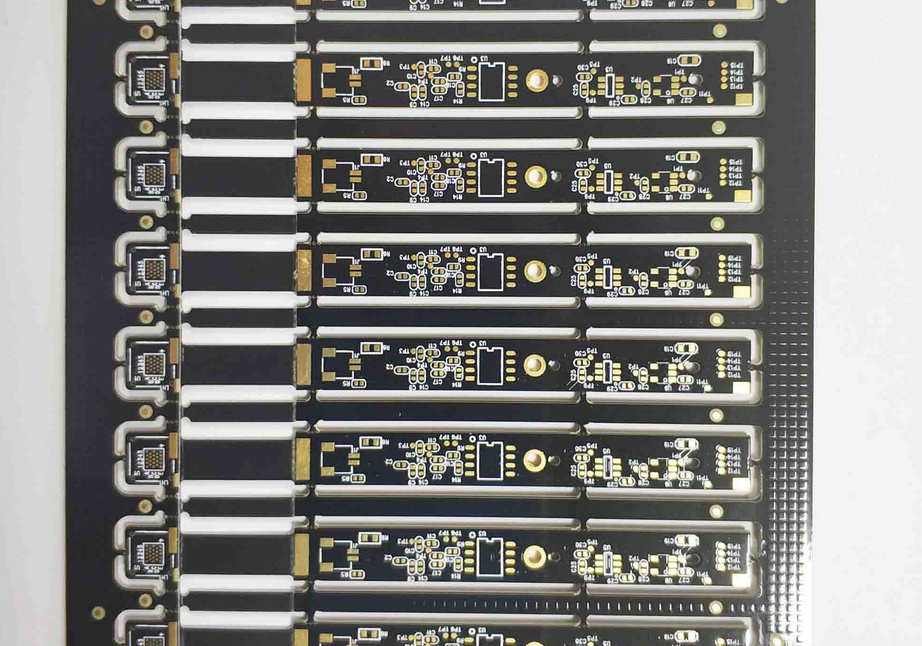
Panelisation Design and Depaneling Method Choice for SMT Panelisation is the practice of building several copies of a board in one panel so that the assembly line has something large enough to handle, and the way that panel is designed decides how the boards behave when they are finally separated.…
Flexible Circuit Assembly: What Changes On A Flex Board Assembling components onto a flexible circuit is not the same job as assembling them onto a rigid board, even though the equipment and the solder are the same. The substrate bends, absorbs moisture, changes size during processing and cannot support the…
Difficult Board Prototypes: Layout and System Test Some boards are difficult for reasons that have nothing to do with the circuit diagram. Fine pitch devices, controlled impedance, mixed analogue and digital sections and tight mechanical constraints all push the design outside what a generic layout can support. Building one successfully…
Sequential Lamination HDI Stackup Design In a conventional multilayer board every via passes through the whole stack. As density rises, those through vias consume space on every layer they cross, and the space they take becomes the limiting factor in the layout. Sequential lamination solves the problem by building the…