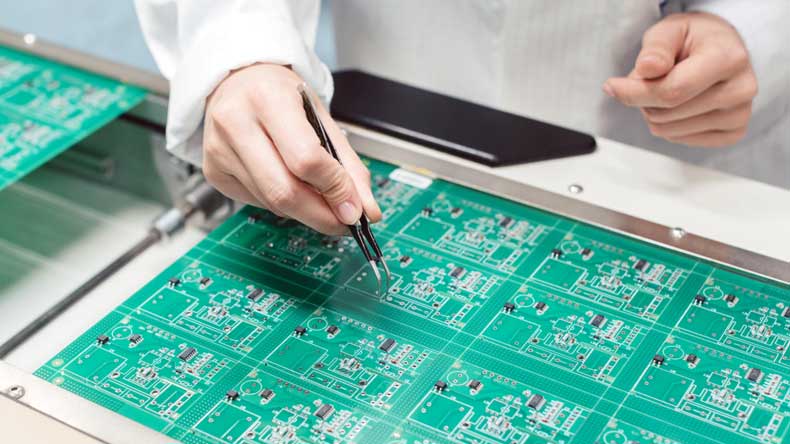
Layout Verification Methods Before PCB Release Layout verification is what stands between a finished design and an expensive mistake, and it works best as a sequence of independent checks rather than as a single act of inspection. Every check has a blind spot, and the blind spot of one is…

EMI Design on a Microcontroller PCB: Practical Steps A microcontroller board is a small, self contained design, and that is precisely why EMI design problems are easy to overlook. The clock is internal or driven by a tiny crystal, the currents are modest, and nothing looks like a power stage.…
SSD PCB Price Guide: Layer Count, Material and Finish An SSD board is a small, dense, high-reliability product, and its price reflects all three. A storage drive that loses data when a via cracks or a BGA pad lifts is not acceptable, so the fabrication rules are tighter than the…
8-Layer PCB Price Guide: Prototype and Volume Costs Eight layers is the point where a board stops being a wiring platform and becomes a transmission structure. Two inner layers usually become solid references, the routing is split by function, and the stackup itself starts to set the electrical performance. That…
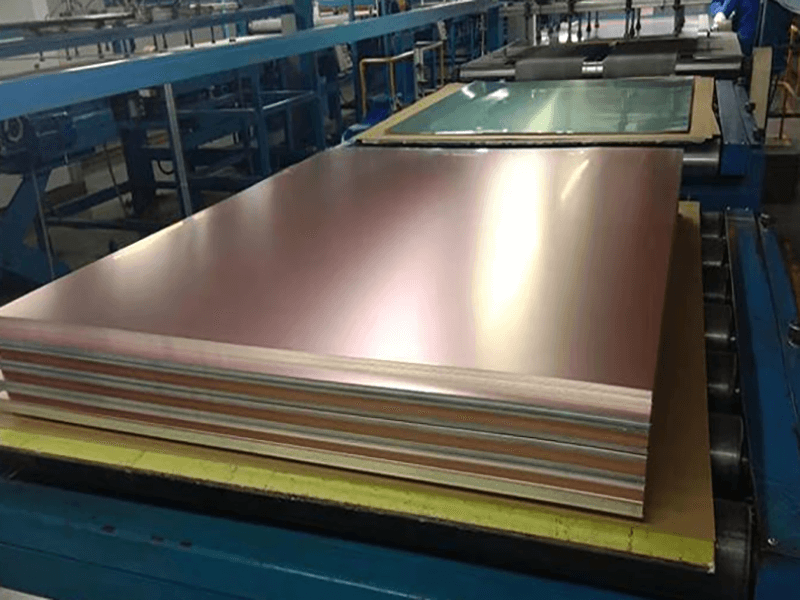
FR-2 PCB: Where Phenolic Laminate Still Makes Sense Most discussions of laminate assume a glass fibre substrate, and for good reason: it covers the overwhelming majority of boards built today. There is still a large category of products, though, where a paper-based phenolic material is the right answer and a…
Design Review: Checks Before a PCB Layout Is Released The last stage before a layout is released is a design review that compares the board against the documents it was built from. It is the cheapest point at which an error can be found, and the checks are the same…
Stencil Manufacturing Methods Compared: Laser, Etching and Electroforming The stencil is the one tool in the SMT process that directly sets the volume of solder paste on every pad. Three methods dominate its manufacture, and they differ in how the aperture walls are formed, which is what ultimately decides how…
Component Placement: The Decisions That Matter Most Placement is the most leveraged decision in a layout. Once the large parts and the connectors are fixed, the routing options are largely determined: the length of the critical nets, the size of the loops, the thermal path from the power stage and…
SMT Prototype Quality Control: Process Checks That Prevent Defects Small batch SMT is judged by a different standard than volume production. There is no long run over which variation averages out, so a single setup error becomes a defect rate that looks alarming on a small sample. The countermeasure is…
Automotive Sensor PCB: Materials, EMC and Reliability A sensor board inside a vehicle is a small circuit in a hostile place. It sits on the engine, in the wheel arch, behind a bumper or inside a seat, and it has to produce the same reading after fifteen years and two…