Thermal Management in PCB Design: Keeping Parts Cool Every watt dissipated on a board has to leave it, and the path it takes is decided by the layout rather than by the schematic. A regulator that runs cool in free air can exceed its limit inside a sealed enclosure simply…
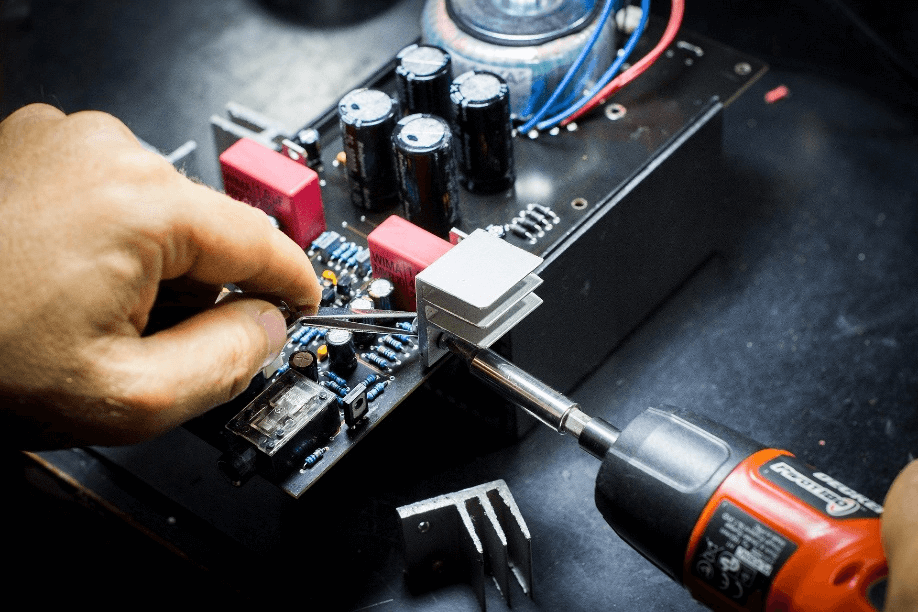
Overmolding PCB Design: Encapsulation and Material Choice Overmolding turns a circuit board into a sealed component. Instead of a housing with a board inside it, the board is placed in a mold and plastic or a soft encapsulant is formed around it, so the finished part is a single sealed…
Carbon Ink PCB: Conductive Printing for Contacts and Jumpers Carbon ink is one of the quiet workhorses of a board. It appears as a black rectangle on the contacts of a keypad, as a short link across two nets that must be joined without a resistor, and as the resistive…
Component Sourcing and Counterfeit Avoidance The parts on a board decide whether the product works, and the parts that arrive at the assembly house decide whether the design can be built twice the same way. Component sourcing is therefore a design and engineering activity, not an administrative one, and the…
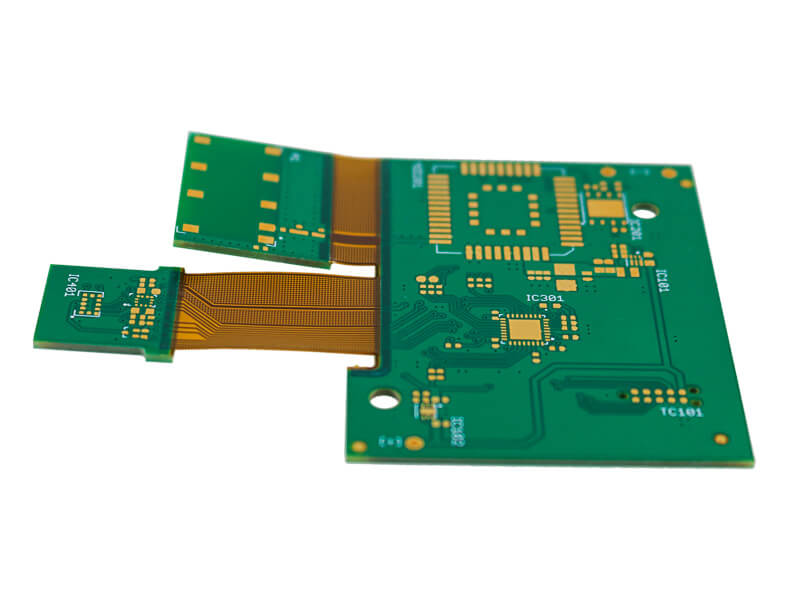
18-Layer Rigid Flex PCB Cost: Prototype to Volume An eighteen layer rigid flex board sits at the top of the interconnect difficulty scale. It combines the lamination complexity of a very high layer count rigid board with the material handling requirements of flexible circuits, and it is usually built because…
20-Layer PCB Cost: Materials, Vias and Volume A twenty layer board is where the economics of PCB manufacturing change character. At low layer counts the price is dominated by area and quantity, but at high layer counts the cost is dominated by process steps: every lamination cycle, every drilling operation…
Do You Really Need a High Speed Laminate? High speed laminates are sold on a promise: lower loss, more margin and a longer reach. That promise is real, but the price is several times that of ordinary FR4 and the process window is narrower. The question a design team actually…
RF PCB Design: Impedance, Grounding and Layout Practice An RF board is not simply a board with a radio on it. The distinction is whether a conductor is treated as a wire carrying a current or as a transmission line carrying a wave, and that depends on the ratio of…
Medical PCB Requirements: Density, Reliability and Flexibility Medical electronics has been a driver of board technology for longer than most people realise. Imaging systems, monitors and laboratory instruments were among the first products to demand high layer counts, tight impedance control and traceability, and the pressure has not eased: the…
10 Layer HDI Stackup: Microvias, Stacked Vias and Design Rules Ten layers is where a board stops being a stackup and becomes an architecture. At that layer count the connection between the layers is no longer a detail of the routing but the thing that determines how many lamination cycles…